RSS
CJLO News - September 25 2013
Hosted by: Catlin Spencer
Stories by: Carlo Spiridigliozzi. Jordan Nemur & Kris Eugenio
Produced by: Jenna Monney-Lupert
Midnight Love Affair’s POP MONTREAL 2013 PIX

Welcome to Midnight Love Affair's top picks of what's good & juicy at this year's POP Montreal festival happening from September 25th to 29th.
This is meant to make you smile and maybe even help solve some of those questions about what certain bands sound like, or what should I do on the Thursday? or maybe you were wondering what is happening! Take a listen and see what comes to mind. I decided to pick my favourites of this year and go day-by-day through the festival and play you what I think would be special - so get ready for a real mix of different artists of different styles from different places.
Tune in to Midnight Love Affair every Sunday at 10 PM EST only on CJLO 1690 AM!
WEDNESDAY, SEPTEMBER 25
Miracle Fortress (DJ SET) @ Nouveau Palais
Empress Of + DIANA @ Sala Rossa
Boyhood @ Quai Des Brumes
SAVAS @ Église POP Little Burgundy
THURSDAY, SEPTEMBER 26
Symposium: All Night Long: A Roundtable Discussion and Workshop about Night and Cultural Neighbourhoods in Montreal
Symposium: Sink or Swim: DIY Until I Die
Film Pop: A Band Called Death @ Centre Phi
Art Pop: d'Eon / Cory Arcangel @ Centre Phi
Miracle Fortress + Ramzi @ Parc de la Petite-Italie
Noni Wo @ Sala Rossa
CAMP @ Casa Del Popolo
Andy Boay + TOPS + Doldrums (DJ), Arbutus x UNO Showcase @ Cabaret Playhouse
Cadence Weapon (DJ SET) @ Nouveau Palais
Colin Stetson + Tim Hecker @ Theatre Rialto
Renny Wilson @ Balattou
Dresden Dresses + Calvin Love @ Église POP Little Burgundy
FRIDAY, SEPTEMBER 27
Renny Wilson + Karneef @ Empire Exchange
Caves @ Barfly
Karneef @ Casa Del Popolo
Pat Jordache + Freelove Fenner @ Divan Orange
Mozart's Sister + The-Dream @ L'Olympia
Majical Cloudz + Nacomi @ Sala Rossa
Mathematique @ Kathy & Kimy
SATURDAY, SEPTEMBER 28
Symposium: Shuggie Otis in conversation with Jamie Thompson
Puces Pop: Record Fair @ Ukrainian Federation
CAMP + Heat @ Divan Orange
Pat Jordache @ Parc de la Petite-Italie
Dishwasher @ Studio Breakglass
Brave Radar + Homeshake + Mavo + Freelove Fenner + Chevalier Avant Garde, Fixture Records Showcase @ Brasserie Beaubien
Factor @ Il Motore
Tommy Kruise + Black Atlass @ Le Belmont
Dent May @ Cagibi
Femminielli @ CFC
Killer Mike @ Cabaret du Mile-End
Miracle Fortress @ Rodos en Haut
Shuggie Otis + Each Other @ Theatre Rialto
SUNDAY, SEPTEMBER 29
Symposium: When Do You Say No? Defining a Career (A Conversation about Artist Management)
Puces Pop: Record Fair @ Ukrainian Federation
Polaris Music Prize 2013 <<< Winner

Congratulations to Godspeed You! Black Emperor, winner of the 2013 Polaris Music Prize for their album 'Allelujah! Don't Bend! Ascend!
The short list of nominees:
Godspeed You! Black Emperor – 'Allelujah! Don’t Bend! Ascend! (music review)
Zaki Ibrahim – Every Opposite
Metric – Synthetica (CJLO Top 100 of 2012)
METZ – METZ (show review & live CJLO session)
Purity Ring – Shrines (music review)
Colin Stetson – New History Warfare Vol. 3: To See More Light
Tegan and Sara – Heartthrob (feature)
A Tribe Called Red – Nation II Nation
Whitehorse – The Fate of the World Depends on This Kiss
Young Galaxy – Ultramarine (music review)
The long list of nominees:
Alaclair Ensemble - Les Maigres Blancs D'Amérique du Noir
Anciients - Heart of Oak
The Besnard Lakes - Until Excess, Imperceptible UFO
Louis-Jean Cormier - Le Treizième Étage
Daphni - Jiaolong
Mac DeMarco - 2
Evening Hymns - Spectral Dusk
Hannah Georgas - Hannah Georgas (music review)
Godspeed You! Black Emperor - 'Allelujah! Don't Bend! Ascend!
Chilly Gonzales - Solo Piano II
Jim Guthrie - Takes Time
Hayden - Us Alone
Zaki Ibrahim - Every Opposite
Ken Mode - Entrench
Kid Koala - 12 Bit Blues
Kobo Town - Jumbie in the Jukebox
Pierre LaPointe - Punkt
Lee Harvey Osmond - The Folk Sinner
Les Soeurs Boulay - Le Poids des Confettis
Corb Lund - Cabin Fever
The Luyas - Animator
Majical Cloudz - Impersonator
Metric - Synthetica
METZ - METZ
Danny Michael with the Garifuna Collective - Black Birds Are Dancing Over Me
AC Newman - Shut Down the Streets
Old Man Luedecke - Tender is the Night
Lindi Ortega - Cigarettes & Truckstops
Peter Peter - Une Version Améliorée de la Tristesse
Purity Ring - Shrines
Rah Rah - The Poet's Dead
Rhye - Woman
Daniel Romano - Come Cry with Me
Colin Stetson - New History Warfare Vol. 3: To See More Light
Suuns - Images du Futur
Tegan and Sara - Heartthrob
A Tribe Called Red - Nation II Nation
Al Tuck - Stranger at the Wake
Whitehorse - The Fate of the World Depends on this Kiss
Young Galaxy - Ultramarine
Quebecers shine at Montreal Marathon

Another Word for Gender Series this week
Concorida University’s Gender Advocacy Center will be holding a series of events this week to empower and inspire students and members of the Montreal community.
According to the Link, it will be the third annual Another Word for Gender Series, which focuses on social justice through a gender-issues lens. The various events will highlight issues relating to marginalized members of society.
The Centre’s Programming and Campaigns Coordinatior, Bianca Mugyenyi says it will be a diversified series for people that see and challenge inequality and injustice in different ways, and will help to build people’s strengths.
Events in the series will include a talk on the aboriginal experience of the residential school system, consent workshops, several events to examine the role of men in feminism and keynote speaker, Glen Canning.
Canning is the father of 17 year old Rehtaeh Parsons, who committed suicide in April after being sexually assaulted and bullied.
The series will end with a Sisters in Spirit march for missing and murdered Aboriginal women.
Norway dismisses plans to obtain carbon dioxide
The Norwegian government has decided to dismiss their much anticipated plans to obtain carbon dioxide and place it underground.
According to BBC News the Oil and Energy Ministry stated that research for carbon capture will be continued regardless of its dismissal.
When the Norwegian Labour Party displayed the carbon capture plan in 2007, they compared it to landing on the moon.
The Oil and Energy Minister stated that the problem with the plan was that it was taking too long and was too expensive.
The idea of carbon capture dates back to the 1930`s and is regarded as a good technology to eliminate greenhouse gas.
CJLO News - September 20 2013
Hosted by: Jordan Namur
Stories by: Audrey Folliot, Catlin Spencer & Saturn De Los Angeles
Produced by: Catlin Spencer
Ontario's justice system to add more aboriginal representation.
Resolving aboriginal issues will no longer take a back seat in the courts of Ontario.
According to CBC News, the province's jury system will have more members from various sectors of the First Nation and Metis community.
This comes after the Ontario government asked former Supreme Court of Canada justice Frank Iacobucci to look into the lack of representation.
He discovered there was a case of 'systemic discrimination,' where access to justice and legal assistance have been long needed, especially in Northern Ontario.
Nishnawbe Aski First Nation Deputy grand chief Alvin Fiddler co-chairs the panel of eleven members.
He's concerned at how a lot of First Nation and Metis people are jailed; and at the same time, excluded in participating in the justice system.
He hopes that the Iacobucci report will bring to a fair trial in Ontario's courts.
The panel's implementation committee is meeting this week-end to make it's next course of action.
The reform in the jury roll comes in line with Aboriginal awareness week.
Possible extension of the metro line to be announced Friday
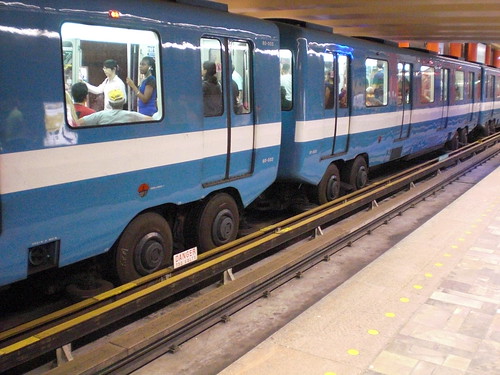
Good news for Montrealers living in the East end of the city.
According to Radio-Canada, the province will announce Friday morning at 10 a.m. their intention to extend the metro system’s blue line beyond the St.Michel terminus.
The province plans on adding as many as five stations to the east, covering a distance of six kilometers all the way to the borough of Anjou.
The AMT had requested this extending back in June, and current transport minister Sylvain Gaudreault mentioned that the province was in favour of the project.
The last extension project of this kind took five years and eight hundred million dollars to realize.
It was the adding of three stations to the orange line towards Laval.
The possibility of extending the yellow line past the Longueil terminus is also expected to be on the table at tomorrow’s meeting.
STORY WRITTEN BY: Audrey Folliot
FLICKR PHOTO BY: Andreas Rammelt
New climate-change action plan for Montreal
The city now has two climate-action plans, as more plans to cut pollution linked to climate change were made public on Thursday.
According to the Gazette, the plans include changes to public transit, the energy efficiency of municipal buildings, driving practices for municipal employees and reducing the use of heating oil.
However, city executive committee chairperson, Josée Duplessis says that even with the new plans in place, it will be a colossal challenge to meet the goal of reducing greenhouse gas emissions by 30 per cent by 2020 compared to 1990.
To improve service and cut emissions, chairperson of the STM, Michel Labrecque, has said new, bigger métro cars are being ordered, and electric buses will be tested.
The city is also planning on creating wider sidewalks and improving bike paths to encourage walking and the use of bikes.
Duplessis said that making even small changes, everyone- including citizens - can make a differences.
Pages



Staff Login | Advertise | Our Location | RSS | Contact Us
