RSS
Kurt Vile and The Violators played at Théâtre Beanfield in Montreal for their Been Good to Me Tour

For more than two decades, Kurt Vile has carved out a space as one of indie rock's most distinctive songwriters. Blending folk-rock and slacker charm, the Philadelphia musician has built a devoted following with a sound that is both deeply introspective and effortlessly loose. Backed by longtime collaborators, The Violators, Vile has also earned quite the reputation as a live performer. His shows never sound rushed or over-rehearsed, but unfold naturally. Songs stretch and evolve beyond their studio versions, making even longtime fans hear them differently. This spirit fully defined Kurt Vile and the Violators' June 17th performance at Montréal's Théâtre Beanfield, on tour for the release of their new album Philadelphia's Been Good to Me.
Vile opened the show with a few familiar favourites that I almost didn't recognize. “Check Baby” and “Hey Like a Child” weren't played straightforwardly but were sprawled and liquid. These new arrangements gave the songs a breath of life, in spite of making them a bit harder to sing along to. Vile’s sound moved through time and space fluidly, rippling across the room and into my ears; warm, inviting, and soul-filled.
Kurt Vile is one of those guys my dad and I can bond over. He’s unpolished, but has this unassuming charm that is completely captivating. Standing on stage beneath that hair he looks like such an unlikely star, yet his presence swallows up the room entirely. About halfway through the show, The Violators took a break and Vile went solo. He had an incredible command of the room with just his voice and a finger-picked acoustic guitar. All he had to do was add a “yeah,” or a “well,” in there and the crowd would go crazy. Watching Vile live felt like what I imagine seeing a stripped-back Bob Dylan might have been like.
If you're the type of person who likes “all types of music” then this guy is for you; folk-rock with flares of alt-country and indie rock, with an edge that's raw and gritty like the streets of Philadelphia. He debuted some songs off Philadelphia's Been Good To Me which sounded great live. The heavy guitar on “Chance to Bleed” hit me in both my chest and my soul. Vile’s hazy guitar, conversational lyrics, and laid-back delivery were exemplified with “Rock o’ Stone,” perfectly capturing the show's warm and comforting atmosphere.
Overall, the level of confidence heard on the new album translated live. Band and audience alike were present and happy, and Théâtre Beanfield was a wonderful environment to close my eyes and sway from side to side. This show felt personal and heartfelt, like Vile was holding my hand.
Nouveau BCNR

Tuesday evening marked the first North American stop for Black Country, New Road on their 2026 tour – lucky for us, the first show was here in Montreal at MTelus.
To start the show, everyone arrived early to catch Horsegirl – a Chicago indie-rock trio consisting of Nora Cheng, Penelope Lowenstein and Gigi Reece. Their sound felt true to their album name, with a phonetic-like beat marching alongside iterative lyrics. The set was tight and playful, a perfect intro to a lovely evening with Black Country, New Road.
Although not directly following a new album release, this tour felt like an important point in their chapter post-Isaac Wood. It was recently announced that the beloved ex-frontman would be returning to the stage to join as the opener for Phoebe Bridgers’ upcoming tour. From a fans perspective, this feels like the symbolic first public run-in with an ex – sealing the fact that you’ve both moved on from the relationship and are doing well. And as for BCNR, they are doing extremely well.
The setlist mainly contained songs from their most recent album Forever Howlong, with an ode to the inspirational Big Star thrown in. This was my second time seeing Black Country, New Road live, the previous time being their tour of Live at Bush Hall in Australia. Both times, the sheer amount of talent from each member has amazed me – this show was no different. Rotating through different leading vocalists, instruments, ranges, and tempos, it felt like watching a mini-orchestra perform. Comfortingly classical, they play with a modern grunge sound with captivating novella-esque lyricism. Throughout the set they played (in various successions) the saxophone, flute, accordion, clarinets, keys, base with a bow, banjo, acoustic guitar, lute, violin, and drums.
The sound always came through clear and synchronized, with their harmonies perfected and tight crescendo endings. It’s not so common that you see three equally talented female musicians leading the stage so effortlessly, each bringing a slightly different style to their songs yet all within the scope of what is so recognizably BCNR. As a female fan, it’s inspiring to see how the band has transformed over these past few years, and the ways in which Tyler Hyde, Georgia Ellery and May Kershaw have stepped in.
This show really cemented that this is a group of good ass musicians, who know each otherwell, and truly just work as a band. Tyler alluded to this fact, stating that there is much more on the way for them – I’ll await eagerly for news.
The night ended swiftly, with a parting “Free Palestine” chant, many smiles and cheers, and a wholesome feeling of togetherness. I wish them the best on the rest of this tour and will wait eagerly to welcome them back to Montreal soon.
A Music Lover's Guide to this Year’s Francos de Montréal
In a couple of days, Montreal’s summer festival season kicks off, and not a moment too soon! Don’t get me wrong, I appreciate the winter and spring-time festivals for keeping our beautiful city alive as we all hibernate, but nothing compares to sunny days spent singing songs outside with complete strangers, all bound together by our love for music. In Montreal, our festival season starts with the Francos de Montréal, an eight day festival putting the spotlight on Francophone music. Personally, this is my favourite music festival our city offers. There is so much local talent and every genre is included, making sure that everyone gets to leave having found a new band to add to their Bandcamp wishlist. This year marks the 37th edition of the festival and the lineup is insane. Here is a list of 10 shows that I think everyone should go see, most of these are free but a couple are not so make sure you go to the Francos’ website to get your tickets if needed!
Robert Robert (June 12, 10:30PM @ Pub-Brasseur De Montréal)
Helping me discover new local talent is one of the things Francos does best. This year that came in the form of Robert Robert. His 2025 album BOOST is full of energy and hope, with beats perfect for dancing and lyrics that tell listeners to just enjoy life, it is the perfect summer soundtrack to play at Montreal’s first summer music festival. Catch him on the opening night of Francos to dance and take life by the steering wheel.
Favourite Track: "KIA RIO"
FFO: Preston Pablo, One Direction
Ariane Roy (June 13, 9pm @ Rogers Stage)
As her fans describe it, this is Hot Québécoise Music at its finest. Ariane Roy’s blend of indie pop and soul is made for singing your heart out and dancing. From winning the Prix Félix-Leclerc back in 2023 -- an award given to artists every year for originality, stage performances, and potential across international audiences -- to launching her album Dogue, and coming out to support Lou Adriane Cassidy during her Rogers Stage performance at last year’s festival, Ariane Roy is no stranger to the Francos. In fact, the Francos are made for artists like her, those who are talented and those who appreciate the very core of French music. Her connections and adoration for all the other incredible, young Québécois musicians that we love is something to admire. Ariane on that big stage is not something you want to miss.
Favourite Tracks: "Si je rampe", "Âmes Sœurs"
FFO: Feist, Marilyne Léonard, Museums
BAIE (June 18, 7PM @ Spotify Stage)
This Acadien pop band is sure to make people move their feet. Hailing from Petit Rocher, New Brunswick, BAIE is a 4-piece made up of sunshine filled harmonies and shimmering instrumentals. Their brand new album La tête a ses raisons, released on Du Prince Records on June 5th, is a mix of up-beat disco songs and heartfelt ballads. With sweeping synthesizers, guitar and keyboard riffs reminiscent of the Rolling Stones, and sweet vocals, Chloé Breault, Matt Boudreau, Marc-André Boudreau and Maxence Cormier are sure to make you feel good at that Spotify Stage.
Favourite Track: "C’est l’amour"
FFO: Les Hay Babies, Fleetwood Mac
Choses Sauvages (June 18, 8PM @ Loto-Québec Stage and 11:59PM @ Vino Disco)
To anyone paying attention over the past decade or so, this band needs no introduction! Choses Sauvages seems to have taken Quebec and Europe by force with their disco punk magic. Having witnessed their album launch party for Choses Sauvages III back in April of 2025 at Club Soda, I understood that their stardom is undeniable. It takes a special gift to make an entire dancefloor move as if it was one entity, however this is a gift that Félix Bélisle, Marc-Antoine Barbier, Thierry Malépart, Tommy Bélisle, Philippe Gauthier-Boudreau, and Charles Primeau have mastered. Formed in Saint-Eustache back in 2013, this band has grown and developed a sound that is impossible to ignore. Whether you go see them outside on the grassy lawn of the Loto-Québec Stage or for free later that night at Vino Disco, make sure you are wearing comfy shoes so you can jump around and dance along to this electrifying band. Seriously, if you have not had the chance to see them due to their shows always being sold out, take advantage of this free show and let your mind get blown.
Favourite Tracks: "Apophis", "Chambre d’écho"
FFO: Daft Punk, Tame Impala, Delta 5
Marilyne Léonard (June 19, 6PM @ Loto-Québec Stage)
Marilyne Leonard was introduced to me back in 2022 when she performed on the Rogers Stage at the Francos. Wearing a pink denim jumpsuit and covering Britney Spears, I immediately knew she was uber cool and I am so glad to see her name on the bill for this year. Since her 2022 album Vie d’ange we have been given 3 singles, each with the same groovy energy and lyrics that are at once incredibly authentic and cleverly funny. Her mix of indie and hip hop is pure fun, with songs like “Mirage” that are perfect for sing-alongs. Wear your favourite denim vest and bring your friends to sing along to her set.
Favourite Tracks: "Mirage", "Quand tu parles"
FFO: Ravyn Lenae, Lola Young, Paramore
Marie Céleste (June 19, 7PM @ Rogers Stage)
Tout ce qui brille is Marie Céleste’s debut album, released on Bravo Musique back in March. What starts off as a fast-paced whirlwind slows down with the beautiful, reminiscing “2 goélands”. Tout ce qui brille is an album that melds all sorts of genres together, with hopecore lyrics and fun call backs. It makes total sense why this band is nominated for the Prix Félix-Leclerc. Their song-writing and ability to perform a concoction of genres makes them an easy choice to go see on stage. Simon Duchesne, Philippe Plourde, Olivier Tremblay, Zachary Tremblay and Guillaume Sliger may have started this band in Alma, Quebec but they truly embody the beautiful complexity of Montreal musical landscape.
Favourite Track: "Ciao bye bonsoir!"
FFO: Elton John, Harry Styles
Héron (June 19, 7PM @ Cinquième Salle, Place des Arts)
Mixing traditional Quebec folk music and neo-soul, Verger by Héron is a love letter to Quebec in album form. Released in April on Big in the Garden, the Verger album launch here in Montreal is sure to be a beautiful night at Place des Arts. Heron’s poetic lyrics, rhythmic spoons, flutes and scatting solos will fill la Cinquième Salle with pure and sweet Québécois sounds, blessing everything with his sugary voice. Make sure to catch this tour as it passes through town and maybe go check him out at the Festival d’été de Québec (FEQ) in July.
Favourite Track: "Bonaventure"
FFO: Harmonium, Yves Jarvis
Vanille (June 20, 6PM @ Loto-Québec Stage)
Fans of my radio show know that Vanille is played all the time because her enchanting, high-pitched voice is perfect to ease everyone into an early Sunday morning. Her latest album Un chant d’amour is full of that same sweet, haunting voice and retro sounds that her fans have grown to love. Released in October of 2025 on Bonbonbon Records, her songs are perfect for holidays spent with your bae and slow dances by the fire. With a voice made for lullabies and love songs, people who don’t even speak French can appreciate her voice as an alluring instrument in the song. While entrancing love songs are her forte, her 2021 debut album Soleil ‘96 proved just how wide this Prix Félix-Leclerc finalist’s range is. I cannot wait to sway and dance along to her timeless voice.
Favourite Tracks: "Carte du ciel", "Lune d’argent"
FFO: Joni Mitchell, pomme, Laufey
Aupinard (June 20, 7PM @ Rogers Stage)
This French artist has taken Paris by storm with his debut album spleen. social club. Released in late April 2026, it’s a mix of Bossa Nova and R&B, with poetry rapped over infectious beats. Aupinard already sold out 2 shows on April 2nd and 3rd at the legendary Salle Pleyel where iconic musicians like Miles Davis, Oscar Peterson and newer favourites like Mac Demarco and Zara Larsson have played. The fact that this new star is playing for free here in Montreal is something we should not take for granted. Listen to his album and come on out to see this cool breakthrough artist, you won’t regret it.
Favourite Tracks: "ciel azur", "ton ombre ne revient pas"
FFO: Bad Bunny, Stromae
Malaimé Soleil (June 20, 8PM @ Club Soda)
Club Soda will be lit up on June 20th for Malaimé Soleil’s Montreal album launch. This Québec, QC band released their second album Fragile in March and it’s a great addition to the rock scene that’s been brewing in this province. There’s a little bit for everyone on this joyful 8-track record with fast paced drums, jangly guitar and a bass that gets everyone moving. Francis Leclerc, Vincent Deit, Antoine St-Onge, Alexandre Crépeau make a pretty fun group and the crowd is sure to be full of energy. Check them out and get ready to sing along to their catchy choruses. They’ll be joined by the effervescent synth-pop duo Fleur De Peau also from Québec City.
Favourite Track: "L'amour en sang"
FFO: Lumiere, The Smiths
Gigi Brown is the host of The Gigi Brown Experience on Sundays from 8-9am.
Dry Cleaning Could Probably Stay on Beat Through the Apocalypse
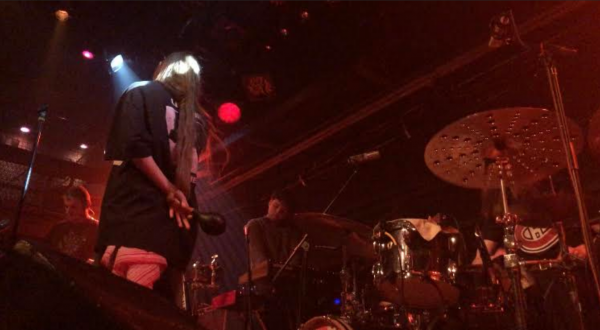
It is difficult to describe South London-based post-punk quartet Dry Cleaning without falling into cliché. One might be inclined to compare lead vocalist Florence Shaw's deep voice and spoken word style to someone like Courtney Barnett or Cate Blanchett. Some refer to Shaw’s previous job as a university lecturer to explain the tidiness of her stage presence. One might allude to the band’s clean, driving basslines, their stream of consciousness lyricism, or their technical proficiency as a group. What I will settle on, and what I only realized at the very end of their set, was that I had spent all two hours of my time supposedly reviewing Dry Cleaning’s concert dancing, with not a single note taken. Needless to say, it was a good time.
The sold out concert, held at Montreal punk mainstay Foufounes Électriques, opened with a very freaky and very fun experimental rock set by New York’s YHWH Nailgun. The four-piece band, who released their debut album Pounds in early 2025, played thirty odd minutes of music -- each song a jarring, two-minute burst of energy. In a matter of seconds, lead vocalist Zack Borzone went from flashing a dimpled, almost bashful smile to the crowd, to writhing on stage, the mic cable wrapped around his neck. By the end of their set -- a rumble of guitar, drums, and yelling punctuated by odd synths -- I was almost convinced that at least one of the players would stage dive, or break an instrument, or find some other way to channel the tension that had accumulated in the room over the course of those thirty minutes. But just like that, as soon as they reached the end of the last song, YHWH Nailgun left the stage with the same sheepish demeanour as teenagers leaving a high school band concert.
Almost half an hour passed before Dry Cleaning walked on stage (with drummer Nick Buxton in a Habs shirt!), and launched into “Sliced by a Fingernail” from their 2026 album Secret Love. At this point, all my note-taking hopes were lost, no thanks to my placement (quite happily) right in front of bassist Lewis Maynard’s amp, drumming my hands on the edge of the stage in time. I was disappointed that the band's set was laden with technical difficulties and interruptions that night, but in a way, Dry Cleaning’s ability to play along with the chaos was one of the most memorable features of their concert. When Maynard’s earpiece suddenly died and he could no longer hear the rest of the band, he got down off stage to play a whole song in the middle of the crowd, and I tried very hard not to seem starstruck.
My proximity to the band during the show, and the relative intimacy of the venue enriched the music quite a bit. If their lyrics often contrast insecurity with a kind of practised detachment, this tension becomes ever more emotionally arresting in a live setting. Seeing the emotion on Shaw’s face as she spoke in her characteristically blasé voice (“My only ambition in life is to grip the roots of your hair/ Just want to be liked/ Tin blades, earthen ware/ Flower brick painted in blue”), watching Buxton sweat through metronomic drum lines, all added to the unexpected tenderness of Dry Cleaning’s polished brand of rock.
When someone in the crowd shouted out “I don’t give a f—k!”; guitarist Tom Dowse immediately responded “We do!”
Notes from ECMA Week
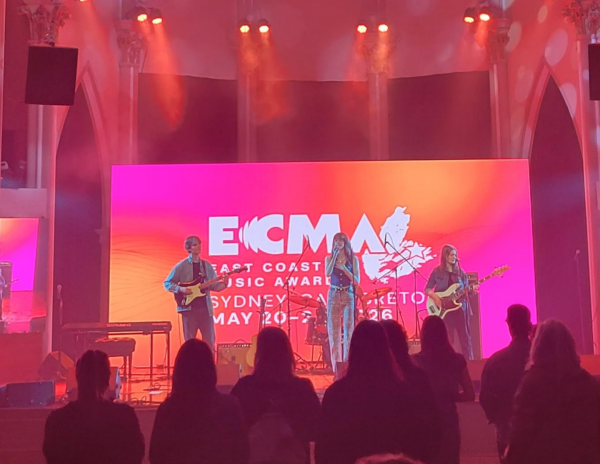
Occurring from May 20th to the 24th, this year’s East Coast Music Awards week was held in Sydney, Nova Scotia. A round-trip of 3000 kilometers, and gas prices nearing two dollars a litre, attending was far from a casual decision. Still, as a broadcaster with CJLO 1690 AM and host of Eastern Promises - a show dedicated to bringing the music of the East Coast to Montreal audiences - I felt the pilgrimage would prove worthwhile.
After two days of driving, I arrived in Sydney in time to pick up my media pass, check in to my hotel, and somehow prepare for the gala’s red carpet. Running mostly on caffeine and adrenaline I was directed to a small corner alongside reporters and content creators, all waiting for the artists to arrive. There was no clear system in place, as musicians randomly ambled towards us and it took a few awkward exchanges before everyone settled into a rhythm. At first the queries were of the stock variety: ‘How does it feel to be nominated?’ ‘What does this mean to you?’ but it quickly became apparent that many artists were looking for something more meaningful. The ECMAs, after all, are an industry machine and it was evident that many of the creators, not necessarily used to these types of proceedings, struggled to maintain their authenticity amid the expectations of performance. Thankfully I was able to recall details about the artists from my years researching for the radio show, allowing me to dig a little deeper when called for.
Some were exceptionally generous, willing to be candid about their perspectives, and their processes, despite the time constraints. Others were quite happy to provide pre-packaged soundbites. Neither approach was wrong. They would then shuffle off to have official pictures taken, refortifying their personas for purposes of enduring the moment. The gala, like most, was populated with industry types, including suit-clad label representatives, sponsors and media, yet, try as they might, the corporate exercise that is the ECMA spectacle gave way to an underlying atmosphere of sincerity; a testament to the unpretentious character Atlantic Canada is known for.
I had brought a box of business cards to help network in the traditional sense, and though I had it in mind to attend showcases and mixers intending to press palms, I found myself taking a less conventional route to create professional ties. I simply went with the flow. Sydney is a community of roughly 30,000 people and it wasn’t difficult to spot those on the street who were there for the week: the omnipresent lanyards were a dead giveaway. Given that Atlantic Canadians are known for being approachable, I was able to adopt a carefree manner with which to introduce myself and my show. Though this did not come naturally to me – I’m not particularly extroverted – the interactions felt more organic than the orchestrated cocktails and showcases created specifically for industry delegates.
I ended up making connections in unlikely places: Waiting in line outside clubs, browsing in bookstores, grabbing a coffee, and weaving through crowds at concerts. Nothing felt transactional and it always started with ‘How’s it going?”
Seeing as it took many participants varied levels of effort to attend the ECMAs in remote Sydney, the logistics of getting to the event became a natural point of conversation. Yet what seemed to endear me to people - what distinguished me - was the fact I had travelled from Montreal. Montreal, as it turned out, was the key.
It’s no secret that our city has cultural currency among the rest of Canada, let alone the East Coast. Despite its language politics, high taxes, rising cost of living, and reputation as a city where touring musicians are liable to have their gear stolen, it still evokes a mystique to those in art circles. Curious about this perception, I began asking those on the red carpet what their thoughts were regarding Montreal. Though it may have appeared that I was angling for praise, my intention was more analytical: I wanted to get a sense of the city’s issues to touring musicians as well as where it currently stood in the national imagination. I also wanted the approach to turn the tables on Atlantic-Canadians, reversing the dynamic when it comes to artistic legitimacy.
The common perception is that the hard scrabbled East Coast of our country is, culturally and economically, on the peripheral compared to the metropolises found in Quebec and Ontario, but I believe it is a narrative that’s misconstrued or, at the very least, outdated. While Montreal still holds an energy that continues to inspire, its rise in unaffordability and ongoing gentrification has whittled down its accessibility to artists.
Paradoxically, the province’s erratic history contributed to low housing costs that attracted full-time artists. But with stabilizing markets at the turn of the Millenium its reputation as an affordable haven for creatives slowly surrendered to the few who had either financial backing or other forms of support. As a result, Montreal’s music community has been significantly divided by artists with economic stability and those juggling employment while surviving project to project.
Conversely, this has put the East Coast in an enviable position. Smaller centres and comparatively affordable living costs have allowed many musicians to keep making art within strong, community-oriented scenes. An increasing number of artists from within Canada and abroad have moved to St. John’s, Halifax, Charlottetown, and other smaller cities and towns to pursue their careers with less financial pressure. Strong regional infrastructure also supports high-quality recording studios, production resources, and distribution networks.
Yet the greatest game changer has been technological. Geography remains the East Coast music scene’s greatest obstacle — touring across vast distances is expensive and exhausting — but social media and digital distribution have fundamentally altered what is possible for artists in the region. Musicians no longer need to relocate elsewhere to expand their audiences. Artists from Cape Breton, rural Newfoundland, or Prince Edward Island can now build dedicated followings across the globe while remaining firmly rooted in their communities.
That, ultimately, may have been the most striking realization of ECMA week: Atlantic Canada is no longer merely exporting talent to larger cultural centres. Increasingly, it’s becoming a destination in its own right — a place where artists can build sustainable careers without sacrificing community, identity, or quality of life.
I had plenty of time to reflect during my sixteen-hour drive back to Montreal. In the end it was the experience outside of the ECMA events that was the most rewarding: the chance to spontaneously meet brilliant and considerate artists committed to creating work that brings beauty and honesty into the world, at a time where we especially need both.
The ECMAs were not simply about making connections or exposure to the industry. They became an opportunity to affirm long-held assumptions about where meaningful artistic culture is created in Canada — and how we can continue to challenge and reimagine these long-held misconceptions.
I’m already looking forward to Moncton in 2027.
Donald Roberge is the host of Eastern Promises, an exploration of the music of Eastern Canada, on air every other
Sunday from 8-9pm
A Taste of Talent with a Side of Tartan: Pinkpantheress at L’Olympia

Photo Credit: ZaneBurkoMedia
The city towered beneath the cold weather in the midst of May–an unfortunate but regular occurrence during the Montreal spring. Yet, splatters of an unspoken but mandatory tartan, red and blue painted the streets, brightening the ordinarily bleak sidewalk of rue Sainte-Catherine in preparation for UK singer-songwriter and producer PinkPantheress. Shivering hands gripped onto umbrellas in line, awaiting the OK to be welcomed into the contrasting heat of the Theatre L’Olympia and to rush to secure their barricade spots.
I, as per my usual bad habit, arrived at the venue at the last minute, sharing my brewing excitement with the rest of the crowd. As I hurried to secure as solid of a place in the pit as I could, despite my tardiness, a dirty – filthy even – bass began ringing throughout the venue.
Cece Natalie—Pinkpantheress’s opening act—writes and produces all of her own music, something she has been doing since the age of 15. Accompanied by her DJ Ali, Cece’s bubbly aura quickly turned seductive as she strutted along the stage with a pair of black angel wings on her back. Cece represents a new wave of a genre on the rise within the digital world, with her autotuned vocals reverberating over a beat that is almost impossible not to move your hips to. Without a doubt, “Exitin” and her remix of “Gorgeous” with Isabella Lovestory will be played the next time I’m getting ready to go out with the girls. Her sound felt reminiscent to Slayyyter or lil hero, leaning into the electro-pop ability to boost your confidence tenfold while listening. Towards the end of her set, a cake was brought out to celebrate DJ Ali’s upcoming birthday, with everybody singing a heartwarming “Happy Birthday,” breaking the ice just before our sweat-covered bodies moved and danced against one another moments later.
Pink’s music is perfect to see live, the energy radiating from her songs and emanating throughout the crowd creates for a contagiously vibrant atmosphere. I went into the show expecting to be swept away by the performance, but I was even more blown away by the crowd itself. Not only did they bring spirit and vigor, in the way Montreal crowds always do, but they also brought looks. From my left to my right L’Olympia was riddled with style, each unique to that individual. However, my awe was quickly cut short as dancers filled the stage, with the lights shining a purple hue as videos of Pinkpantheress began flickering on the big screen. Pink stepped on stage with a red cardigan on her shoulders, left open with the exception of a single button, donning a royal blue tube top underneath, and a pair of trousers layered under her signature tartan patterned skirt. Within the first 5 chords of Pinkpantheress’s recent hit “Stateside,” she had the crowd in the palm of her hands.
With each one of her songs being a handsome 34 seconds long, she had an extensive setlist of 28 songs. Playing a good variety of songs from all four of her albums, she transitioned from some of her more nostalgic and lyrically vulnerable songs like “I Must Apologize” and “Last Valentines” to her more flirtatious and cheeky ones, like “Tonight” and “Romeo.” Being a personal fan of Pink’s since her first project, to hell with it, I was refreshed to hear her play a number of b-sides and singles from it and can almost guarantee that the exact moment I lost my voice was when the guitar for “Attracted to You” graced my ears.
From the dancers to Pink herself, the show oozed with drive and spirit. Each performer dripped with talent in a way that made everyone leave feeling inspired and filled with a sudden urge to create something themselves. You could feel the hard work put into the set, the choreography, and the songs– yet, they still managed to make it feel fun and effortless, something which is no easy feat. You could tell that this was no longer the same woman who met each stage with a purse on her shoulder.
The Devil Still Wears Prada
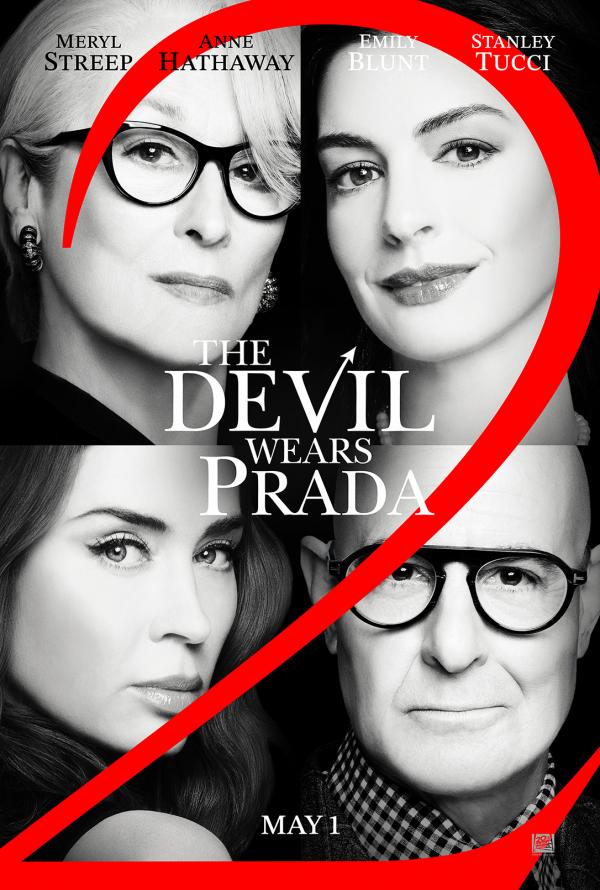
In my anniversary review for The Devil Wears Prada, I expressed my hesitancy regarding the movie’s sequel. Although it certainly cannot hold a candle to its predecessor, I am pleased to report that The Devil Wears Prada 2 is an enjoyable movie with a bleeding heart at its core.
The movie takes place twenty years after Andy Sachs (Anne Hathaway) left her position as an assistant to Miranda Priestly (Meryl Streep), the formidable editor-in-chief of Runway magazine. Andy is now an established investigative reporter, and in the opening scene, she is set to receive a major award for her work. In the seconds before her speech, she (and all her colleagues) received a text message notification that their entire newsroom was being laid off—a situation eerily familiar to journalists working across both legacy and independent media today.
Meanwhile, the past two decades have immensely changed the atmosphere of Runway. Once the world’s foremost fashion magazine, Runway now struggles to maintain relevance. Consumers no longer flip pages of print magazines for directives on how to dress. Consumers barely even click to read articles posted on the Runway website. Even Miranda’s status as the ultimate gatekeeper of high fashion has dwindled. While in the first movie, Miranda carelessly tossed her coats onto the desk of her degraded second assistant, she must now hang outerwear herself on a rack at the corner of her office. Plus, Miranda can be cancelled now: the narrative catalyst is Miranda facing significant backlash for publishing a puff piece about a brand that uses sweatshop labour to manufacture its clothing. This backlash is apparently so catastrophic that not only do Runway’s top advertisers threaten to cut ties with the magazine—a revenue loss which would debilitate the already floundering magazine—but also kneecap Miranda’s promotion to Head of Global Content at Elias-Clark, Runway’s parent company.
Compared to the sobering reality of Andy’s initial predicament, I found myself irritated by the implausibility of this apparently cataclysmic editorial error. If no one reads Runway anymore, would people really react so strongly to Miranda failing to screen a random puff piece? Runway is a thinly veiled stand-in for Vogue magazine, and a quick trip to Vogue’s website shows recent articles about brands like Zara, Nike, and H&M, all of which have faced serious allegations of human rights violations in labour facilities. Even luxury brands like Versace, Gucci, and (yes) Prada are being investigated by Italian authorities for exploitative labour practices. Would the consequences of Miranda’s puff piece mishap be so significant that she must bend to the will of her couture advertisers, offering them free advertising space in upcoming issues and website articles? I really don’t think so.
Well, at least this set-up serves its purpose of reuniting the cast of characters we know and love from the original Devil Wears Prada. Andy is hired by Runway as the new features editor, tasked with repairing Miranda’s image and reviving engagement with Runway’s editorials. Nigel (Stanley Tucci) is still working as the creative director of Runway, and immediately resurrects his role as Andy’s wise and benevolent guide. Emily (Emily Blunt) appears as a senior executive at Dior, one of the fashion houses that Miranda must appease after her puff piece debacle. Still headstrong, Emily has nevertheless also been snubbed by the deterioration of legacy media. Once singularly devoted to climbing the ranks of Runway, Emily pivoted to luxury retail because, she says, that’s the only sector of the fashion industry that still makes money. Strewn throughout the movie are many, many, many cameos: Donatella Versace, Lady Gaga, and Amelia Dimoldenberg of “Chicken Shop Date,” to name just a few.
My favourite aspect of the original Devil Wears Prada is its earnest adoration for the craft of fashion. This sequel cares less about fashion—unfortunately, the costumes were disappointing—but it cares deeply about journalism. The devil of this movie is Jay Ravitz (B.J. Novak), the newly appointed head of Elias-Clark, who dresses like a millennial tech-bro and acts like a McKinsey intern who just learned the concept of downsizing and is bursting at the seams to try it. Jay Ravitz holds no regard for fashion or journalism and views Runway as a poor investment. His callous attitude places the entire Runway institution in true life-or-death jeopardy. The movie makes its distaste for Jay Ravitz abundantly clear. More than that, Aline Brosh McKenna’s frustration with the devaluation of journalists, the collapse of legacy media, and impending A.I. doom proves a fiery force that powers her slightly-jaded-but-still-glamorous world of 2026 high fashion.
Sure, The Devil Wears Prada 2 isn’t perfect. But it has some good laughs, every acting performance is spectacular, and above all, it cares. I mean, the producers hired an actual artist to paint an AI-generated meme. In my opinion, that alone should convince you to watch it.
Are riot police over deployed at Habs games? CJLO reports
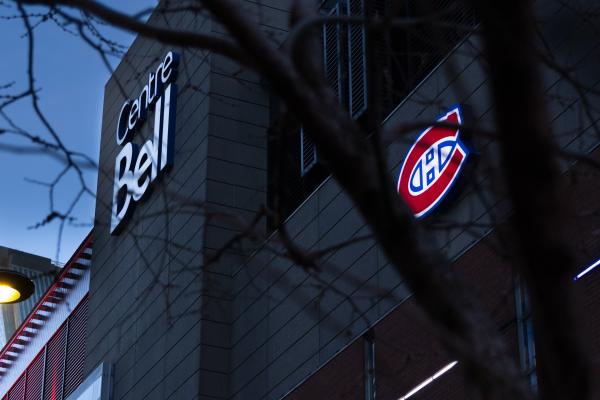
On Sunday May 3, the Montreal Canadiens defeated the Tampa Bay lightning to advance to the second round of the NHL playoffs. Jubilent celebrations followed, but the collective vibes downtown turned from celebration to fear in a matter of minutes. When the crowd of 100,000 plus fans reached the corner of Drummond St and Boul de Maissoneuve, they were met with lines of police in riot gear. Hundreds of officers initiated contact with shocked fans, beating them with batons, kicking them, and forcing them to run using their riot shields.
CJLO reporter Will Shoukri was on the scene. Hear his report of the events that followed and his investigation into the potential over-deployment of riot police at Montreal sporting events.
Dissecting DisXYn: Concert Review and Interview (feat. Miami Deathrow)
Mentally crawling on the floor with Lala Lala at L’Escogriffe
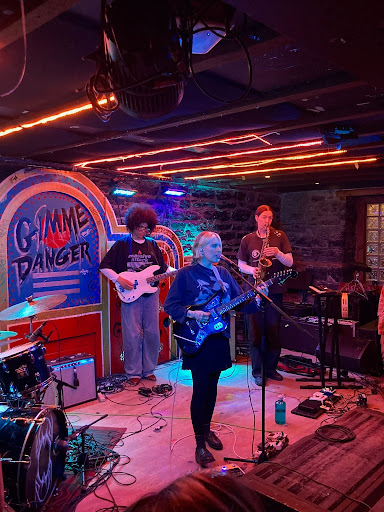
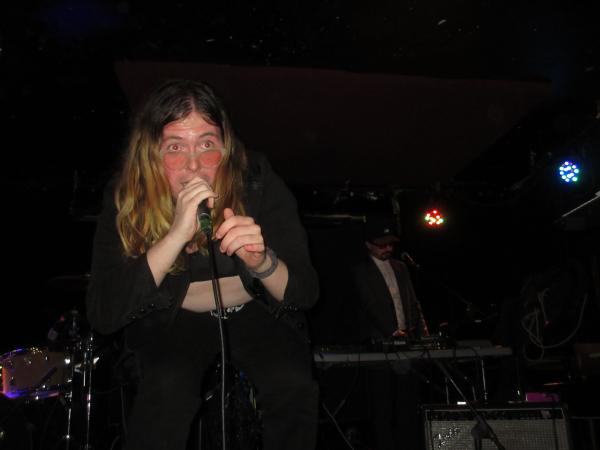
“How do you say ‘I’m pregnant’ in French?” Lillie West of Lala Lala asked us, “It’s probably like ‘I have’ or something,” the indie singer had just impressed us with her mediocre yet competent French. The audience chimed in with various pregnancy phrases, “yeah, I have that,” Lillie confirmed. Despite being four months pregnant while on tour, Lala Lala delivered a captivating and emotionally laden performance at L’Escogriffe on a chilly Sunday night. The pregnancy announcement clarified the self-imposed restraint of the ethereal indie singer; she stared the audience down with a stone blue chiselled face. She told us she couldn’t breathe properly, “normally I’m crawling around on stage, but I would suffocate,” to the fault of the little grubber sucking away her life force (her words, not mine).
The ethereal indie band is finishing up their East Coast leg of their tour for the new album Heaven 2. Opening for them was Minneapolis’ Mother Soki, an indie dream pop version of Ethel Cain with more texture and ethereal vocals. I felt like I was in a 2026 version of Twin Peaks, especially with the singer's pointed black stiletto boots (which she later took off for comfort). Flanked by two guitarists and a table full of midi controllers, synths, drum pads, and a laptop, Mother Soki filled the venue with ethereal indie pop for the growing crowd, some of whom she recognized from their concert last Halloween.
I’ve been a fan of Lala Lala since their debut album Sleepyhead, released in 2016. Their signature mermaid indie soundscapes have always thoroughly brought me into their world. Heaven 2 expands on that, opening the sonic landscape up to the windswept mountain tops of the Californian coast. This album was written as Lillie West searched for and ran from home, leaving Chicago and finding selves in London, Iceland, and the American southwest, eventually finding love in Los Angeles and learning to settle down. Heaven 2 is about shifting into stillness, amidst a rapidly changing world and vibrating layers of synth. The four-piece band created expanses of space packed with sound on stage, and each instrument had an array of synth pedals and waves of reverb. Lillie West expertly maneuvered the numerous vocal modulations she uses while their drummer impressively navigated between a drum pad and a traditional set with additional chimes made of keys and various strings of bells. I was extremely pleased that saxophonist Sen Morimoto was part of the touring band. The shattering screams of a saxophone became the meaty difference between recorded tracks and the live experience, frequently bringing us to the peak and into the echoing ends of many songs. Underneath the full band were backing tracks of synthy beats and echoing vocals. This always catches me off guard. When I’m in the audience, I like to hunt for the origin of the sounds I hear, which guitar is bringing us this riff and how the bassist is moving their fingers across the frets. When there are backing tracks, it almost feels like there's a ghost on stage, an invisible USB underlying the live instrumentation. Granted, with the complex and intricately layered songs of Lala Lala, it would be difficult to take up all the sonic space that they do without pre-made tracks, so I laid down my hunting ears and let myself get awash with the emotion of live music.
Pages



Staff Login | Advertise | Our Location | RSS | Contact Us
