RSS
Head honcho resigns in Tunisia
 Tunisia's Prime Minister resigned on Tuesday.
According to the guardian, Hamadi Jebali tendered his resignation after his attempt to end a stand-off by forming a government of technocrats failed.
Jebali proposed a cabinet of technocrats to ease the tension brought on by the assasination of secular opposition politician, Chokri Belaid last February 6th.
On one has claimed responsibility for Belaid's death, which shook the country and left the government reeling.
Jebali vowed not to lead a new government unless he gets assurances about the timing of fresh elections and a new constitution.
Congress breaks as cuts loom
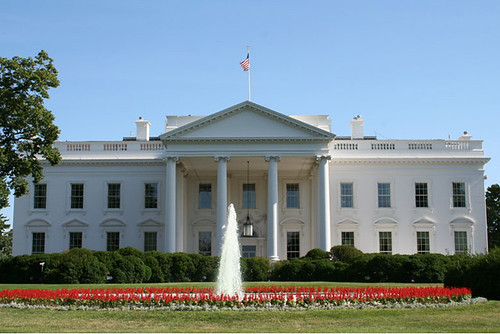
Staring into a wide range of cuts to federal departments, there doesn't seem to be a deal in sight.
As reported by the disability scoop, the automatic cuts will effect on March 1st unless congress acts.
People with disabilities will not be spared. The reductions are expected to affect everything from employment assistance to housing programs, education, mental health initiatives and research dollars.
U.S. President, Barack Obama, told lawmakers on Tuesday that the automatic approach of the spending cuts will hurt the U.S. economy.
The spending cuts were delayed from January. They were triggered in 2011 when Congress failed to reach a budget deal.
Flickr Photo by: U.S. Embassy Jakarta Indonesia
Ethnic minority or cultural community?
Controversy is growing around Bill 14 concerning how Quebec will define minorities.
According to the Montreal Gazette, a provision in the bill aimed at tightening language laws will see the term “ethnic minorities” replaced with “cultural communities.”
Ethnic minorities are protected under international human-rights law, but the term “cultural communities” is not.
Human-rights lawyer Pearl Eliadis says that by changing the term the government is avoiding acknowledging the existence of minorities in Quebec.
Spokesperson for the minister of Immigration and Cultural Communities Jonathan Lavalée says the change is to harmonize Bill 101 with other existing legislation.
He says the term is not modern or up to date.
Critics believe that with the change in wording Quebec is distancing itself from protecting the rights of minorities.
STORY WRITTEN BY: AISHA SAMU
CJLO News - February 19 2013
Hosted by: Gabrielle Fahmy
Stories by: Carlo Spiridigliozzi, Jenna Monney-Lupert & Nikita Smith
Produced by: Carlo Spiridigliozzi
Airline protesters clash with police

Airline workers clashed with police on Monday, kicking off a strike mandate.
As reported by Al-Jazeera news, ground staff and cabin crews for Spain's Iberia airline began 15 days of strikes.
The protests are in response of the company's intentions of laying 3800 workers.
The protesters clashed with police at Madrid's International Airport.
The walkout is expected to lead to 1200 flight cancellations over the next three weeks.
The company has found seating for 70 000 affected passengers.
Flickr Photo by: Deanster1983
Quebec & N.B. premiers meet to discuss pipeline
Quebec and New Brunswick premiers met in Montreal on Monday to discuss oil pipelines.
According the Montreal Gazette, Alberta’s premier David Alba has been trying to find ways to get the province’s bitumen to international markets and they may have found an in with Quebec’s Pauline Marois.
Marois’ spokesperson said the both leaders discussed Employment Insurance and pipelines at the Marois’ office.
According to the Canadian Press, the Canadian oil industry sees New Brunswick as a potential destination for Western Canada crude.
This is a project that would have to cross Quebec.
Marois and Alward announced that a working group would be created to observe/overview the TransCanada Corp. proposal.
As reported by the Montreal Gazette, the TransCanada Corp. says it's technically and economically possible for it to convert an existing, underused natural gas line to bring oil from Western Canada to Quebec and New Brunswick.
The Canadian oil industry is still waiting on the United States’ decision to send oil sands crude to the Gulf Coast through the Keystone XL pipeline.
STORY WRITTEN BY: JENNA MONNEY-LUPERT
PQ efforts to build ties with Anglophones is failing says poll

A recent poll suggests the P.Q.’s efforts to build ties with Anglophones are not going as planned.
According to CBC News, an EKOS poll finds that Quebec Anglophones don’t trust the P.Q.
While 84 per cent believe the minority government would put in further limits on the English language if it won a majority.
The P.Q. ranked lower than the Green Party, Québec Solidaire and even “other” when it came to anglos deciding who to vote for.
42 per cent even stated that they have considered leaving the province in wake of the P.Q. victory last September.
Asked who they would cast a vote for if an election were held, only 1 per cent said they would vote for the P.Q.
Flickr Photo by: Montreal metropole culturelle
End of federal program worry police forces across Canada
 A program started by the federal government could see a cut to police forces across Canada when it ends in March.
Known as the Police Officer Recruitment Fund and armed with a budget of $400 million, the program was a way to aid officers in each province with crackdowns on what they felt was important. Some money went to anti-gang and cyber crime squads, as well as increasing aboriginal police forces.
According to the Gazette, the program was started in 2008 with the goal of increasing Canada’s police forces with 2,500 more officers.
However, with the program coming to an end, many police chiefs across the country are worried about what the lack of funding could mean for their departments.
The Nishnawabe-Aski police force, one of North America’s largest aboriginal police departments, will probably see a cut of 11 officers. The 150 officers working for the department police 34 communities in poor, small town areas in the far north of Ontario.
The cut would be a critical loss for the aboriginal force and would mean that they would need to withdraw services from some small communities.
February 18th, 2013
Hosted by: Aisha Samu
Stories by: Natasha Taggart, Carlo Spiridigliozzi, Kurt Weiss & Nikita Smith
Produced by: Carlo Spiridigliozzi
Hundreds gather to denounce Bill 14
A few hundred people gathered across from McGill University campus at Premier Pauline Mariois’s Montreal office to protest against Bill 14 yesterday afternoon, as reported by The Gazette on Sunday.
The rally was organized by an organization called Put Back the Flag and a newly formed rights group known as Unity.
The Parti Quebecois’s proposed new language law is meant to tighten up Quebec’s French-language charter.
Among other things, the law would take away bilingual status of districts whose English-speaking population falls below 50 per cent and force CEGEPs to favour English-speaking applicants.
STORY WRITTEN BY: NATASHA TAGGART
Pages



Staff Login | Advertise | Our Location | RSS | Contact Us
