RSS
Nirvana The Band The Show The Movie: A Review

Nirvana The Band The Show The Movie (Currently In Theatres Check Your Listings)
Dir: Matt Johnson
Runtime: 102 Minutes
Having no idea or concept of the ideas behind the premise of Nirvana The Band The Show from creative duo Matt Johnson and Jay McCarroll, led me to do a deep dive into the content of the internet webseries before the release of the film. I could not fathom what I would end up watching, but from the get-go, I was hooked and locked in. What can be described as the absurdity of Bo Burnham’s crooning song internet comedy, Johnson is the more outlandish, and McCarroll is the more reserved, serious as two roommates who create Nirvana The Band. The premise is simple: to get booked to perform at the “elusive” venue, The Rivoli in Toronto. The catch is that they have never written a song, and they have never contacted the management team of The Rivoli to get booked. They use more guerrilla-style warfare hijinx to try to make their presence known to no avail, it seems, after all these years. Each episode parodies a famous television show or movie from Frasier, CSI Miami, Lost and The Wire. This spoke to my popular culture lexicon, and I was transfixed as I got the meta humour of the series. The Canadian content of the series shines through when, in an episode, both Matt and Jay meet with Ronnie Hawkins from The Band to get him to release the rights of the title The Band to them, leaving out the fact that Nirvana is also part of the title. Too bad Courtney Love is unaware of the band’s existence. For this iconic duo, a part of Canadian Pop Culture, there needed to be the perfect send-off. Cue Nirvana, The Band. The Show. The Movie. It made its debut earlier this February as part of the Cineplex Mystery Movie Monday showcase.
Even though I haven't seen the post-web series, the movie picks up where old habits die hard as the duo once again attempts their fate at getting booked at The Rivoli. How are you going to do this in a motion picture? Do it with the most outlandish stunt coordination to get the attention of all of Toronto by skydiving off the CN Tower into the Rogers Center Skydome when it is open during a baseball game. Not to give away the ending to this play, but the creative forces go back to the drawing board, and this time it is a time machine that the outlandish Matt hatches a la Back To The Future, which Jay starts to question when it is enough with the hijinx plans to call it a day and possibly quits. Jay starts looking at booking solo gigs at an open mic slot in Ottawa and is amazed by how easy he can get in, thinking it’s a serious gig after all these years. All I can say is that Matt goes through with his plan to make a time travel machine, which involves a trailer and one last bottle of Orbitz beverages, cue the Canadian central pop culture reference, and the duo end up time-travelling back to 2008 when both enter the RV, not suspecting the other one to be there.
The meta culture of 2008 is on full display as both Matt and Jay discover that the bottle of Orbitz, lightning in a bottle, is the key to the time machine and in 2008, it is a hot commodity that Matt is flush with. Matt and Jay go to their 2008 apartment, inevitably running not only into the bottle of Orbitz but also their younger selves, henceforth the playing with time travel paradox of codes and rules. Some interactions between their past and the future self sees Jay changing the course of his destiny by writing something on the whiteboard that will alter the future. The duo comes back to a different 2025.
Jay's alternative plans have worked so it seems because he is now a very successful musician living in a mansion, and Matt is the drummer in a Jay McCarroll cover band. Matt confronts Jay at a concert, but Jay says he doesn't know Matt and has no knowledge of the time machine. Feeling that this is the best possible outcome for his life, Jay smashes the last bottle of the discounted Orbitz beverage so the time machine will no longer have the lightning it runs on. Jay finds out how lonesome and hollow being in a successful band can be and decides to play a game with his bandmates that leads to a tragic accident. Now on the run from the law, Jay realizes that he made a crucial mistake playing with time and needs Matt’s help for the duo to go back to 2008 and fix their mistakes.
Nirvana, The Band, The Show, The Movie continues to have all the meta-cultural references that the web series was known for, being a strong comedic focal point and being clearly Canadian. What I think the movie integrates well is the participation from actual people on the streets who might be aware or new to the antics of Matt and Jay. Matt and Jay have to be an iconic Canadian friendship duo, for better or for worse, and this movie provides the perfect epic conclusion to their friendship. The film goes to prove there is no Jay without a bit of Matt in your life.
⭐⭐⭐⭐/⭐⭐⭐⭐⭐
Remi is the host of At The Movies along with regular Co-Host Danny Aubery every Tuesday morning from 9-10 AM only on CJLO 1690 AM. They cover local film festivals, have interviews with directors and actors, and talk about a new film or the classics. They also cover the iconic sounds of present and past film scores and soundtracks. Follow Remi on Letterboxd.
Are You Ready (Ready For The Time of Your Life): Laundry Day in Montreal
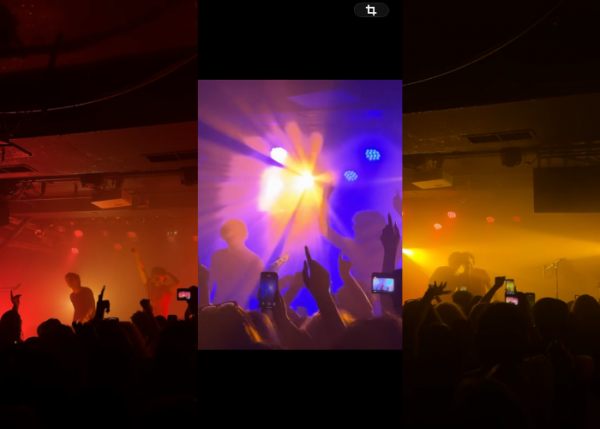
Two nights ago, I learned that freedom floats through musical decades. When I was younger, I could find it within the hearty bellows of texan-native Janis Joplin. As time passed in the lyrical world, freedom filled its walls with reflections of blistering rhythmic palettes.
When I faced the February cold after a 7-hour shift, New York-based band Laundry Day became the chicken soup to my soul. As I stepped into Café Campus, the walls rang with anticipatory chatter and echoes of 4 Non Blondes serenated the atmosphere. Just two days prior, my friend Kaitlyn and I rode the train home when she told me they were in town. Who knew that 48 hours later, we'd be swaying around to the sounds of friendship?
As the night wound down, vocalist Jude Lipkin blistered our hearts in melodic warmth during “FRIENDS” from their 2019 album HOMESICK. Inviting the crowd to hold those they cherish close. An ode to the people that pull us through, those we are lucky to grow up right beside.
Was I ready? Not much could have prepared me for the perpetual blast that was Laundry Day.
When the lights went down, Montreal drowned in ear-splitting melodies. In harmony, we bumped our heads and waved our bodies to the songs of EARWORM, released in October of last year. For a brief moment, my fears dissolved when I saw you in the dizzying lights. When your arms coddled the microphone with the young adult ecstasy that came out of you, as your soul hovered around the room. Your cheeks were flushed with warm exhaustion, and your smile welcomed the crowd. Into the night, we were invited to let go, wave goodbye and embrace. The time of our lives began when none of us were ready. Yet, with Laundry Day by our side, we knew how it went down that night. We couldn’t stand jaded on the hills of musical thrills by heavily enthralling basslines and striking lyrics. Instead, like the open road, freedom found its shape in rhythmic grooves and whimsical beats. Just as we had connected, it was time for the band to depart. We were just the fourth stop on The Time of Your Life tour.
Sawyer Nunes, we heard you tearing it on drums and singing the woes and joys inside you. Henry Pearl, we melted at your quiet, misty sound as you gently plucked the bass strings. Under your mustache revealed so much more than you let on. Henry Weingartner, how can we forget your compelling guitar on the edge of musical mania? Jude Lipkin, you have marked that stage so profoundly; you engaged in the lyrical frames of your mind.
Thank you for stepping out onto the edge. Montreal loved you!
An Interview with Will Oldham
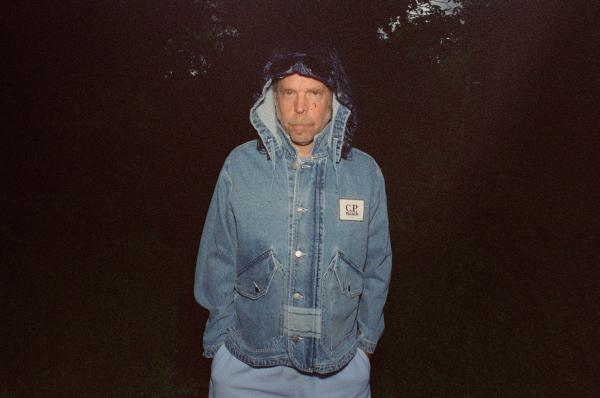
On The Alley, host and music director Aviva sits down with Will Oldham of Bonnie "Prince" Billy to discuss his new album We Are Together Again, out March 6, 2026. Listen to them chat about songwriting in this political moment, Louisville music, connecting to childlike wonder, and more. You can tune in to The Alley, every Friday at 11AM.
At The Movies: An Interview with Stefan Verna
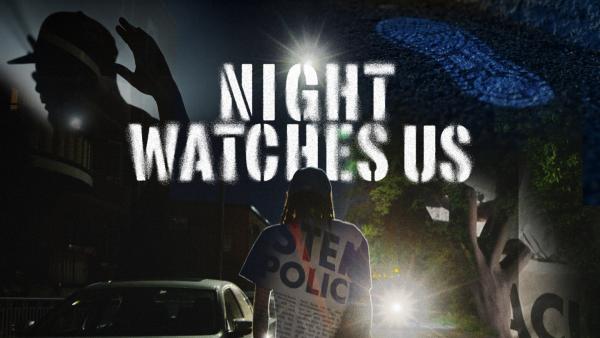
The National Film Board of Canada is celebrating Black History Month with a spotlight on documentaries and films in their Black Communities in Canada, a free collection of films awarded by black filmmakers, creators, and allies of the black community, which detail a rich history to better understand the present. As part of this collection would be the documentary Night Watches Us from Stefan Verna. Through documentary styles, street art, and spoken word, Night Watches Us examines the systemic forces that caused a young man’s tragic death. On today’s show, we speak to director Stefan Verna.
Remi is the host of At The Movies, along with regular Co-Host Danny Auber,y every Tuesday morning from 9-10 AM only on CJLO 1690 AM. They cover local film festivals, have interviews with directors and actors, and talk about a new film or the classics. They also cover the iconic sounds of present and past film scores and soundtracks. Follow Remi on Letterboxd.
The Long-Awaited Steeple / Plus! / Palomine Crossover Episode at L'Esco
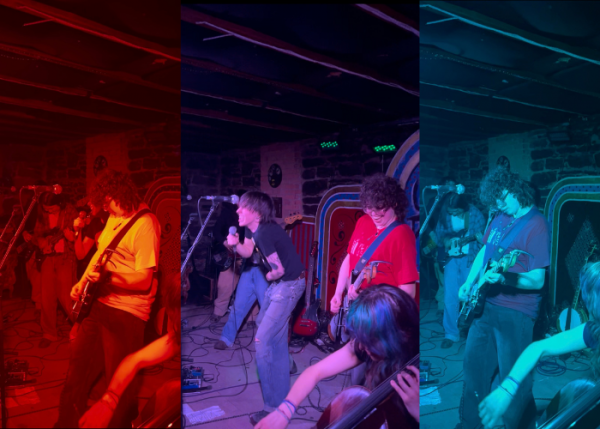
As per the title of this piece, this show was very much long-awaited for me. Anyone who knows me knows I am quite the Palomine superfan, but I’ve also been a huge fan of Steeple for at least a year now. Their first EP was actually recommended to me by a friend, so I knew a handful of songs already. Steeple has been performing semi-often in Montreal, yet I hadn’t managed to see them until now (embarrassing!!!). Let’s just say I was not surprised by the incredible show that they put on.
It is worth mentioning that this show took place at the most beautiful venue, maybe ever. I’d never been to L’Esco before, though I had heard great things. I immediately understood the hype as soon as I got there. It was spacious, with fantastic lighting and decorations, and the stage was massive. Normally, I don’t go to a show without my camera, but of cours,e this had to be the show I decided against it. I was so jealous of every photographer there, as this venue was perfect for concert photography. I could actually see the drum kit and the drummer, which is a rare find nowadays. I will definitely be returning to this venue soon, camera in hand. I can only imagine how good it felt to play on the stage, with all the lights and space to move around. Every band that graced the stage used the space well, yet Palomine definitely needed it the most.
I've already written about Palomine, since they were at Lilith Fair in January, but this show was something special. First of all, they were headlining at L’Esco, which is arguably a huge deal for anyone, and secondly, they have yet ANOTHER new member, a cellist, who is already in two bands in Montreal. At this rate, the Montreal music scene is becoming something akin to the Royal family tree. However, I am not complaining. This new addition puts Palomine at six members, which had the stage pretty full. I am always impressed with this band’s sound; they’d already been experimenting with the banjo, but the cello was definitely the cherry on top. They also did an encore this time, which I’ve never witnessed from them, and I have seen Palomine four times now. Lastly, they announced they’re finally recording some songs in the studio, which is majorly exciting, especially for people with all-new music radio shows…. So all in all, big night for Palomine and Palomine fans alike.
I’d never seen Plus! before, but I was expecting a good show. They recently did a Toronto show with Palomine, so with this in mind, I anticipated a very solid set. Much like every band that performed, Plus! was extremely well-practiced, and their energy was great. During their set, I made the astute observation that someone in this band (maybe all of them?) has to be the top listener of The Strokes since the resemblance was uncanny. I do get down to The Strokes, though, so this wasn’t a negative thing at all. Another great example of the constant Montreal band crossover is that the guitarist of this band is also a member of Palomine. Insanity. But overall, great set, great band, great time.
Of the three bands performing, Steeple was definitely the one I was anticipating the most. Not to diss Plus! or Palomine, they are both amazing bands as I have said – do not get me wrong. However, Steeple had a unique continuity to their set. Every song fit together effortlessly, with creative rhythms and riffs that had me positively delighted. As a four-piece, their sound was astoundingly full, and you would never know there were only four people onstage. Especially since the singer was not playing an instrument, each musician had to be exceptional, which they were. I will say the drummer was maybe the most essential asset; this guy was locked IN. I was giddy for the entirety of their set, and I kept turning to my friends to scream about how good it was. The guitarist was also so impressive and clearly knew his instrument very well. It did help that Steeple’s music is kind of my favourite genre ever: indie bordering on math-rock with some screaming here and there. A single guitarist in a band of this genre is surprising, but Steeple did it expertly. I honestly could not recommend them enough. They are definitely one of the most creative and practiced bands I’ve seen recently, and I will be looking to see them again soon.
I will for sure be returning to Esco as soon as possible, seeking out a night as good as this one. Keep an eye out for new Palomine music and check out Steeple’s EP!
An Interview with Christopher Owens
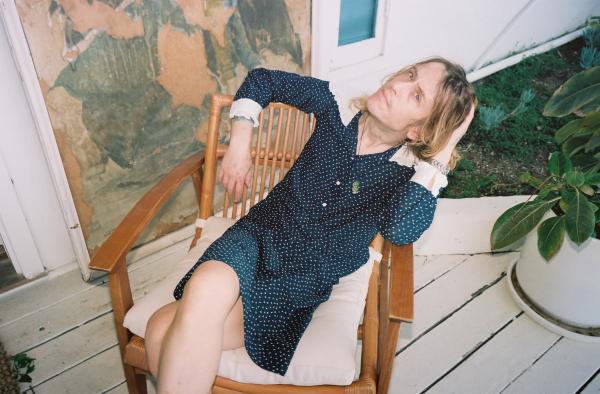
This past week on Lektor Decoder, Hayley and Jason sat down with Christopher Owens off the tails of his Taverne Tour show, February 12th. Owens talks with our DJs about his band Girls, creative inspirations, and the importance of maintaining vulnerability. Listen to their heartfelt chat here and check out Lektor Decoder every Monday at 9 PM.
Sudan Archives: The BPM is Power!
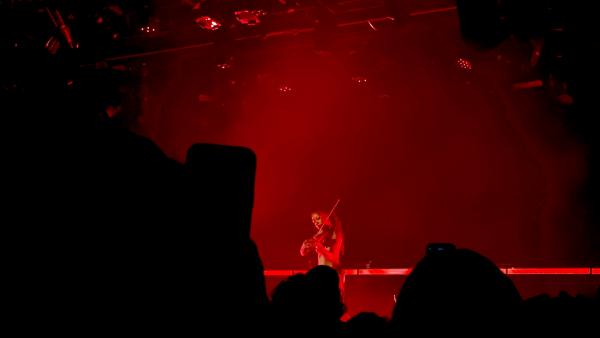
As I neared Studio TD on Saturday night, slightly dejected by the temperature being minus twenty with the windchill (and reaping the consequence of my mediocre layering), I was met with a glowing sign which displayed “Sudan Archives se soir a 18:00h”. Underneath, a line wrapping around the block of people bundled up, like me, trying to shield themselves from the absurd temperature. However, there was a distinct anticipation and excitement radiating from the groups who waited in line to enter the venue. I was in the right place tonight. The 30% of my mood that told me it was too cold to be outside rapidly shifted as I realized I was in for a ridiculously fun, entertaining, and energetic show. My expectations were, of course, met (no surprise there), though her set far exceeded every single assumption I had made about what a dance music concert could be.
The lights dimmed, and the crowd quieted in a way that I have never witnessed at a show. Soft nature sounds–--a bird chirping, insects chattering, wind blowing—began to play, and a green panel of lights, which stretched across the back wall of the stage, breathed on and off slowly revealing and concealing a circular platform in the middle of the stage (which an audience member would later be invited to dance on during the song “A BUG’S LIFE”). In the light, the audience could see wires hanging off the equipment onstage, her keyboard, drummachine, and a computer that looked like a decorative piece, used to pay homage to the Y2K retrofuturist aesthetic; later revealed to be a functional part of her setup. Finally, she emerged onstage, slithering like a snake with a look of awe, wonder, and confusion on her face. She was fully in character, and she didn’t waver from it for the entire show. Through her theatrics, she invited the audience to visually experience, revel, and live in the world she’s created in her latest album, THE BPM. A world that perfectly marries nature and modern technology, expressed through her character, who embodies a sort of crossroads between warrior, alien, goddess, and humanoid android.
She wore white contacts and a green bodycon outfit, with a brown harness that held her bow and violin, which struck me as a nod to Zelda. She was playful with how she shared her ethos with the audience, namely, using a sound bite of a sword slice each time she pulled her bow from its carrier, solidifying the fierce “warrior” vibe she portrayed. She began the set with the track “DEAD,” which is not only the first track of the record but effectively, through the lyrics, bittersweet melody, and high BPM, drew us into her world. As the beat swelled, the crowd began to shout, holler, and most importantly, dance. Her stage presence was captivating. She knew exactly how to move and control the audience despite not speaking much between her songs—save for when she charmingly exclaimed, “I HOPE Y’ALL ARE TURNING UP TONIGHT CAUSE IT WAS MY BIRTHDAY YESTERDAY!”--- She was able to create an atmosphere where people felt free to dance, clap, and shout, which seems to be a difficult feat nowadays. I think it was this very lack of interruption that made the audience fully surrender to her performance.
Her violin clung to her body, almost becoming another appendage to aid in her storytelling, and she used it with an ease that made you forget that it is one of the most challenging instruments to master. It was amazing to see a performer rely on their intuition on stage; it showcased her deep understanding of and trust in her artistic vision and led to some very cool modified versions of songs I’ve come to know and love. Most notably for me, “COMPUTER LOVE”.
My heart fluttered when she played the song “NBPQ (Topless)” off her sophomore album Natural Brown Prom Queen, mostly because that album pretty much ruled my entire year in 2022. She didn’t play many songs from this album, only a few that aligned with the journey she was taking us on. The show was pure fun, with profound intent. The final words she spoke to the audience were, “The BMP is power,” which is the sort of motto for this tour. BPM not only refers to a beating heart, but in the context of this album, which is chock-full of fast dance tracks, is a reminder of what it means to be alive. A reminder that we can hone our power through enjoying ourselves; feeling, laughing, dancing, and embracing the community found through experiencing these human things. As I left the venue, I couldn’t wipe the smile from my face; my prior distaste for the cold weather didn’t bother me anymore.
Zoe is the host of Something For the Mood, on air Wednesdays 2-3 pm
Earl Sweatshirt's Curation Prowess on Full Display: a Review of the 3L World Tour

Anyone vaguely familiar with Earl Sweatshirt’s discography might not be sold on the idea of seeing him live. Although he’s one of modern rap’s greatest writers, his work has long dealt with heavy, sombre subject matter. In his earlier projects, the then-teenage prodigy laid bare his struggles with anxiety and the psychic toll of growing up in the public eye, while later works offered more layered explorations of depression, loss, and grief. It wouldn’t surprise me if your average concertgoer, seeking a fun night and temporary relief from life’s stresses, was skeptical about seeing an artist with an album titled I Don’t Like Shit, I Don’t Go Outside.
When the LA artist came to Beanfield Theatre in December for the Montreal stop of the 3L World Tour, however, Earl and his entourage delivered a night far more dynamic than this reputation might suggest. The tour follows the release of Live Laugh Love (LLL), his fifth full-length LP and first as a father and husband. This new chapter seems a positive one for Earl and guides much of the album’s overall tone: optimism, renewed faith, and a sense of inner fulfilment. The album’s energy was palpable on the night and seeped into Earl and co.’s performances.
Montreal’s Mike Shabb kicked off the show. I arrived slightly late but just in time to catch him closing out his set by bringing out his team and fellow Montreal rapper Trapmat Savior, another exciting local up-and-comer to watch. Together, they paraded Haitian flags and thanked the crowd for their support over instrumentals from Shabb’s latest project, an instrumental album titled Melted Faces, v1. It felt like a significant moment: one of Hip Hop’s most universally respected figures in Earl Sweatshirt endorsing not only Shabb, but also Montreal’s bubbling scene and rising status in contemporary rap.

The night continued with sets from the remaining openers, Cletus Strap, Niontay, Zelooperz, and Liv.e. Despite the sonically diverse lineup, from Liv.e’s neo-soul to Zelooperz’s zany experimental raps, the show never felt disjointed. The sets flowed smoothly, propped up by the artists’ clear friendship and mutual admiration of each other’s work. They drifted in and out of each other’s performances, sharing ad-libs and occasionally acting as voluntary hype men for each other. Throughout it all, Earl hovered discreetly, sometimes popping onstage to help at the DJ decks or to just mouth along to his friends’ lyrics in the background. It didn’t feel like a typical hierarchical opener-headliner sequence, but rather a small community festival hosted by friends.

When Earl finally came out to his instrumental track “Riot!”, the outro of his critically acclaimed 2018 album Some Rap Songs (SRS), he was welcomed by an already jovial crowd. He dove straight into his new material, kicking things off with the first three tracks from LLL, ‘gsw vs sac’, ‘Forge’, and ‘Infatuation’. In doing so, he grounded the mood of the rest of the night in the project’s passion and excitement, feeding into the night’s already energetic spirit.
As a performer, Earl remains part of a seemingly dying breed amongst his contemporaries: he raps all his lyrics live. No backing track to lean on, just a mic, his DJ (producer Black Noi$e), and his voice. While I’m not mad at backing track-reliant performances for artists whose music and shows involve a lot of spectacle, Earl’s music, usually vulnerable and introspective, lends itself far better to his ‘traditional’ MC approach. He captivates crowds through the sincerity with which he raps every lyric, a sincerity he conveys well with his voice and stage presence. Throughout the show, he would occasionally grab the mic with both hands, his eyes closed, almost as if forgetting about the 1000+ fans in front of him and briefly performing for himself. This intimacy is where his strength as a performer lies, and what kept the room reeled in.
In between songs, Earl would engage the crowd and show his light-hearted side. After performing his 2013 track ‘Molasses’, he jokingly scolded the crowd for reciting its chorus, where Hip Hop legend RZA raps “I’ll fuck the freckles off your face bitch.” “Damn Montreal,” he laughed, “that’s how y’all get down over here? That’s crazy!” It was a self-aware acknowledgement of the shock humour that characterized much of the output from his early Odd Future days, while also showing a clear sense of distance from it.
While the night centred on LLL, Earl also performed cuts from his catalogue like the Alchemist-produced “E.Coli” and SRS fan favourite, “The Mint”. Both drew some of the loudest responses of the night as the room rapped every lyric word for word. He initially closed with LLL’s outro “exhaust”, but when he walked off stage, Beanfield erupted into cries of “Olé, Olé, Olé” – which I learned was not just a soccer chant but also Montreal’s version of calling for an encore. Earl obliged, returning to perform another fan favourite in “Power”, sending the crowd into its final frenzy and rounding off a concert that was, from start to finish, a warm, upbeat affair.
Fool Me Once, Shame on You

SPEWING SWEAT TILL THERE’S NOTHING LEFT
Crushed beer cans floating through the mud-filled floor testified to the post-punk madness that defined Shame’s show at Montreal’s Club Soda. Strangers doing front-flips from the stage into the crowd matched the energy the South London band brought on stage for the tour, celebrating the release of their fourth studio album - Cutthroat. A real circus, Shame’s frontman, Charlie Steen, was the ringmaster of the Saint-Laurent venue on that snowy Wednesday evening.
The Montreal-based band, Ribbon Skirt, led spectators into a world of their own - one crafted by the post-punk chords and lyrics of the duo Tashiina Buswa and Billy Riley. The echoes of Ribbon Skirt’s sounds did not merely reverberate off the venue’s walls, but were felt deep within. Their album Bite Down, released in April 2025, saw immense success for the band, earning them a nomination for the 2025 Polaris Music Prize. Having been on tour throughout the United States and Canada, there is a certain degree of solace to be found in Ribbon Skirt’s performance in front of its hometown supporters. The community to be found amongst the crowd of adoring listeners, if but for a brief moment, was a gift the band bestowed on us all that evening.
For nearly ninety minutes, we belonged to Shame. Bodies floated above the crowd’s fingers, moving effortlessly to and fro in the crowded venue. Like particles in constant motion, our every movement was guided by the command from the sounds emanating from the stage. Charlie Steen was our post-punk preacher, and us his faithful servants. The perpetual colliding of the crowd became a dance of its own. Total lack of control meant a complete surrendering of oneself to the other concertgoers and to Shame. As the night went on, we slowly became one, morphing into a creature of its own. A cocktail of sweat and existential dread -- the blood of Shame -- seeped through our every fibre.
The debauchery on stage and within the crowd continued to gain momentum, culminating in Charlie Steen jumping without hesitation into the eye of the storm. We were given the body of Shame and savoured every second of that brief encounter between the band and the masses. Our souls were well fed. Perhaps some did not even realize they were starving until they had a taste of pure post-punk pandemonium.
Before releasing us back into the Montreal winter, Shame delivered a final song. From their debut album Songs of Praise, the ballad-like track "Angie" ended the night on a nostalgic note. Otherwise characterized by loud sounds and intense energy, the encore led a path towards introspective melancholy. The chaos from the night continued to ruminate in "Angie", as bodies kept moving above the crowd.
As the venue slowly emptied, echoes of "Angie" continued to wander through every inch of the room. Bracing for the cold journey back home, the sounds of Shame would assuredly guide our every footstep.
Sharp Pins Break Record for Smallest Pants Worn at La Sot!
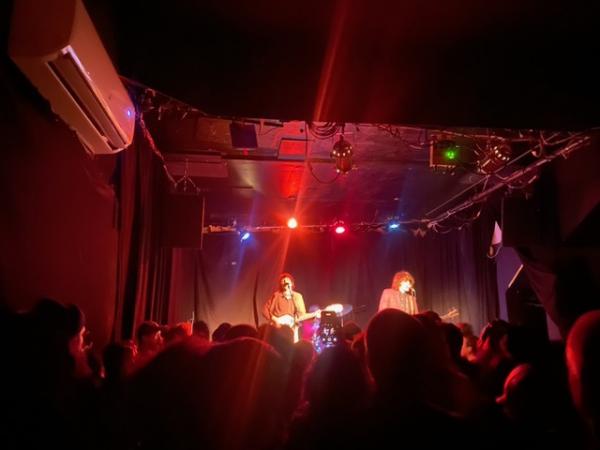
As it snowed with ferocity on the streets of Montreal, the three-piece outfit (not dissimilar from what they wore), Sharp Pins, rocked La Sotterenea – basement venue of La Sala Rossa – in style. Hailing from Chicago, a city at the epicentre of the fast-evolving and emerging indie-rock sound and scene, they brought with them not only a zest, spunk and flair for theatrics, but also a particular analogue flavour hard to come by in our present hyper-digitized hellscape. With songs veering from sweet love ballads to angsty jangle-rock anthems, Sharp Pins packed a punch that could only be described as the frenetic ethos of youth. You could even say they have “a way” (a joke Kai Slater himself later used while introducing their song “You Have a Way”).
The band rolled in at 9:30, fresh from pushing their tour bus up a hill in the snow, having been preceded by Montreal’s very own Prism Shores and Austin’s Eli Winter. Beginning with a boom of their latest album opener, “Popafangout,” from drummer Peter Jebson (who was reminiscent of if Animal from the Muppets dressed in a collared shirt under an argyle sweater and khakis), that was so loud its reverberations emanated through the floor and hit me squarely in the lower back. Sharp Pins were off, exploding with the energy I can only assume was harnessed from the brute force their journey to the venue had required. Jesting that “we like it loud,” three Chicago twentysomethings, dressed in their finest 1960s church-boy Sunday best attire, burst into a setlist filled with songs off their three studio albums, Turtle Rock, Radio DDR and Balloon Balloon Balloon, along with an unreleased number to keep the fans excited for what's to come.
Sharp Pins confirmed a sneaking suspicion I had, namely that they are truly meant to be experienced and taken in live. Despite the Montreal crowd’s (unusually) timid reception (I blame the persistent onslaught of snow and sub-freezing temperatures, which can break the spirit), their songs eventually encouraged in the crowd an alchemistic desire to shimmy and jive. I’m not sure about everyone else there, but I was certainly heeding Slater’s encouragement to “shake some tail feathers.” Bookending each song with a sweeping guitar jump with greater frequency as the concert progressed, it appeared that as the crowd continued to warm to the band, the resulting energy turned Slater into something of a jumping bean. Considering his skin-tight striped flared pants, I was doubly impressed at his sheer ease and fluidity of movement.
After finishing their electric set, the band was summoned back on for a two-song encore, a slow song: “With a Girl Like Mine” and an upbeat, energetic final number: “I Can’t Stop.” And that they couldn’t! With a familiar yet unplaceable essence, Sharp Pins sound like they could be a peer to early Beatles, The Cleaners from Venus and Guided By Voices wrapped all into one – like discovering some B-side of a long forgotten band in the dollar crate at a record store. Suddenly, I seemed to understand Beatlemania and the ferocity with which your grandma probably approached the twist in her heyday. As I lined up to buy a CD, Kai Slater emerged, and I got a chance to compliment his pants as I bought the album. With a head filled with fuzz and muffled ears, still ringing from the show, I stumbled out into the quietly soft, snowy night on St. Lau, a sort-of cloud nine magnified by the marshmallow snow which surrounded me.
Sophie is the host of Are We There Yet?, a sonic journey through temporal realities, on air Wednesdays from 9-10 am
Pages



Staff Login | Advertise | Our Location | RSS | Contact Us
