RSS
The End of the Internet…or Is It?

Over the past decade, we have tacitly acknowledged that online, we are the product. Our search histories and scrolling habits are being sold, not just to corporations, but also to government intelligence agencies. Relinquishing any modicum of privacy feels so inevitable that most of us passively surrender our online data to the ownership of a few major internet conglomerates. Dylan Reibling’s 2025 film, The End of the Internet, which screened at the 28th annual RIDM (Montreal International Documentary Festival) back in November, provides a glimpse into various resistance groups around the globe operating decentralized online networks to resist this data control.
Instantly positioning the consolidation of internet power as problematic, the film opens with an anecdote about the so-called “Google Maps War,” in which an armed conflict was nearly incited between Nicaragua and Costa Rica due to Google Maps mistakenly labelling Isla Calero as Nicaraguan territory. The film then attempts to demystify how the internet operates by describing network nodes, undersea fibre optic cables, and internet exchange points, showcasing how the centralized internet leaves users vulnerable to cyber attacks and control of information.
The crux of the film introduces five decentralizing movements seeking to preserve ownership of data in the hands of the user. Mimicking the experience of surfing the web, the film bounces between communities in Germany, Brazil, Hong Kong, Catalonia, and Miami, offering cursory glances into the internet experiments occurring within them. In the social media age, when our shortened attention spans have been tirelessly memed and editorialized to the point of tedium, this spasmodic structure is well-suited. That said, the most common refrain I overheard when leaving the theatre was that people wished the film selected a subject to focus on in further depth.
In the director’s statement published on the film’s website, Reibling writes that the objective of the decentralizing groups is “to rewire the internet in the service of freedom and equity.” This prescription undoubtedly applies to a platform like Mapeo, a peer-to-peer mapping tool used by Indigenous communities in Brazil to ensure that information regarding locations of various natural resources is protected from government seizure. However, the film spends significant time on the decentralized personal server platform Urbit, a platform which decidedly opposes those professed ideological claims.
Urbit was co-founded by Galen Wolfe-Pauly and Curtis Yarvin, the latter of whom has amassed a loyal following as a far-right political pundit under his pseudonym Mencius Moldbug. Yarvin argues for “neocameralism,” a political system that abolishes liberal democracy and replaces it with a patchwork of city-states each owned by a CEO sovereign. Yarvin is essentially a technofascist who is on the record saying that he is “not exactly allergic” to white nationalism, among other reactionary statements. These might sound like the ravings of a lunatic, but his ideas are endorsed by some of the most influential members of the American ruling class, including Vice President JD Vance and his puppet master, Peter Thiel. Yarvin’s social vision is inextricable from Urbit, as the network’s hierarchical structure materializes neocameralism on a virtual scale.
Yet, Yarvin’s neofascistic social vision is only briefly mentioned in the final minutes of the documentary—a choice which, combined with the film’s presentation of Urbit in an identical manner to all other networks presented and the inclusion of Urbit’s literal marketing materials, leaves viewers with what is functionally an advertisement for the platform.
I left the documentary feeling rather helpless, as while some of the decentralized movements Reibling shows are fascinating and commendable, the documentary gave no material advice on how an ordinary girl like me can seize control of my data and protect against corporate and government surveillance. Urbit is the most accessible decentralized option covered in the documentary, which frankly feels like that “the illusion of free choice” meme where a cow sees two hallways that lead to the same dead end—in this case, the dead end is a technofascist future where my mortal enemy Peter Thiel reigns supreme.
The End of the Internet screened at the 28th annual RIDM and is streaming on MUBI.
Dijon Commands L'Olympia with Unpredictable Energy

Most people have at least one artist they tell themselves they must see live one day. Some years they just don’t come to your city, or the dates don’t work out, or the album releases don’t come as often as you’d hoped. But finally, on a Friday in late November, as I was standing at the back of a crowd, eyes very slowly closing and opening again, looking around at the marvel that is the L’Olympia venue, I had experienced that sweet satisfaction of checking Dijon off my list.
Around mid-August of this year, I took two of my best friends to my late-grandmother’s home on the waterfront of Mayne Island, BC. After a day of whimsical, child-like fun that felt like four days squished into one, we sat in front of the TV and watched Dijon’s short film: Absolutely. It makes me emotional every time I see it; a stunning live performance of tracks off the 2021 album that can’t be described as anything else but raw, musical magic. My friend Aliyah is sitting on the floor, and we realize Dijon is going on tour soon. She says, “If I can’t get tickets for the Vancouver show, I’m coming to Montreal.” And that she did, along with my partner from Ottawa, making for a night I knew would be filled with love, beaming light and memories.
Dijon’s style has become increasingly polarizing, and he wears it on the sleeve of his live performances. Whereas his debut album, Absolutely, was tender, soft, and heartbreaking, Baby packs a punch that hits you from all angles. Its radical leap from the acoustic and mellow tones is unapologetic. Drums and random vocal snippets played loudly between tracks, making for almost no silences throughout the entire show. Even when starting it off with the song “Many Times” from Absolutely, it was fast and loud and had a totally different feel, making you wanna jump up and down rather than hold your head in your hands.
But it wasn’t complete chaos. It was like a mature tenderness that embodied themes of sacrifice and of changing life stages, the album being named after his son and the music reflecting that transition. The intense sampling from the recorded album is amplified in the performance and fills the whole space with sounds from all directions, with a mesmerizing light show that flashes on cue. My face hurt from smiling, and everyone else around me was beaming. It was hard not to be pumped up for whatever would come next.
Dijon also has a uniquely passionate voice. My boyfriend Caleb and I joke about how he sings in cursive, which you could hear so crisply through the loudspeakers. Like his close pal Mk.gee, he’s not afraid to screech and yelp between words. Even in the slower songs, where he sang low and soft, the light in his voice never dimmed, and his eyes were squeezed shut with intense focus. I’ve got to give props to his drummer, too, who was grooving to the music the whole time with his cymbals positioned high as hell.
With Dijon growing in popularity, even gaining the title of Pitchfork’s “Artist of the Year” for 2025, I’ve sometimes contemplated whether his new direction in music is still for me. Music rooted in spontaneity and an improvisational nature can be destabilizing, making you rethink where you stand with the artist and if what they think is working, is really working for you. Seeing someone you admire perform live can settle that, I think. Intently watching how they move through the process, interact with the crowd, their instruments and their collaborators is telling.
The story Dijon told that night gave me all the assurance I needed. You can tell he cares, maybe too much and to his own fault. I read Paul Thompson’s Pitchfork article that talks a lot about his struggle in crafting this album, but it seems to have paid off. His on-stage crew were smiling ear-to-ear watching him sing, and the interactive nature between them was lovely and free. There wasn’t a ton of crowd interaction as I’ve seen in clips of his other shows, but I was there for the music, which was strongly delivered.
CJLO'S BEST OF 2025
As we close out another great year at CJLO, we asked our DJs and staff to compile their favourite music, media, and, well, anything of 2025! Join us for recommendations of albums, songs, films, snacks, shows, and other experiences you may have missed this past year.


Aviva - Head Music Director and Host of The Alley, Fridays 11:00AM
It's the most wonderful time of the year, 'best of' time! It has been a huge year for CJLO. We've had so many changes and successes, I'm so proud of this little community. I truly have the best job in the world, where every week I'm inspired by the tastes and passions of all of our CJLO DJs, and I think that's reflected in my top 10s this year. So, without further ado, have fun reading through all our takes!
Best Albums of 2025
1. Water From Your Eyes - It’s a Beautiful Place
To say I was shocked by this year’s Water From You Eyes record would be an understatement. Up until this point, WFYE had blended into the sea of New York Zillennial bands I knew hip people were talking about, but I hadn’t given a shot. However, It’s A Beautiful Place can’t help but grab you from the first track. Rachel Brown’s deadpan and too-cool-for-you vocal stylings over Nate Amos’ catchy songwriting and unexpected production choices make this guitar-driven experimental pop so infectious. This album blends catchy pop tracks with a general feeling of unease that is all too relatable for our current moment.
2. caroline - caroline 2
The album that got me through thesis writing. caroline 2’s blend of avant-folk and post-rock envelops you in swells of strings and drones. It is a particular album that can be put on for really any mood/activity and yet still demands your attention. The violins and choir vocals on “Two Riders Down” and “U R UR ONLY ACHING” are discordant but somehow soothing at the same time. For the rest of the year, I’ve been trying to find more albums that sound like this.
3. Wednesday - Bleeds
Wednesday keeps on getting better and better. The band at the forefront of the Asheville alt-country scene cements their legacy with this record, with roaring highs (“Bitter Everyday,” “Pick Up That Kife”) and heartfelt quieter moments (“Elderberry Wine,” “The Way Love Goes”). Karly Hartzman’s pen is sharp and witty, and her voice booms over this record.
4. Ribbon Skirt - Bite Down
I’ve said a lot about Ribbon Skirt, and I’ve been saying it since back in their Love Language days. Bite Down is everything a debut record should be– intriguing, concise, and with a strong point of view. The driving guitars and lush production, together with lyrical landscapes of Indigenous culture and environmental decay, make Bite Down singular in the indie rock landscape. Ribbon Skirt has been on a tear this year, with stand-out SXSW showcases, signing to Mint Records, a Polaris shortlist spot, and the release of this record and an EP right on its tail. Ribbon Skirt is a great reminder of the talent we have here in Montreal.
5. Greg Freeman - Burnover
Greg Freeman’s Burnover was one of my most-anticipated albums of the year, and it did not disappoint. This country-rock record is full of quirky characters and sprawling stories that put Freeman at the top of his class for this new generation of slacker indie. The album puts aside the shoegaze influences of his 2023 debut in favour of more plucky, naturalistic instrumentals, which suit his Americana theming well.
6. Lily Seabird - Trash Mountain
Another Burlington, VT artist back-to-back?? Cool! Lily Seabird (mem. Greg Freeman band and vice versa) also put out a beautiful country-rock record this year. American rural decay is put on beautiful display on Trash Mountain, in this pedal steel and harmonica-driven record that would make any Lucinda Williams fan smile.
7. Lifeguard - Ripped and Torn
I was totally captured by these little Chicago guys. Rip-roaring energy from the first note that doesn’t let up for the entire 30-minute record. Between Lifeguard, Sharp Pins, and Horsegirl, this new generation of the Chicago Matador-related scene has been very fun to watch. Lifeguard finds a way to toe the line between wearing its post-punk influences on its sleeve while still creating a sound uniquely their own. The band’s show at L’Esco this past summer was amazing, but did, for other reasons, define itself as, for better or worse (worse), the weirdest night of my year. Real Aviva-heads know. Moving on.
8. Florry - Sounds Like…
Yet another great country-rock record this year. Wow, it’s almost as if there has been an explosion in this genre and scene in these past two years… Florry does it impeccably, though. A record that doesn’t take itself too seriously, lyrical motifs include river dips and Holly Hunter movies over beds of some classic rock n’ roll riffage.
9. No Joy - Bugland
What a fun surprise the new No Joy album was! Blending the local artist’s distinctive shoegaze sound with experimental y2k-evocative production by Fire-toolz, Bugland is 90s referential but wholly unique.
10. Gelli Haha - Switcheroo
This album is so silly!! Switcheroo is wacky, cartoony synth pop made for the weird art kids. It feels like going to a cool LA club that’s full of circus clowns.
Honourable Mentions
Ela Minus - DIA
Home Is Where - Hunting Season
Horsegirl - Phonetics On and On
Acopia - Blush Response
Annahstasia - Tether
Rochelle Jordan - Through the Wall
Best Local and CanCon of 2025
Marlaena Moore - Because You Love Everything
Living Hour - Internal Drone Infinity
Heaven For Real - Who Died And Made You The Dream?
Eliza Niemi - Progress Bakery
Goldenstar - goldenstar EP
Sunforger - Auspices EP
Casper Skulls - Kit-Cat
Common Holly - Anything Glass
Alicia Clara - Nothing Dazzled
Fine Food Market - I’m afraid to be in love with anyone who crashes their car that much
Sunwell - Sunshine, Etc. EP
Holly McLachlan - faith adventure
Notable Shows of 2025
Cindy Lee @ Rialto Theatre
Land of Talk @ La Sala Rossa
Los3r @ Taverne Tour
Mount Eerie @ Le Fairmount
Fantasy of a Broken Heart @ Mohawk (SXSW)
Strangest Karaoke Picks of 2025
Galaxie 500 - "Tugboat"
Built to Spill - "Carry the Zero"
The Velvet Underground - "I Found A Reason"
Metric - "Black Sheep"
LCD Soundsystem - "Drunk Girls"


Lisa - Station Manager and Host of Mirror Journal, Tuesdays 11:00AM
2025 never fails to astound me! There have been so many wins, accomplishments and amazing experiences that have left me absolutely humbled. Below is my little list of albums and shows that kept me company during the year. There’s nothing like losing and finding yourself in art, music, community, connection. Here’s to another year of great music and adventure in the city!!!
Favourite Albums of 2025
Frost Children - Sister
Oklou - Choke Enough
Nadah El Shazly - Laini Tani
caroline - caroline 2
Water from your Eyes - It’s a Beautiful Place
Claire Rousay - A Little Death
Smerz - Big City Life
Joseph Shabason, Nicholas Krgovich & Tenniscoats - Wao
Saapato - Decomposition
Early Fern - Wetland Interiors
J - Little Lock
Joni Void - Every Life is a Light
Favourite Concerts of 2025
Takako Minekawa, Joni Void & Mineo Kawasaki (Suoni Per Il Popolo) -La Sotterranea, June 25 2025
Sunforger, Dresser, Wally & Sundots - L'Hemisphere Gauche, July 26 2025
Barnacle, Swimming & Bracelet -The Crumper, Aug 9 2025
Sparks (Toronto) - Queen Elizabeth Theatre, Sept 17 2025
Bolis Pupul (POP Montreal) - Rialto Hall, Sept 25 2025
Cindy Lee & Freak Heat Waves - Rialto Theatre, Nov 10 2024
Claire Rousay & Laurie Torres - Toscadura, Dec 3 2025


Cameron - Program Director and Host of Shaking the Habitual, Tuesdays 1:00PM
Best Albums of 2025
Chat Pile, Hayden Pedigo - In The Earth Again
Fencing - Fencing Wikipedia
Marie Davidson - City of Clowns
caroline - caroline 2
N Nao - Nouveau Langage
Ribbon Skirt - Bite Down
Shallowater - God’s Gonna Give You a Million Dollars
Slash Need - SIT & GRIN
Sunforger - Auspices
Swans - Birthing
They Are Gutting a Body of Water - LOTTO
Water From Your Eyes - It’s a Beautiful Place


Samuel “Thee” Roberts - Hip Hop Music Director and Host of Whip Appeal, Mondays 3:00PM
2025 was a huge year for CJLO’s hip-hop department. We held our first ever Hip-Hop 4 Life concert showcase at L’Escogriffe, shoutout 110%, Quinton Barnes and Fraud Perry! I hit up SXSW in Austin, TX with the rest of the MD crew and had a blast; plus so, so, so many great local acts dropped so much great stuff this year; Mike Shabb, SeinsSucrer, CHUNG, ZIMBA, DeusGod and many more just to name a few.
Top 10 Hip Hop/R&B Albums
1. Egotrip by John Michel & Anthony James (Loudmouth Records)
I went back and forth on what my favorite record of the year was, but I ended up giving the edge to Egotrip because of how big a surprise it was. An independent release from artists I had legitimately never heard of before, yet sounded like a masterpiece by artists who had spent decades honing their craft. A modern chipmunk-soul influenced conscious hip hop record that doesn’t ever sound corny or derivative is unheard of in today’s climate, and the songs are catchy and Michel’s lyrics are extremely relevant to the social realities of our time and the production is unbelievably creative and lush?! Highly recommend and can’t wait for what they put out next.
2. Alfredo 2 by Freddie Gibbs & The Alchemist (Self-released)
This record feels like cruising through 80s Florida in a convertible at very low speeds iced out with garish diamonds and draped in floral-patterned clothes. My vibe for 2026.
3. black british music (2025) by Jim Legxacy (XL)
A masterpiece of forward-thinking UK hip hop in a year filled with projects that blew my mind from the scene.
4. Only Dust Remains by Backxwash (Ugly Hag Records)
My favorite full-length project from MTL icon Backxwash; a statement I have said after every album she puts out. Unbelievable and can’t wait for what she does next.
5. Golliwog by billy woods (Backwoodz Studioz)
At times feeling like a victory lap through woods’ vast discography and rolodex of collaborators, but at the same time cohesive and extremely creative as usual with rap’s greatest enigma.
6. Through the Wall by Rochelle Jordan (Empire)
Diva house is BACK. UK street soul is BACK. High-bpm R&B is BACK. Do you miss the vibes of 1991 dance/R&B? You should!
7. Cult Subterranea by Celestaphone & Dealers of God (Dismiss Yourself)
The most bizarre record of the year. I have no idea what the hell Celestaphone is talking about most of the time (a la Kool Keith) and I have even less of an idea where Dealers of God found the zany and off-kilter samples on this project. Must-listen if you love schizo-rap.
8. Glockaveli by Key Glock (Paper Route Empire/Republic)
Sometimes, a classic throwback southern hip-hop LP is all I need. Key Glock is the heir to the legacy of all the Memphis greats that came before him.
9. Papaholic, Vol. 1 by Papo2oo4 & Subjxct 5 (Self-released)
Just so much fun. Classic 00s east-coast flows over some ridiculous beats.
10. The Beautiful Malaise by Everything Is Psychedelic (Live at the Clinic)
Another entry into hip-hop’s wildly experimental side this year, I don’t really know how to describe this other than an hour-long odyssey of abrasive rap experimentation.
Top 10 Hip Hop/R&B Tracks
1. “Crush” by AJ Tracey feat. Jorja Smith (Revenge Records)
Pop-rap perfection.
2. “Girls Gone Wild” by JT (Quality Control/Motown)
A ghettotech revival by formerly one-half of the City Girls. Audacious bars and 80s electro production is the key to my heart.
3. “So Be It” by Clipse (Roc Nation)
Hot take: I’m a huge fan of Clipse, but their comeback record was supremely overrated! However, this track is up there with anything they put out in their mid-2000s peak, even better in some cases. That sample is nuts.
4. “As Far As You Know” by Corey Lingo (Natra)
I don’t know why nobody before Corey Lingo decided to study the vocal melodies of 90s slow jams instead of just sampling them for modern plugg&b, but holy s**t. So good.
5. “Life’s Too Short to Be This Afraid” by Zayok feat. H3artch3rades (Forevermore/Create Music Group)
Progressive emo-rap? Artsy trap sadcore? Glitch&B? Don’t know what to call this but I love it.
6. “LV Sandals” by EsDeeKid feat. Fakemink & Rico Ace (XV/Lizzy)
The Northern English accent will come to dominate hip-hop if I have anything to do with it.
7. “War” by Preservation & Gabe ‘Nandez feat. billy woods (Backwoodz Studioz)
Essential listening. Politically revolutionary hip-hop that really feels sonically radical as well is hard to come by sometimes, but this record achieves it and more.
8. “stick” by Jim Legxacy (XL)
One of the most underrated producers and songwriters working today.
9. “Sin City” by MIKE & Tony Seltzer (10k)
MIKE fits shockingly well on mainstream production, so much so that I think this could have been a mainstream hit if that wasn’t so antithetical to his ethos, lol!
10. “More” by George Riley (Confessions)
2000s rom-com original soundtrack scores have infiltrated R&B/pop, debated between this or PinkPantheress but I’ll go for the more underappreciated look here.
Top 10 Musical Obsessions
“Be Like a Woman” by Chris Rainbow
When I visited my hometown of Calgary this summer, my younger brother had this obscure yacht rock/prog pop song by Scottish singer Chris Rainbow come up while driving in his car in-between his usual mix of Chicago drill and Steely Dan. I was blown away by the unique instrumentation, killer chord progressions and the Beach Boys-style vocal layering… but even more blown away when this (now top 25 of all time personally) banger turned out to be not a hit or popular at all when it came out in 1979. Insane stuff.
“Scarred” by Uncle Luke feat. Trick Daddy
Possibly the hardest song of all time, a high-BPM Miami bass odyssey propelled by a Barry White sample pitched up to sound like a whimsical ‘50s cartoon that Luke and Trick Daddy spit some of the grossest and most out of-pocket bars ever on top of.
Birthing by Swans
Apple Music said I listened to Swans more than any other artist this year, but that’s not hard when I listen to a 2.5-hour long album like at least 8 times in full. I also got to see them live at Le National this fall and it was a transcendent experience.
Latin American art rock
I got heavy into classic Latin prog rock this year, and while it’s too wide a net and too diverse to encompass in a brief little blurb, I’ll shoutout some of my favourites I discovered this year: Charly Garcia, Invisible, Los Jaivas, Spinetta Jade, Bubu and Congreso
Womack & Womack
The husband-and-wife duo of Cecil and Linda Womack made some of the finest soul/R&B music of the 20th century and it seems to have been mostly overlooked. If you love this genre at all, you’re doing yourself a disservice by not checking out their discography, particularly 1983’s Love Wars and 1988’s Conscience. Cecil’s rock-influenced acoustic guitar wizardry accompanies Linda’s relaxed yet powerful voice in a way I’ve never heard and don’t expect to soon.
Fijian Effluvium by Phyllomedusa
If you listen to CJLO often, I’m sure at some point you’ve thought to yourself, ‘Gee, I think I’ve heard just about every genre of music!’. I chuckle at your naivete and point you towards Phyllomedusa’s bizarre, brutal fusion of sludge metal, grindcore, and… tropical steel drum music. Has to be heard to be believed.
Alcohol abuse-themed country music
I’m not a big drinker at all, but there’s just something about a belligerent 70s country artist singing about being depressed, drinking heavily and making an ass out of themselves that touches my soul. Some highlights include “(I Drank) Fifteen Beers” by Johnny Paycheck, “D-R-U-N-K” by David Allan Coe, “Straight Tequila Night” by John Anderson and “If Drinkin’ Don’t Kill Me (Her Memory Will)” by George Jones
Now That I’ve Found You: A Collection by Alison Krauss & Union Station
Genuinely up there with the most beautiful albums I’ve ever heard, Krauss’ voice is otherworldly, Union Station’s harmonies and classic bluegrass mastery, the warm atmosphere and so much more in this compilation has made this winter exam season bearable for me. I’m a man of many musical tastes, what can I say?
Trans by Neil Young
Neil’s widely-scorned synth album is actually kind of incredible. It exudes sincerity and amazement at the then-new possibilities opened up by electronic instruments without the cynical commercial desires that many of his peers succumbed to. So many great tracks here and once you listen a few times, he manages to get some genuine emotion out of the primitive pads and vocoders.
“Up ‘N Da Club” by 2nd II None
Most recognizable as a background song during Bada Bing scenes in Season 2 of The Sopranos, I’ve found myself frequently saying “UP ‘N DA CLUB!” in the ridiculous-ass operatic voice heard in this G-funk classic’s refrain throughout the year at any possible moment and I expect to for the remainder of my life.
Top 10 Movies of 2025
I have officially completed my Film Studies degree at Concordia this term, so this is the last year I’m legally allowed to share with CJLO my favorite films! Pray I don’t decide to switch the wildcard category to my top 10 pro wrestling matches next year…
1. One Battle After Another (dir. Paul Thomas Anderson)
2. Eddington (dir. Ari Aster)
3. Bugonia (dir. Yorgos Lanthimos)
4. Friendship (dir. Andrew DeYoung)
5. Sinners (dir. Ryan Coogler)
6. The Naked Gun (dir. Akiva Schaffer)
7. Weapons (dir. Zach Cregger)
8. Manas (dir. Marianna Brennand)
9. Hamnet (dir. Chloe Zhao)
10. A Working Man (dir. David Ayer)
Don’t judge me, Jason Statham movies are my comfort food.


Remi - Equipment Manager and Host of At The Movies, Tuesdays 9:00AM
Albums I have enjoyed or been recommended (In non-ranking order)
Bon Iver - Sable/Fable
Lucy Dacus - Forever Is a Feeling
Djlo - The Crux
Tyler, The Creator - DON'T TAP THE GLASS
Lilly Allen - West End Girl
Olivia Dean - The Art of Loving
Clipse - Let God Sort Em Out
Geese - Getting Killed
Discoveries of the year: Chuck Mangione, after one too many King of the Hill episodes (RIP to a Legend). Nala Sinephro. The answer of: You like jazz? Yes I do.
Scores and Soundtracks (Non-ranking order)
Howard Shore - The Shrouds
Ludwig Göransson - Sinners
Kenny Beats - Lurker
Kansuke Ushio - Chainsaw Man: Reze Arc
Nala Sinephro - The Smashing Machine
Joe Hisaishi - A Big Bold Beautiful Journey
Max Richter - Hamnet
The Newton Brothers - The life of chuck
Bobby Krlic - Anemone
Jonny Greenwood - One Battle After Another
A Non-Definitive, Almost Top 10 Films of 2025, Ranked
Well, maybe by stating that these are the best films of the year so far, because the theatrical run is not over yet, and my list will ever be changing until mid-January. You can follow the ever-evolving list on Letterboxd.
10. Celine Song - Materialist
9. Tatsusya Yoshihara - Chainsaw Man: Reze Arc
8. Danny Boyle - 28 Years Later
7. Ari Aster - Eddington
6. Chloé Zhao - Hamnet
5. Kelly Reichardt - The Mastermind
4. Joachim Trier - Sentimental Value
3. Andrew DeYoung - Friendship
2. Ryan Coogler - Sinners
1. Paul Thomas Anderson - One Battle After Another
Honourable Mentions
Zach Cregger - Weapons
Yorgos Lanthimos - Bugonia
Amy J Berg - It’s Never Over, Jeff Buckley
Mike Flanagan - The Life of Chuck
Michael and Danny Philippou - Bring Her Back
Darren Aronofsky - Caught Stealing
Alex Ross Perry - Pavements
Jake Schreier - Thunderbolts
David Cronenberg - The Shrouds
Stephen Chung - It’s All Gonna Break


Sam - Magazine Editor and Host of I Think You Might Like This, Tuesdays 2:00PM
Hello! My name is Sam, I'm the host of I Think You Might Like This and CJLO’s magazine editor. In honour of the dissolution of my show as an official hour of hip-hop radio, i’ve decided to supply, in no particular order, my top 5 non-hip-hop albums of the year. To hear my real top 5 you’ll have to find and ask me which will NOT be easy. Enjoy!
¡ok! - Khadija Al Hanafis full-length follow-up to her Slime Patrol series is a non-stop sample cut fest, collecting a pile of beats and breaks miles high that caves in on itself 6 times over. It’s the kind of album where the catchiest sound bite you’ve ever heard will appear once, and promptly vanish into a sea of blurring drum lines, never to be heard again. It’s razor sharp and unyielding, and finishes as quickly as it comes, leaving you dancing spasmodically in a void of Nintendo samples and flocka adlibs.
Radio DDR - Kai Slater has cemented himself as the most exciting name in rock 3 times over this year, but his most charming display comes on Radio DDR. Existing beyond lifeguards full-cock, legs-flailing debut, and without the polish of Slater's perennial follow-up record, the jangle-pop of Radio DDR is a timeless jangle-pop love letter. Every song sounds like it’s being sent to earth from a tiny, backyard-built retro spaceship, where Kai sits in tightly-knit sweaters, surrounded by The Who demos and ticker tape.
The Velvet Underground and Rowan - Worldpeace DMT’s first full-length step out the gate is rumoured to have been made in a sonic negative zone, where music is still 30,000 years away from being invented. Not a single minute in the album's 33-minute run time can be predicted, as it hops so sporadically from stomp-clap run-arounds sung through tin cans to ballads likely to actually be undiscovered Velvet Underground B-sides. I heard someone at Rolling Stone actually tried to do it, and it blew his MacBook through the roof, leaving behind a trail of marshmallow fluff and pink faux-fur. How a band can start at their sgt. Pepper’s phase is entirely beyond me, but it’s wonderful regardless.
It’s a Beautiful Place - An incredible amount of the music put out on Matador this year has passed me by entirely; thankfully, Nate Amos and Rachel Brown's freakishly tight package squared me directly in the temple. Brown singing “what’s on the record” in her charmingly wry voice echoes throughout my skull whenever this album is played, as it seems to speak for the entire body of work: what the hell is on this record? ambient drone samples lay sandwiched between a raging sonic destruction and a glitchy indie rock cry for help. What more is there to say?
New Threats From The Soul- This summer, I worked, entirely out of my element, at an off-the-grid electronic music festival. Surrounded by dubstep hippies, my saving grace was Ryan Davis’s pen. New Threats From The Soul is unlike anything that exists; 7 songs with a runtime of 57 minutes, packed with a lid-bursting amount of quotables that read like a Vonnegut book, from an alternate timeline where he was wildly less insufferable. It’s bar piano covered in empty Old Mill cans music, that has a drum and bass break within the first 12 minutes. It’s the most comfortable you’ve ever been in the back of a pickup, floating untethered down a road in pseudo-appalachia, and the coolest thing you’ll ever show your dad.


May - Host of Yumain W Leila/2 days & A Night, Mondays 2:00PM
Best Songs 2025
1. "Opla" - 7ari
2. "Skaba" - Akhrass
3. "Nightmares" - Anys
4. "Stylo" - Madd
5. "30" - A.L.A
6. "DELLALI" - ElGrandeToto ft. Hamza
7. "Drakula: - Issam
8. "Mal Habibi" - Saad Mjarred
9. "Girlfriend" - Wegz ft. Tayc
10. "Gowa elaalb" - Houssam Habib
11. "Ahla Rasma" - Fadel Chaker
12. "Kelma" - Snor
13. "KARMA" - Abyusif ft. Marwan Pablo
14. "Habibi w Bas" - Nassif Zeytoun
15. "CHITANA" - Rubio
16. "RIRI&ROCKY" - Najm ft. Manal
17. "Guerrilla" - Raste
18. "Rockstar: - Soolking
19. "Dawk Lya" - Snor
20. "Cobra Pretty" - Valerieblud


Dan - Host of No Boundaries, Sundays 7:00PM
Best Albums of 2025
25. Lou-Adriane Cassidy - Journal d’un loup-garou
24 Titanic - Hagen
23. Maria Somerville - Luster
22. Mattheis - Waiting For The Silhouette
21. Eiko Ishibashi - Antigone
20. Rosy Parlane - Array
19. Wednesday - Bleeds
18. Ex-libris - 001 & 002
17. Feeo - Goodness
16. James Holden and Wacław Zimpel - Universe Will Take Care Of You
15. Ribbon Skirt - Bite Down
14. Joni Void - Every Life Is A Light
13. Cleo Reed - Cuntry
12. Djrum - Under Tangled Silence
11. Nino Paid - Love Me As I Am
10. Mereba - The Breeze Grew A Fire
I think this is hands down the best pop album of the year. The songwriting is just so so good and Mereba achieves a nice variety of sounds with such an amazing and emotive voice to carry them. Plus, this album is straight all-killer-no-filler with 12 songs that are all standouts in their own right. On top of all this, the production is uniformly amazing and it’s probably the best mixed record on this list.
9. Rafael Toral - Traveling Light
I’m a really big fan of Rafael Toral, his early albums from the mid 90s, Sound Mind Sound Body and Wave Field are two of my favorite drone albums. That’s why this album is so amazing for me. It’s a return to drone for Toral. Yet, he’s mixing in all of the new elements he’s brought to his music since the 90s and blending them into a totally unique take on ambient jazz. This is actually an album made up entirely of drone versions of old jazz standards. The first half of this decade has been an amazing one for ambient jazz. We’ve had Nala Sinephro and Jeff Parker’s ETA IVtet creating their own unique sounds in the genre with masterpiece albums that will probably spawn so many copycats and acolytes, and now we have a 3rd varietal that’s just as unique and will probably have just as much influence. This is the year of drone jazz.
8. Makaya McCraven - Off The Record
I’ve been a Makaya McCraven fan for a minute now. His albums and to-die-for drumming are always always on point. His last album “in these times” was mind-blowing. And I wondered how he could improve on his already amazing formula of sampling his own jams and producing them into the songs he wants them to be, and where he would go from there. Turns out he would go ahead and make one of the best and most generous albums of the year. 1 hour and 30 mins of the most vibey and ingenious jazz.
7. Navy Blue - The Sword And The Soaring
I’ve heard a few albums by Navy Blue and always dug them, but none of them have hit me like this one. This is such a beautiful and moving concept album. From what I’ve heard, it’s the most conceptual and cohesive album of his career. This album is chiefly about him facing his most difficult emotions and family trauma and finding peace through a newfound connection with God.
But, there’s another thing about the album that really clicked with me. I’m a big fan of the recently departed rapper Ka who was also a friend and mentor to Navy Blue. On this album, the ghost of Ka is like an angel watching over the proceedings. His presence is felt in the aesthetic of the beats, in Navy’s flow, and of course in his lyrics referencing Ka throughout. This album is a very personal statement for Navy Blue, and he was probably working on it before Ka died, but it still seems like he is naturally stepping into that empty place left by his passing. He’s there rapping calmly and with tenderness over beats that sound ancient and beautiful, trying to make the world a better place with his music. What more can you do?
6. Béa Brennan - Trances People Live
In a year where I listened to A LOT of new music and probably about 35% of it was ambient or ambient-adjacent, this album was the one for me. This is my favorite ambient album of the year. Now unlike a lot of albums on this list it was not an instant love at first listen kinda thing. When I first put it on, I immediately thought it was interesting, but it didn’t seem like it would end up being one of my favorites. But, the more I listened, the more I realized how incredible it is. It’s the most adventurous and immersive electronic album I’ve heard this year.
5. Snakeskin - We Live In Sand
I’ve been a fan of Beirut duo Snakeskin since their last album They Kept Our Photographs. Where that album was haunted by the War on Gaza like a specter—the violence still at a distance and separated by a border—this one is about living in a war zone. On September 30, 2024, Israel fully invaded Lebanon and the fighting was brought to their doorstep. Yet, as they told me during our interview earlier this year, they lived only 3 weeks of the war and then they were in a plane to Bern, the quietest city in Switzerland, for a residency. It was there that this album was born in a period of intense focus and creativity, most of it being done in one week.
This translated to their most calm and ambient album musically, while the lyrics are almost solely focused on the violence and fear that war brings. But ultimately, this album is about life not death. It’s about the life that is lived between bombings and the love still found in a seemingly hopeless situation. It doesn’t turn away from the reality of war, but it also tells us what that reality really is. Like lead singer Julia Sabra said during the interview, “Our lives are a constant mix. There’s no linearity to it. It’s not like ‘oh it’s bad’ and then it’s good. It’s just constantly bad and good at the same time.”
4. Annahstasia - Tether
I’d been anticipating this album all year after hearing the first single from it, "Villain". That song hit me like a ton of bricks. The crazy thing is, that’s not even the best song on the album. This album is full of masterfully written and produced songs about little intimate thoughts and moments that are actually so profound and yet always get overlooked for the bigger things. And no matter how much I love to analyze music, sometimes something just speaks to you. And this album spoke to me. There’s one song on this album in particular that spoke so perfectly to a really difficult time that I was going through this past summer. It was like it was saying everything that I couldn’t say at that moment. So how could it not be one of my favorite albums of the year?
3. Apache Prophet - Black Men & Therapy
Apache Prophet has been quietly releasing some of the most raw, honest and beautiful hip hop out there since 2014. This is his best album yet. The fact that it comes with a companion album that’s almost just as good makes it even more amazing.
Written in the aftermath of an infection and two surgeries that very nearly ended his life, Black Men & Therapy is the follow-up to the album that he thought would be his last. It’s one thing to believe your time has come and romanticize it with a farewell album, it’s another thing to deal with a second chance at life you weren’t sure you wanted in the first place. This album is about that. It’s an unflinching portrayal of someone dealing with survivor’s guilt, depression and chronic health problems. It’s not an easy listen, but I really think it’s a masterpiece.
Check out my interview with Apache Prophet to hear the full story.
My favorite lyrics of the year are from this album:
“Call on the ones that love you / call on the one’s that trust you / call on the ones that pull up late at night / thinking they need to come hug you / call on the ones that will answer the phone / call on the ones that won’t leave you alone / call on the ones that will reach through the dark to the light / in hopes that they can bring you back home”
2. Ichiko Aoba - Luminescent Creatures
Luminescent Creatures is the first Ichiko Aoba album to come out since I became a fan and it was by far my most anticipated album of the year. I was a little afraid of being disappointed, but I also remember thinking, “what if it’s her best album yet?” Well, it turns out that, of all the possibilities, we got the best one. This album is without a doubt her best album up to this point and it is an absolute masterpiece. It takes everything good about her past releases, and lives up to all the potential that was there for her to make an expansive, fully arranged album. It contains some of her most beautiful melodies, best songwriting, and most emotive performances. And when pretty much everything she writes seems to be one of the most beautiful things I’ve ever heard, that amount of beauty can only be described as transcendent.
1. Benjamin Booker - LOWER
When I heard that New Orleans singer-songwriter Benjamin Booker was working with Kenny Segal on his new album, I was really intrigued, and when I heard the first single I was just plain excited. Where his last two albums were a modern take on blues rock with amazing songwriting, this time he’s breaking new ground musically. The production on this album is the best and most inventive I’ve heard this year. But, putting aside all the excellent experimental production—which fuses hip hop, shoegaze, blues, indie rock, RnB, and noise together—these are just amazing songs. And they're sequenced perfectly to make a concept album that couldn’t capture the zeitgeist of this very, very dark time for America more perfectly. Yes, this album is bleak. There are no easy answers or sugar-coated commentaries. But, despite all this, Booker at times provides a glimmer of hope in a very authentic way.
All the hype around the Springsteen movie this year has got me thinking… What if Born in the USA was made now? What if it was made by a Black man? What if it was even more critical of the American dream? What if it recognized that, rather than being a broken promise, it was a lie from the start?
It would probably be a much better, albeit darker album. Like this one.
Best Ambient Albums
Béa Brennan - Trances People Live
Rafael Toral - Traveling Light
Jardin Botanique & John Kiran Fernandes - Isthmus
Rosy Parlane - Array
Nick Breinich - Nothing Left To Dissolve
Gabriel Brady - Dayblind
Lisa Pulsatilla - Fernweh
Jefre Cantu-Ledesma - Gift Songs
Laurie Torres - Après coup
Walt McClements - On A Painted Ocean
Cole Pulice - Land’s End Eternal
Leif - Collide
Matt Emen - Baldios
Voice Actor & Squu - Lust 1
Best Songs
DJ Koze & Ada - "Unbelievable"
Benjamin Booker - "New World"
Barker - "Reframing"
Chapell Roan - "The Subway"
Simina Banu - "Dream Dictionary"
Mattheis - "All Meanders"
Ichiko Aoba - "Wakusei No Namida"
Jefre Cantu-Ledesma - "The Milky Sea:
Choses Sauvages - "Chaos initial (feat. Lysandre)"
Ribbon Skirt - "Off Rez"
Bels Larsen - "Might"
Robyn - "Dopamine"
Obongjayar - "Talk Olympics"
Snakeskin - "Blindsided"
Annahstasia - 'Waiting"
Lorde - "Man of the Year"
james k - "Doom Bikini"
Les Louanges - "GODDAMN!"
Lianne La Havas - "Disarray"
Bassvictim - "Lil Maria"
Rosalia - "Reliquia:
Lou-Adriane Cassidy - "Souffle Souffle"
Best Shows
10. Elisapie at Jazz Fest
9. Benjamin Booker - at L’Escogriffe
8. Yusu at the SAT
7. Mereba at the Fairmount Theatre
6. James Holden and Wacław Zimpel at the SAT
5. Maria Somerville at The SAT
4. Lorde at the Bell Center
3. Annahstasia at Le Ministère
2. Djrum at the SAT
1. Lisa Pulsatilla outside at MUTEK


Jayde - Host of Love Actually Needs Work, Sundays 3:00PM
Best Songs of 2025
1. Ella Langley's cover of "Wish I didn't know now," originally by Toby Keith.
She turns this into a gut-punch of regret that feels raw, twangy, and painfully relatable in the best way.
2. Mariah the Scientist "Burning Blue."
It’s moody, addictive, and perfectly captures that “I know this is bad for me but I want it anyway” kind of love.
3. Giveon's "For Tonight"
A song about choosing to live in the moment over the future, because sometimes one night of love is enough.
4. Olivia Dean's "Man I Need"
Warm, confident, and grown, this one’s about wanting love that feels safe, steady, and actually good for you.
5. Sadie Jean's "Slow Burn"
Soft, tender, and sweet, it romanticizes falling in love slowly and realizing you’re already in deep.
Best Albums of 2025
1. Olivia Dean's The Art of Loving
A cozy, feel-good album that makes love sound intentional, healthy, and something you get better at with time.
2. Kelsea Ballerini's Mount Pleasant
Full of memories and emotional growth, it looks back on love with honesty, nostalgia, and a little heartbreak.
3. Cat Burn's How to be human
A messy, heartfelt guide to love and feelings, perfect for anyone still figuring it all out.
4. Avery Lynch's I'm Glad we met
Gentle, intimate, and diary-like, it makes small moments and chance connections feel huge and romantic.
5 . Giveon's Beloved
Big, dramatic, slow-dance love songs that make heartbreak feel cinematic and devotion feel timeless.


Hayley and Jason - Hosts of Lektor Decoder, Mondays 9:00:PM
Top Five Drummer Firings in 2025
5. Matt Cameron quitting Pearl Jam
4. The Who firing Zach Starkey (first time)
3. Keith Urban firing Nicole Kidman
2. Foo Fighters firing Josh Freese
1. The Who firing Zach Starkey (second time)
Top Five R.E.M. Songs in 2025
5. Wh. Tornado
4. Sitting Still
3. Radio Free Dub (Mitch Easter Remix)
2. Radio Free Europe (Jacknife Lee Remix)
1. Radio Free Europe
Top Five Albums in 2025
5. TOPS – Bury the Key
This record is such an earworm, it’s constantly on loop in my head. It drives me f*cking
nuts. At the same time, I can’t stop listening to it. Well played, TOPS. Well played. -H
4. Snocaps – Snocaps
The existence of Snocaps in 2025 has made my party trick of identifying which
Crutchfield sister is singing based on just a snippet much more relevant. -J
This must be how Oasis fans felt when the Gallagher bros got back together. -H
3. Ryan Davis & the Roadhouse Band – New Threats From The Soul
If country music always sounded like this, people might actually listen to it. If country
music always sounded like this, I might actually believe the singers meant it. Ryan
Davis’ voice sounds like Nashville pantomime but his words are timeless and sharply
modern, like denim. Hard to get bored on the 5+ minute runtimes because he never
repeats himself. -J
2. Wet Leg – moisturizer
Easily the best album this year featuring a reference to a Diablo Cody movie. -J
I’ve been waiting for this album since 2022 when the band flat-out lied to everyone just
for a laugh and said their second record was already “in the bag”
(#dakotajohnsonmoment). It’s the perfect follow-up to their sardonic debut album,
pairing their signature playfulness and catchy tunes with a surprisingly hopeful approach
to matters of the heart. Lovebirds, rejoice! -H
1. Iggy & The Stooges – Raw Power
Unfortunately, nothing that came out this year was able to best the proto-punk classic
from 1973. The aggressive riffage and dangerous charisma of Iggy Pop are as relevant
today as they’ve ever been. To the rest of the music industry, I say: better luck next
year. -J


Dom - Host of Unheard Of, Wednesdays 11:00AM
Best Albums (These are not from 2025)
1. Precious Thing - Allegra Krieger
2. The Head Hurts but the Heart Knows the Truth - Headache, Vegyn
3. Morning View - Incubus
4. Imaginal Disk - Magdalena Bay
5. Household Name - Momma
(These are actually from 2025)
1. Where the Earth Bends - Daffo
2. Double Infinity - Big Thief
3. Animaru - Mei Semones
4. Live at Revolution Hall - Adrianne Lenker
5. Forever Howlong - Black Country New Road
Best Films From 2025
1. Bring Her Back
2. Frankenstein
3. How to Train Your Dragon
4. The Phoenician Scheme
Best Concerts of 2025
1. Allegra Krieger (London, UK)
2. Kali Uchis (Montreal, QC)
3. Paul Mccartney (Montreal, QC)
4. Sharon Van Etten (London, UK)
5. Momma (Ottawa, ON)


Angelica - Art Director and Host of BVST, Wednesdays 7:00PM
Another year, another collection of delightful releases, as usual presented in no particular order. Extreme electronic influences tinge a few of these records, but sludge and hardcore still dominate. Wanna listen? The playlist is here.
Bonnie Trash - Mourning You
In a surprise to no one, another beautiful release by one of the best bands in this country right now made it to my year end list. Let this record haunt you, you won't regret it. Track to taste: "Veil of Greed"
Dusk - REPOKA
Dusk return with an experimental quartet of tracks, just as menacing as their previous output but branching in frightening new directions, including an unexpected Slayer cover. Track to taste: "Dark Shaman"
Black Magnet - Megamantra
Never did getting shredded apart and hastily reassembled by a slab of industrial noise feel quite so sexy. Track to taste: "Better Than Love"
Emma Goldman - all you are is we
You call it skramz, I call it a perfect gem of blistering hardcore, its viciousness punctuated by bits of spoken word and breakneck DnB. Track to taste: "I don't think much at all"
Scare - In The End, Was It Worth It?
Ferocious and bleak, this record puts all the best bits of hardcore, sludge and even doom and black metal into a blender and invites you in to dance among the blades. Track to taste: "Crowned in Yellow"
Teen Mortgage - Devil Ultrasonic Dream
Eleven tracks of catchy punk earworms in 26 frenetic minutes, this party ends before you want it to, but luckily you can just hit play again. Track to taste: "Disappear"
Pigs Pigs Pigs Pigs Pigs Pigs Pigs - Death Hilarious
Pigs x7 deliver the sludge sludge sludge sludge sludge sludge sludge on this big, mean, meaty album that will leave you licking your chops. Track to taste: "Stitches"
Aawks - On Through the Sky Maze
Crunchy occult doom and fuzzy space rock fight for dominance on this drugged out psychedelic Canadian concoction. Track to taste: "Drifting Upward"
Mountain Dust - Mountain Dust
It took a long time to get here, but Mountain Dust return with a big blues-inflected number transported through time and space from the hipp(i)est 1970s Laurel Canyon turntables. Track to taste: "Vengeance"
Harakiri For The Sky - Scorched
Another searing, introspective work of precision and melancholy from these post-everything masters makes it on the list. Don't miss the Radiohead cover. Track to taste: "I Was Just Another Promise You Couldn't Keep"


Emma - Host of Screamers, Saturdays 7:00PM
I just started hosting my show at CJLO this year, and boy was it a good year for screaming. For context, my show Screamers has to have music where people are screaming (pretty self-explanatory). Will I be bending those rules? Well yes! It also isn’t just metal and emo, there’s a good mix of electronic music as well, but the entire show is very alternative leaning. Tune in every Saturday at 7pm! Being a part of CJLO has been so rewarding this year, and I’m so grateful to be a part of this community. Hogging aux at a function for years has led me down this road, and I couldn’t be more ecstatic.
That being said, here’s some of my favourite screams from this year.
Alexisonfire - Copies of Old Masters Vol 1 (EP)
Favourite song: "Cuz"
Classic Can Con. This year, I always played Alexisonfire on Screamers. This EP in particular is super well kept. Some classic screaming. There’s even a Tragically Hip cover of “Fully Completely” (one of my favourite TTP songs). It’s a quick listen (around 15 mins or so), but still very good. Shout out to my uncle Greg for putting me onto them. Hoping there’s more volumes to come!
Flowersforpersephone - a temporary stay (EP)
Favourite song: "put on your big girl panties and deal with it!"
I struck gold when I found flowersforpersephone. Based from Columbus, Ohio, their EP itches a certain part of my brain. It’s heavy and delivers in every aspect: the entire band is incredibly talented, with heavy guitar riffs with a sludgy feel, but their lead vocalist stands out by mashing heavy screams with light and airy squeaks. Three new singles have been released since this album that I’ve also played on Screamers. If you love heavy hitting metal, then definitely give it a listen. Looking forward to seeing what they’ll do in the future!
Frost Children - Sister
Favourite songs: "ELECTRIC" and "Ralph Lauren (feat Babymorroco)" (sorry I couldn’t just choose one)
Frost Children never ceases to disappoint me. So incredibly glad I saw them back in 2022 in a room full of maybe 30 people MAX. It was an incredible experience. Sister is a pop electronic album that sports amazing production and catchy beats. I first listened to this album because I was co-hosting a charts and crafts episode with Lisa (if you’re reading this, hi queen). We both couldn’t help ourselves and turned up the volume to an unhealthy level. Overall, this album is meant to be played at full volume while dancing with your friends.
Geese - Getting Killed
Favourite song: "Cobra"
I discovered Geese this year and I couldn’t be happier. The band opens with “Trinidad”, with lead singer Cameron Winter screaming THERE’S A BOMB IN MY CAR!!! Incredible. Looooved playing it on charts. The album has a roughness and some nice guitar and good percussions to accompany it. Although it was released in late September, it has a very summer feel to it that I can’t exactly explain. Nice listen if you’re into some indie rock.
Hail the Sun - cut. turn. fade. back.
Favourite song: "Consumed With You"
God I love Hail the Sun. Great vocals, great composition. I discovered them too late and missed their show in Montreal by one week. I will never forgive myself. This album plays into their strengths as an emo band: great vocals, well structured production, great energy. I will say though, this album is much softer and less gritty than their previous albums, so if you’re not into the more melodic emo, it might not be your cup of tea. My favourite song “Consumed With You” is a swooning romance song that I just keep coming back to. Definitely a different direction from them, but I’m not complaining.


Alex - Host of Ashes to Ashes, Tuesdays 7:00PM
Top 10 favourite albums of 2025
Listed in alphabetical order. But for the first time, a tie for #1 between one of my all-time favourite acts (TOPS) and one of the best discoveries I've made in a long time (Nourished By Time).
Addison Rae - Addison
Austra - Chin Up Buttercup
Debby Friday - The Starrr of the Queen of Life
Hatchie - Liquorice
FKA twigs - Eusexua
Japanese Breakfast - For Melancholy Brunettes (& sad women)
Men I Trust - Equus Caballus
Nourished By Time - The Passionate Ones
PinkPantheress - Fancy That
TOPS - Bury the Key


Ari - Host of Past Tense, Mondays 10:00PM
Favourite Shows of 2025
goldenstar + Shallowater + Worlds Worst
Bracelet + Taupe + Sunforger
Wombo + Ribbon Skirt + Poolgirl
Goldenstar has been a favourite of mine since I first saw them in the spring, and Shallowater (having come all the way from Texas) played an incredible show with them back in July. I'd somehow gone in without expecting much of Shallowater (thinking the Weed-reminiscent Worlds Worst would do more for me of the two out-of-towners), but was blown away by their capacity for both restraint and intensity. God's Gonna Give You A Million Dollars and There Is A Well are both stand-out albums, and the latter felt somehow contextualised by Shallowater's live performance.
The Bracelet EP release was kind of a super-show for me, having three of my favourite local bands, and was very much worth getting rained on then cramming into P'tit Ours for. Sunforger has been playing sparingly the last year or two, and Taupe has since dialled back on playing live shows, so it felt like a special occasion even besides the new release. And while Sunforger and Taupe have been favourites of mine for a while, my first time seeing Bracelet was earlier this year, at which time they really impressed me, and every show I've seen them play since they've been great, with the EP release being a summer-closing cherry on top.
As for the Wombo et al. show, while Poolgirl and especially Ribbon Skirt are both good, Wombo were incredible. I'll leave it at that.
New Albums of 2025
goldenstar - goldenstar EP
Bracelet - I Hear Bracelet
Fencing - Fencing Wikipedia
Goldenstar's self-titled probably had the greatest effect on me for being the Canadian slowcore I've spent the six years of my show's existence searching for, though Fencing's own considerably more casual? slacker? take on slow post-rock is similarly impressive. Bracelet's EP is super tight and, to put it simply, fun as hell.
Notably, these are all debut releases, although both Bracelet and Fencing can be connected to Learning and Urban Vacation, respectively. See Learning's Dirger and Urban Vacation's Success with House Plants.
Fencing is not the only slow-rock Winnipeg band I'm interested in, as they're neighbours to Tarp and Living Hour. I sincerely hope some Winnipeg-Montreal cross-polination occurs. Tarp came here back in September (before I had heard of them, sadly), so Fencing, please come next.
New-to-Me Albums of 2025
Alps - Alps Of New South Wales (2006)
memory card - memory card (2022)
UTAH - Reaper's Gain (2018)
Alps and memory card were part of a re-found love of sadsack bedroom pop that formed a large part of my summer listening. UTAH was a surprise find for me last winter considering I thought I'd plumbed the online depths of New York state's 2010s slowcore scene, and even more surprising since it was recorded by one of my favourite musicians, Francis Lyons (see ylayali); “Sam” deserves special mention as an incredibly moving closer.
Of these three bands, memory card is the only one currently active, and released an EP back in September (on top of many other great albums between the self-titled and now).


Angela - Host of The Spacious Astrology Playlist, Saturdays 9:00PM
Best Songs of 2025
1. "Zoology" - Fionavair
2. "Danger in Fives" - Wombo
3. "Feeling" - Billie Marten
4. "Heaven Is No Feeling" - Cate Le Bon
5. "What Was That" - Lorde
6. "Lucky River" - Kris Delmhorst & Anais Mitchell
7. "Motorway" - Salami Rose Louis
8. "Dearly Missed" - Searows
9. "Piece by Piece" - Anna Justen
10. "A Dream In Liminal Haze" - Bobby Tarian
11. "Final Words" - Pike
12. "Cross Your Mind" - Shelly
13. "This Is Real" - feeble little horse
14. "something in the wind" - Ada Lea
15. "Somewhere in Between" - Blood Orange
16. "Falling on my Sword" - TOPS
17. "Surviving You" - Hannah Frances
18. "PENSACOLA" - Ribbon Skirt
19. "Aegean blue" - Common Holly
20. "infinity" - Carl Glacier

Ingrid - Host of Bikini Brrroadcast, Mondays 11:00AM
Top 25 Songs of 2025
1. "Elderberry Wine" - Wednesday
You can’t really beat this can you… surely will be a favourite for many years. Yum!
2. "Playing Classics" - Water From Your Eyes
A classic to my ears. Standout song from one of my favourite albums of the year.
3. "Pensacola" - Ribbon Skirt
Addictive.
4. "4 Raws" - EsDeeKid
There’s no way Timothée Chalamet could do this.
5. "You got time and I got money" - Smerz
Can you listen to this without swaying your arms and head and scrunching your eyebrows together? perfect harmony. beautiful song. I like your shoes.. i like your shoes!
6. "Headphones On" - Addison Rae
“Guess I gotta accept the pain, need a cigarette to make me feel better, every good thing comes my way, so I still get dolled up” Many a girl’s anthem.
7. "If it’s in vogue" - cootie catcher
While my true favourite from Shy at First is the undeniably perfect Friend of a friend, alas it was released as a single in 2024. If it’s in vogue might be their best 2025 track, with that signature indietronica intro… so crunchy & delicious.
8. "sour diesel" - They Are Gutting a Body of Water
9. "Tonight" - PinkPantheress
like wha?? like a perfect pop song i might say…
10. "5" - Dean Blunt & Elias Ronnenfelt
11. "Alice" - bassvictim
BOOM BOOM BOOM BOOM
12. "MAKKA" - fakemink, Ecco2k & Mechatok
13. "I could" - Fine
14. "We’re Outside, Rejoice!" - McKinley Dixon
I recommend listening riding your bike on a tree-lined trail, the temperature preferably around 23 degrees celsius.
15. "All over me" - HAIM
That guitar solo going into the bridge… yeaaahhhhhhh.
16. "tears on his rings and chains" - Dean Blunt & Elias Ronnenfelt
17. "Grass is Greener" - bassvictim
18. "Professional Underwearer" - G String
I feel like this should be the Bikini Brrroadcast theme song or something… G-String if you’re reading this… I love you!
19. "Heaven" - Clay St.
Extremely underrated Brooklyn indiegaze band Clay St. turn it out. Had this on repeat all fall. Check out their other single “You Say” if you like a slightly noisier sound!
20. "Au Pays du Cocaine" - Geese
I hate to say it, but they got me… “You can change, baby, you can change, and still choose me”. Honestly! I’m not sure if anyone can resist this one. Sometimes you gotta admit Cameron Winter can be objectively great.
21. "Dollar Store" - Ben Kweller (feat. Waxahatchee)
This would not be to its full effect without Waxahatchee’s perfect complementary vocals. Start to turn your headphones up around 2:35.
22. "I Care For You" - Good Flying Birds
23. "Disco Life" - Say She She
It’s very hard to go wrong with classic dance! Let’s affirm a disco life in 2026
24. "This Is Real: - feeble little horse
25. "Shandy in the Graveyard (feat. billy woods)" - Panchiko
5 Great Canadian Albums of 2025
These are five great Canadian albums released this year that have paved the way for and/or rode the wave of what’s good about indie and alternative rock right now. The prolific (and wonderful!) return to melodic, slacker-ish vocals over noisy guitars in alternative music have made their way up north. While these five albums could fit on a playlist together, they are still distinct and have something for everyone; from Tashiina Buswa’s drawling and absorbing vocals on Bite Down, to cootie catcher’s expert indietronica instrumentation, to Living Hour’s Manitoba-made mellow folk-rock — it’s been a great year for new Canadian music.
1. Bite Down — Ribbon Skirt
2. Shy at First — cootie catcher
3. Who Died & Made You The Dream? — Heaven For Real
4. Internal Drone Infinity — Living Hour
5. Kit-Cat — Casper Skulls
Best Shows I Saw in 2025
The Linda Lindas — April 24th, Fairmount Theatre
I remember this day I had a terrible and headache and did not want to go to a punk show, and then it ended up being probably the best show I saw all year, so that speaks for itself. They are so young and had so much energy, bouncing around the stage and screaming. The fun they were having onstage was infectious. They ended with a cover of Rebel Girl, and their moms were selling the merch — what a way to cure a headache!
Fcukers and Nettspend at Palomosa — September 8th, Parc Jean-Drapeau
It’s true that every time I think about seeing Nettspend live, I do laugh out loud a little bit… However, is laughter not a sign of joy? Sometimes I love getting pushed around to loud music I don’t really know the words to! Fcukers was the other festival highlight, but in the way I could actually dance to songs I do know pretty well.
Blue Linen/Hearts of Palm/Clay St/Lulu Lamontagne — October 17th, Toscadura
This was a lovely and magical night at the end of reading week, one of the days we could probably still just wear a light jacket. Lots of local and emerging talent, I remember being blown away by every band, with clay st and Blue Linen becoming quick favourites of mine! If you’re located in Montréal, I highly recommend you catch a Blue Linen show in the new year.
Cindy Lee — November 10th, The Rialto Theatre
What can be better than seeing Cindy Lee’s first night in Montréal with your best friends during the first big snowfall and a metro strike. My heart grew three times in size and I cried.
PISS — November 19th, M for Montreal at Foufounes Electriques
Vancouver-based hardcore outlet PISS blew Montréal away for the second time this fall. If you have the chance, I highly, highly recommend going to a show and opening your ears to Taylor Zantingh’s words and screams. Heavy content warning, but equally raw, beautiful, important and loud.
Honourable mention: Yung Lean on October 21st at MTELUS for being so fun and awesome! And shoutout to all the local acts I’ve seen this year, in both Montréal and Victoria, that’s what makes me feel alive.


Paul - Host of Trawling the Megahertz, Fridays 8:00AM
Best albums of 2025
1. Lonely People in Power - Deafheaven
Incredible performances all across, fantastic lyrics, killer riffs, some of the best vocals in Black Metal. It’s just a top notch album front to back that hit me really hard on the first listen and it was a great start to a year where I delved into metal much more than before. Their best album over Sunbather also. Doberman, Magnolia, Winona are truly incredible songs.
2. The Passionate Ones - Nourished by Time
Great eclectic pop record that is varied, but also balances a wide array of emotions. Was a great live show too. Tossed Away is one of the best songs of the year.
3. I Love My Computer - Ninajirachi
Killer electropop/electrohouse and it was one of the most fun concerts I’ve ever been to.
4. Safe 2 Say - Corey Lingo
Loved his debut, but this takes what made his debut great and pushes it a notch or 2 in quality.
5. After EP 1 & EP 2
I love the y2k aesthetic so 2 whole EPs of y2k pop is everything I could ask for and I wasn’t disappointed at all, they studied to perfection the sound and replicated it in such a fresh, beautiful way.
6. Deseo, carne y voluntad - Candelabro
Gen Z Chilean BCNR-ish rock music. I was listening to a ton of South American rock this year so this dropped at the perfect time and it was great.
Honourable Mentions
Big City Life - Smerz
Shine Forever - Lil Shine
Lifetime - Erika De Casier
Femme Fatale - Mon Laferte
Bleeds - Wednesday
El nuevo sonido - SINAKA


Eric - Host of Patch Notes, Wednesdays 3:00PM
Best Albums of 2025
Album of the year: Tapeworms - Grand Voyage
I haven't listened to a more perfect album this year. Grand Voyage is the excitement of a plane ride, the endless possibilities of a new journey, the freedom and nerves that change brings. Each track glistens and glides by, filling you with joy and hope through its sugary synths and carefree vocals. It's brought me so much joy throughout the year, I truly love this album.
Ten Honourable Mentions (Unranked):
Ninajirachi - I Love My Computer
Baths - Gut
caroline - caroline 2
Wednesday - Bleeds
Frost Children - SISTER
Nourished by Time - The Passionate Ones
Sharp Pins - Radio DDR
This is Lorelei - Holo Boy
The Armed - THE FUTURE IS HERE AND EVERYTHING NEEDS TO BE DESTROYED
Skrillex - F*CK U SKRILLEX YOU THINK UR ANDY WARHOL BUT UR NOT!! <3


Clifton Hanger - Host of Brave New Jams, Sundays 10:00PM
Top Shows of 2025
Billy Corgan and the Machines of God - Theatre Beanfield Montreal, QC 06-13-2025
Cowboy Junkies - Tupelo Music Hall Derry, NH 09-26-2025
Donna the Buffalo- Haw River Ballroom Saxapahaw, NC 01-26-2025
Drive-By Truckers - Ardmore Music Hall Ardmore, PA 02-03-2025
Eggy - Thalia Hall Chicago, IL 11-15-2025
Greensky Bluegrass - Wings Event Center Kalamazoo, MI10-31-2025
Goose - Allianz Amphitheater 10-03-2025.
Matt Berninger (The National) - Union Chapel London, England 04-05-20205
String Cheese Incident - The Pines Music Park 08-16-2025
Widespread Panic - En Market Arena Savannah, GA 01-11-2025


Sophie - Host of Are We There Yet? Wednesdays 9:00AM
Top 10 Albums of the Year (unranked)
caroline 2 – caroline
Earnest, gut wrenching orchestral post-rock. Like a hit straight to the throat, leaving you with that sinking feeling you get when you’re about to fall asleep, the one that jolts you awake – Caroline manage to bottle the feeling just before that jolt. Contributions from fellow Caroline (Caroline Polachek), whose ethereal vocals float above the ambient symphonic terrain, gives the album a necessary variegation.
Purity – Anysia Kym, Tony Seltzer
Anysia Kym has been one to watch and this year is no different – she has the midas touch, listening will turn you gold. This year she's done it again alongside Tony Seltzer, crafting a sea of breakbeats and choppy rhythms. Purity has an undercurrent which allows you to be carried away by Kym’s sedative voice as a raft – unfazed and evanescent.
Blurrr – Joanne Robertson
Joanne Robertson’s sixth studio release stays true to her artistic ethos; ephemeral, untethered and hard to quite pin down. Aptly named, Blurrr, this album is understated and otherworldly, like trying to remember a dream after waking up that's only slightly out of reach. Spectral and hazy, as though you’re listening through the cosmos, Robertson’s voice sounds almost alien – à la Cocteau Twins, she could be speaking gibberish for all I know but her music still maintains a mainline to the soul.
Radio DDR – Sharp Pins
Sharp Pins are one of those bands which feel decidedly of a bygone era despite being entirely fresh and new. Radio DDR is brimming with catchy riffs and jangly melodies, capturing the essence of the reckless abandon which only comes from being young and idiotic. This album found me at the perfect time in my life and is one which I can only imagine will be transportative to listen to in the future. In sum, Kai Slater is a god and every project he touches becomes an instant classic for me.
Friend – James K
Simply put, this album is straight-up beautiful dream pop and was one of my favourite study albums of the year, which is a highly coveted genre for me. Entrancing and diaphanous, James K creates an oneiric fantasy playground on this album, both radiant and hypnotic.
Way Too Much – Superstar Crush
Oozing with charm, Superstar Crush’s Way Too Much is just that, way too much in the best way possible. Punchy, poppy, with instantly catchy riffs. Listening is like that moment of being on the dance floor and suddenly becoming filled with a sense of existential dread – in a good way, I promise! Fun filled with longing, this album has something for the whole family.
Lucre – Dean Blunt, Elias Rønnenfelt
A pairing seemingly put together by the gods, Dean Blunt and Elias Rønnenfelt’s work together feels nothing if not divine. Rønnenfelt whines over Blunt’s lamenting guitar and synth-forward production leaving the listener reeling. The short, only 15 minute long, album (which I suppose is more of an EP) acts as the paddles of a pinball machine, slapping the listener as the metaphorical ball around rapidly, and ending before you can realize just what hit you.
Blizzard – Dove Ellis
Recency bias be damned, I love this album! I didn’t add Heavy Metal by Cameron Winter to my list last year for that very reason and I’ve regretted it every day since so I am learning from my mistakes this time. Carrying the torch of annual heart-wrenching December releases, debut album, Blizzard by Irish singer-songwriter Dove Ellis strikingly parallels the raw emotion and hopelessness captured by Cameron Winter’s own debut project. While perhaps less wailing-heavy, Ellis captures the same shades of Rufus Wainwright, Leonard Cohen and Jeff Buckley on his achingly comforting album, embodying the act of dwelling on a feeling and letting it stew. Ellis has cooked up a perfect soup of self-indulgent heartbreak, with enough shimmering glimmers of hope to steer it as promising rather than morose. Throwing caution to the wind, Dove Ellis has charmed me and made the list!
Goodbyeshouse – Snuggle
Nostalgia is a drug which I am in the process of getting clean from, however Snuggle has been able to wean me off with this album specifically. Listening feels like being 17 years old again, but experienced through my own current reality, entirely unique and fresh. Goodbyehouse allows me to revel in the feeling of deja-vu and retreat into the confines of my own mind while still seeming to maintain connection to the other world.
Body – Finnish Postcard
It wouldn’t be my list without a classically depressing under the radar release and this year that was presented to me on a silver platter in the form of Finnish Postcard’s album Body. Toting all the classic indie trappings, they sound like the opener of a local show you happened upon and were lucky enough to catch and discover. Melancholic folk-pop with sparkling moments of certainty, like a daydream born from a bleak February stroll.


Dan - Host of Advice by the Fireplace, Wednesday 5:00PM
Hi folks. Dan Lilah here. If there's one thing I love, it's advice. And if there's two things I love, it's advice and a roaring fireplace. And if there were let's say ten things that I loved, they would be, in order: advice, fireplaces, red wine, bubble baths, mid-September sunsets, a Baroque era piano concerto, oversized hooded cardigan sweaters, shiatzu massage chairs, the colour beige and in the number ten spot ... year-end top ten lists. Here are a few of my hand-crafted artisanal top ten lists across all forms of modern arts and culture (not books).
Songs
10. Lou Laurence - "Be Bodies"
9. Kirby - "Vain"
8. Tune Yards - "Heartbreak:
7. Smerz - "You Got Time And I Got Money"
6. Sault - "I.L.T.S."
5. Raye - "Where Is My Husband?"
4. Earl Sweatshirt - "Tourmaline"
3. Cameron Winter - "Love Takes Miles"
2. De La Soul - "The Package"
1. Wet Leg - "CPR"
Movies
10. The Naked Gun - d. Akiva Schaffer
9. The Phoenician Scheme - d. Wes Anderson
8. On Becoming A Guinea Fowl - d. Rungano Nyoni
7. Mickey 17 - d. Bong Joon Ho
6. It Was Just An Accident - d. Jafar Panahi
5. If I Had Legs I’d Kick You - d. Mary Bronstein
4. Paying For It - d. Sook-Yin Lee
3. Friendship - d. Andrew DeYoung
2. Eddington - d. Ari Aster
1. One Battle After Another - d. Paul Thomas Anderson
TV Seasons
10. WWE: Unreal
9. Win Or Lose S1
8. The Chair Company S1
7. Smiling Friends S3
6. Pluribus S1
5. Demascus S1
4. Andor S2
3. Severance S2
2. Taskmaster S19 & S20
1. The Rehearsal S2
Comedy Specials
10. Sarah Sherman: Live & In The Flesh
9. Conan O’Brien: The Kennedy Center Mark Twain Prize for American Humor
8. Joe List: Small Ball
7. Caleb Hearon: Model Comedian
6. Michelle Wolf: The Well
5. Matteo Lane: Al Dente Special
4. Marc Maron: Panicked
3. Maclunkey Treasure Island: A Live Staged Reading Of Star Wars - A New Hope
2. SNL50: The Homecoming Concert
1. Las Culturistas Culture Awards 2025


Jasper - Host of The Castle, Fridays 1:00PM
This year was a lot better than last. Many angles of life blew up in my face in January, but once I turned 24, restarting a 12 year long astrological cycle, things started to brighten. Back to square one, wobbling on a foal’s sea legs. My journal is a dusty lavender color, thick and heavy. The good days outnumbered the bad. Got back in touch with a practice of prose writing and astrological study. Made a lot of really great new friends, got really into camo and nudism.
This year marked a big transition in my music listening tendencies. It was all guitar music. Okay, not all, but there was a significant decrease in my years-long appreciation of glitched out club music. I also stopped wanting to go to raves that weren’t outside, opting instead for many many concerts and cozy nights in with precious friends. Lots of Cronenburg movies were watched.
Best albums of 2025, relatively in order
Bite Down by Ribbon Skirt, followed up by their EP PENSACOLA
two house by food house
Basspunk 2 by bassvictim
Bleeds by Wednesday
Birds Of Prrrey Live from CJLO by Birds Of Prrrey
From The Haze Of A Revved Up Youth by Karma Glider
frog song by fish narc
star by 2hollis
audio stars 2 by Tommy Fleece
9Million by 9Million
Sounds Like… by Florry
Burnover by Greg Freeman
It’s A Beautiful Place by Water From Your Eyes
God’s Gonna Give You a Million Dollars by Shallowater
Bugland by NO JOY
Wide Awake by Mechatok
Best singles
“Hornse” by Things Made Of Noise
“tower of memories” by ivri
“CRUSING TO SELF SOOTH” by Ecca Vandal
“Crocodiles and Concrete” by Abygale Scott
“Dx2 - I'll Count You In Even When You Turn Away” by los3r
Best local bands of 2025
Ribbon Skirt
Birds of Prrrey
Best concerts by local artist
The Fake Friends at Honey Martin’s Pub in NDG
The band was too big to fit on the stage that doesn’t exist. The lead singer was up on the bar, ass crack displayed, pouring liquor into open mouths. Epid dudes.
The CJLO birthday party with Dresser, Bodywash, and Land of Talk + DJing by No Joy at La Sala Rosa
I gotta look up the astrology of that night cause the vibes were so perfect.
Best concert by touring artist
Wednesday and Daffo at Club Soda
The pit was waves of bodies screaming the lyrics. Felt like we were part of a moment building to monumental heights.
Best rave
Voie maritime outdoor bike rave organized by Vasimolo, Zamalek, and Memento Cycles
Naked river dips, dirt dance floor, CCR, biking over a bridge at dawn.
Best book released in 2025
Fucking Magic by Clementine Morgan
The Body Is a Doorway by Sophie Strand
Both of these books are memoirs that touch on autoimmune disorders, sexual trauma, finding oneself in the wild mess of the world, and the magic of connection and the natural world. Both are very inspirational, urging me to write more and reconnect to witchcraft.
Best book read in 2025 that was not released in 2025
Just Kids by Patti Smith
Pulled me through a breakup and out of late winter’s eclipse season.
Best YouTube video
The Channel 5 interview with Hunter Biden
Best movie I watched but didn’t come out in 2025 cause honestly there were a lot of flops this year
eXistenz by Cronenburg, 1999
Best Swim Spot
(45.27’19.7”N, 73.33’46.2”W)
Although it is close to boat docks so there is the consideration of oil slicks and boat sounds but that is balanced out by it’s proximity to an ice cream shop. There's a gap in the tree line allowing direct sunshine in the later hours of the afternoon. The horizontal tree branch allows for easy and comfy hammock installation. I would often run into Verdun friends and my mama here.
Best Car I drove
‘The Leer’, a GMC Sierra pick up truck, 8 foot covered bed with sliding wooden board for easy loading. This is a landscaping work truck used by the carpentry team, often seen with piles of 2x4s sticking out the bed window. It violently shakes while it idles, doesn’t want to go over 70km/h, its loud growling keeps all other cars on the road far away. Has the strongest AM receiver of all my company’s work trucks, the volume dial is stuck on loud. Bright headlights. I am often the only one brave enough to drive it.
Best Castle Episode
“You Will Fall In Love Everyday” broadcasted live on August 1st
Biggest shout-out to
The dead mice I keep finding in my apartment


Gigi - Host of The Gigi Brown Experience, Sundays 8:00AM
Best Albums of 2025
1. Ada Lea - When I Paint My Masterpiece
I can confidently say I listened to this album every day on my way to school for the first week I downloaded it. It’s such a whimsically Montreal album that was a perfect soundtrack for my bus rides. There’s a haunting quality to her voice on songs like moon blossom but oh that guitar puts you right at ease.
Top track: "baby blue frigidaire mini fridge"
2. Hanorah - Closer Than Hell
It’s no secret I adore Hanorah, and Closer Than Hell is such a great way to reason my adoration. The 4 songs on this EP are masterfully curated by Hanorah and Max. With poetic lyrics and groovy melodies, this EP is equal parts raw and refined. Do you want to dance or cry? Girl, just eat a babybel cheese.
Top track: "Matty"
3. Lou-Adriane Cassidy - Journal d’un loup garou
Journal d’un loup garou is such a well-rounded album, there is sparkle and light, but also some slower, darker moments like with her song 16 ans bientot 30. Lou-Adriane is able to balance it all and show off her beautiful vocal range perfectly on these 14 tracks. Seeing Quebec's pop queen at the Francos was a highlight of my year so that's another reason this had to be on the list.
Top track: "Cours, Cora, Cours"
4. Out By Lucy - Max O'Million Extraordinarious' Super Symposium
I think this album is so fun. The capacity for a band to make some really good music without taking themselves too seriously is something I appreciate a lot and these fellas sure have that. This album was a late find for me this year, but I’m so happy I did because this album has a little bit of everything from testosterone filled rock to some softer twee songs.
Top track: "Red Sorghum"
5. Sabrina Carpenter - Manchild
This album has to be on here for the amount of times I listened to it: showers, cleaning, morning walks, you name it. Carpenter’s witty lyrics and fun music made this album irresistible. (Her calling out ICE is an added bonus ;p)
Top track: "When Did You Get Hot?"


Nina - Host of Dreamscapes, Mondays 4:00PM
Top Dream Symbols of 2025
Reindeers eating buildings, blueberries, owl faced moose with psychedelic antlers, mud, nicotine patch dreams, Binraglica (a real game of bingo that can be played while watching the metallica documentary), war, eclipse soup, dream premonitions, babies , Paul Rudd as a mischievous roommate, radio stress dreams, quetzals, magic trees, mirror versions of the dreamer that hold up a sign that says “sleep b*tch”.
Favourite Music of 2025
Albums: Ribbon Skirt- Bite Down, No Joy- Bugland, They are gutting a body of water - LOTTO, Wednesday- Bleeds, Marlaena Moore- Because You Love Everything, Geese - Getting Killed, Mark Molnar - EXO, Clipse - Let God Sort Em Out, Earl Sweatshirt- Live Laugh Love. Makaya McCraven - Universal. Beings (IA11 Edition) Singles/Songs: Charli XCX and John Cale ”House”, Tempete Solaire “ Manicouagan”, eLm - “fledgling”, Val Bah- “masterpiece”, Goodnight moonshine - “Stars”
Albums from 2024 that I really got into in 2025
Truck Violence, Cindy Lee, Mustafa, Daevar, SZA, Fulu Miziki Kolectiv
Top Dreamscapes Snacks 2025
“Dream Cakes” from NDG korean+japanese grocery store
Melted chocolate bars
Protein
BANDS I NO LONGER LIKE (and maybe never liked at all? There was always a certain level of dissociation that I had to do anyways to hang out with people as a teen/young adult and I think I just buried any feelings of discomfort because I didnt want to seem critical of something that seemed to give everyone so much joy. Don't be a buzzkill Nina everyone is having so much fun interacting with the music in the normal fashion . Everyone loves a mediocre white man singing about the this and that of life , and thoughtfully curated dog bark soundbytes and the sunshine face on the CD. Everyone loves fun and fun means listening to songs that are kind of mean and definitely sexist and we can all laugh about it because fun is about dissociating, actually. Also sexism and racism in the late 90s/early 2000s were a specific all encompassing beast that felt impossible to escape from but thank goodness it’s the end of 2025 and we’ve solved that for good, finally. Thank you, Omar, for freeing us all from this charade.
Sublime
Top Culutre
Watt from Pedro Show, Fashion Neurosis, This Jungian Life, Adam Friedland Show


Sonam - Host of Brave Little Emo Girl, Sundays 12:00PM
Top 10 new albums of 2025 unranked
Avec Plaisir - Active Listening
Montreal emo that shines and shimmers like fresh snow, this album is full of heartfelt and uplifting midwest emo harmonies and genuine lyrics that are best experienced in singing along. This album makes you want to put on a little beanie, roll up your khakis and consider different guitar tunings.
Listen if you like American football, mom jeans and retirement party.
Tortoise - Touch
This album is a soundtrack for instrumentally side questing in the snow and fog. Ambient, abstract and awesome. I can’t write too much or else it’s recency bias. Soz. Listen if you like Boards of Canada, spacious jazz and bald guy math rock
Viagra Boys - viagr aboys
Despite this being my contender for male music critic album of the year, there is a layer of depth and relevancy here that had been present in their previous albums, but this time around there is a heaviness to it, like on « medicine for horses »and « river » both of which made me cry on first listen? What are the Viagra boys doing out here making a 20-year-old girl cry?
Listen if you’re a thoughtful freak.
Wednesday - Bleeds
Karly's writing continues to intimately build and deepen the world and lives being explored in previous albums, a hyper specific, vulnerable and diaristic telling that is somehow so painfully relatable. I love the little genre moments too, the psych rock thing happening on “phish pepsi”, the hardcore energy on “wasp” and the narrative folk happening on “elderberry wine” and « Gary’s II ».
You’ve definitely already listened to this
(or listen if you enjoy the idea of country and shoegaze making out on a lap steel running through a decked out pedal board).
Mourning glow - idailedyournumber
Electro/Emo album from Halifax, this album feels like a warm hug from the inside of a motherboard. It’s full of delicate guitar and synth lines, a wonderfully arranged bouncy rhythm section and distorted, ethereal lofi 4 bit harmonies.
Favourite tracks are "6:00 am", "holiday dog" and "linen shroud".
Listen if you like your arms are my cocoon, brave little abacus, bedroom sçreamo or dream pop
Fleshwater - 2000 In Search Of The Endless Sky
While continuing with their late 90s nu metal shoe gaze revival sound, this album brings a little more production and genre variation than « we’re not here to be loved » which I really appreciate, like the little electro beat on « be your best », or the build on « sundown ». I love how energetic their last album was, but I really like slow tunes on here, the album has a little more room to breath. Also female bass player fronted bands own my heart so. Wish there was another Björk cover though, army of me would be great.
Listen if you like any sort of nu metal or heavy shoegaze
PUP - Who Will Look After The Dogs
Sixteen-year-old me is feeling emotional. This album is catharsis, and a return to form for PUP, kind of ridiculous and self deprecating diaristic writing still but with a little bit more tenderness. The cd packaging is also lovely with scans of the actual handwritten lyrics giving us a glimpse into Stephen’s process.
Listen if you are learning to accept yourself faults and all.
Holly Mclachlan - faith adventure
After seeing Holly play live at the mai/son show in april i knew this album would be on repeat. Dreamlike, diaristic low-fi abstract anti-folk (I don’t even really know what anti-folk is but that's okay), this album makes me sink into myself in the best way.
Listen if you like Cocteau Twins, Big Thief/ Adrienne Lenker or Alex G)
Swimming - Old
No skip midwest emo album by St. Johns band Swimming, this 28-minute album is required Canadian emo listening and has been on repeat both on the show and anytime I'm in need of some dopamine.
Again, listen if you like Midwest Emo you loser.
Alex g - Headlights
Look. Alex G is my goat. Of course it's going to be on here. It's indie folk with weird production and great drone. Love the chainsaw on louisiana.
Listen if you’re on /mu
Honourable Mentions
Tron Ares soundtrack
Deftones - private music
Big thief - double infinity
Car Seat Headrest - the scholars
Lorde - virgin
Home is where - Hunting Season
Genvieve Artadi and the Norbotten Big Band - Another leaf
Rocket - R is for Rocket
dead butterflies - Heat death of the universe
They Are Gutting a Body of Water - LOTTO
Psychedelic Porn Crumpets - Carpe Diem, Moonman & Pogo Rodeo
Top EPs
earth2tiffany - Get better
Dangerbox - Reality
february - Run like a girl
Nothing To Hear Without A Sound - Retirement party
Ora Cogan - Bury Me
In and out list for this year (2026)
INS:
-
Fibre
-
Ttrpgs
-
Living seasonally
-
Embracing the backpack
-
Walking 2+hours to a destination
-
Scary ass eyeliner
-
Wearing super bright colours and patterns
-
Unionization
-
Print media
-
Food at home
-
Local businesses
-
Hunting incels for sport
-
Stuffed animals
-
Understanding and unlearning your biases while still trusting your intuition
OUTS:
-
shaving
-
The STM
-
hipsters
-
Choice feminism
-
Trend cycles
-
Bootlicking
-
Tiny beanies that don’t cover your years
-
Embracing nihilism instead of empathy
-
Productivity culture
-
Honestly….. micro bangs
-
Paying for a university degree only to not actually learn anything because you use AI on your assignments that you see as problems instead of opportunities


Andrew - Metal Music Director and Host of Grade A Explosives, Sundays 4:00PM
Best Albums of 2025
1. Sleep Token - Even in Arcadia - In the summer, I told someone, "If Sleep Token is in my top 5 I'm going to consider it a boring year for music," but there is no record I spent more time with this year, and though I wouldn't even say its a great Sleep Token record, it still is pretty great.
2. Fleshwater - 2000: In Search of an Endless Sky - Continuing with "Yeah, I've kind of heard this all before," this Fleshwater album is kind of just more of the same, but I'm not tired of it yet, but Fleshwater, if you're reading this, maybe do some switch ups on the next record, yeah?
3. Prostitute - Attempted Martyr - A breath of fresh air from these Detroit...ians? who are rereleasing this record on Mute Records, and honestly, good for them. You could do way worse than to listen to this brand of punky nonsense.
4. Black Magnet - Megamantra - In my continued attempt to hope that "this is year for the industrial comeback," I can hold this record up and tell all the bands, to model their albums off of this.
5. Messa - The Spin - I've been getting Messa records since they were on Svart records, and they just keep improving on the doomy, witchy stuff that they've been doing. I'm glad to see them on Metal Blade and hope they get all the praise they deserve.
6. Lowheaven - Ritual Decay - Grunge gaze with metalcore, blackened parts, and a various array of vocals. Yes please!
7. Emma Goldman - All You are is We - If you haven't listened to this weird mix of electronics, hardcore, screamo and whatever else I'm missing, you are missing a treat. Keep an eye on these ones; I feel like they may be going places.
8. Demonic Death Judge - Absolutely Launched - Fuzzy, but also sludgy, rock n roll. If you're a fan of Whores., you should probably check this out.
9. Bonnie Trash - Mourning You - I guess this could safely fit into the "death rock" genre that people are fond of throwing out there, but the doomy, horror vibes that Bonnie Trash have been doing are added to here with a sense of loss and sadness that is heartbreaking.
10.Ho99o9 - Tomorrow We Escape - Ho99o9 have been on my radar for some time since I first heard their mix of punk, industrial, hip hop, and general weirdness, and this album may be one of the best representations and cohesions of their work to date.
Honorable Mentions
Mares of Thrace - The Loss - Another great addition to the Mares of Thrace discography which is able to be brutal sonically as well as emotionally.
Faetooth - Labyrinthine - If I would have sat with this record more, it is entirely possible this got into my top 10. Doomy, witchy, aggressive; its really good.
The Haunted - Songs of Last Resort - Most bands that put out a record after a long absence do a disservice to their back catalogue by putting out a subpar record. The Haunted seem to have taken a different approach and made something that kind of kicks ass.
Scare - In the End, Was it Worth it? - Who would think Quebec City could spit out such sludgy hardcore that is always so good?
Deafheaven - Lonely People With Power - Ew. Did Deafheaven make a record that I like? Seems so. Between this and the last Liturgy record, something is going on with these Pitchfork approved black metal artists, and I'm kind of down for it.
Frayle - Heretics & Lullabies - Speaking of a witchy doom band that just keeps getting better and better...


Beatrice - Host of The Waxing Gibbous, Sundays 8:00PM
Best Albums of 2025
1. CMAT - EURO-COUNTRY
2. Wet Leg - moisturizer
3. N Nao - Nouveau Langage
4. Spill Tab - Angie
5. Audrey Hobert - Who's the Clown


Zoe - Host of Something For The Mood, Wednesdays 2:00PM
Best Albums of 2025
1. Gelli Haha - Switcheroo
2. Snooper - Worldwide
3. Nourished By Time - The Passionate Ones
4. Laura Kreig - Crépuscule
5. Guerilla Toss - You're Weird Now
BVST Goes Santapalooza / Lemmy R.I.P. Anniversary

It's beginning to sound a lot like Santapalooza on BVST! For the 14th year in a row, Angelica is joined by special guest Matt Kiernan for another trip through the freshest new Christmas music you've never heard before. Tune in on December 17 at 7 pm ET and then catch it again on Christmas Eve, December 24th at 7 pm ET. Tell your friends!

Canada's Bill C-12 continues to receive pushback from refugee community
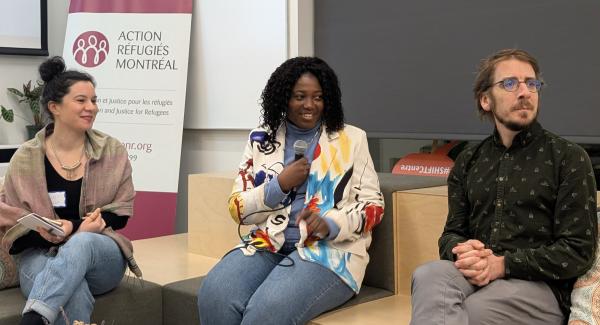
Refugee and migrant support groups are calling on the federal government to withdraw its proposed border security and immigration law. The law will make changes for those seeking asylum in Canada.
The latest action to draw attention to the bill featured a film screening and panel discussion from Action Réfugiés Montréal.
Death to All Honour the Late Chuck Schuldiner at MTELUS
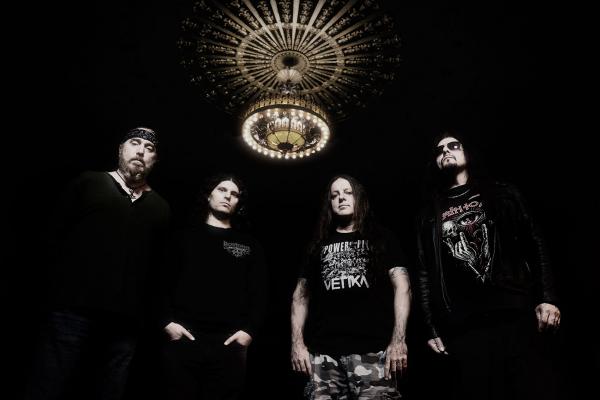
Death was had by all at the MTELUS in Montreal this past Wednesday night. Quasi tribute act / quasi metal supergroup Death to All have been bringing the late Chuck Schuldiner’s musical legacy to fans around the world since 2012 - and their performance in Montreal was one for the books.
Understanding Death to All always requires a short mansplain. Death was a Floridian metal act formed back in 1984, spearheaded by the legendary Chuck Schuldiner. Originally getting inspiration from gory horror flicks like Evil Dead, the band’s 1987 debut Scream Bloody Gore would spawn an aptly-titled musical subgenre: death metal. Characterized by blood-curdling vocals and a chunkier, grimier instrumental sound, thousands of bands, to the likes of Cannibal Corpse, Morbid Angel, and Deicide, would pioneer this groundbreaking new sound.
What separated Death from their cadaveric competition, however, was their ability to always be at the forefront of the genre they created, always one step ahead of the curve. Over the course of 11 short years and 7 album releases, Death’s output would gradually evolve towards a technical and progressive sound with longer and more intricate song structures - a far cry from their debut’s classic bloody bangers like “Mutilation” and “Regurgitated Guts”.
Death’s discography is a case study in the evolution of metal music, in a similar fashion to how the Beatles’ 7-year run dictated the progression of rock music in the 1960s.
Long story short: Chuck Schuldiner is the man. And as these stories tend to go, he was taken from the world early after a battle with an aggressive cancer that took his life at 34 years old.
Since his 2001 passing, Death’s discography has been cemented as canon listening for metalheads around the world. As the group’s fanbase continued to snowball, a desire grew to see their material played live.
Enter Death to All, consisting of former Death members Gene Hoglan (drums 1993-1996), Steve DiGiorgio (bass 1986, 1991-1998), and Bobby Koelble (guitars 1994-1996). Joining this trio is Max Phelps, taking on Schuldiner’s parts on vocals/guitar. Together, the foursome delivers just about the best rendition of Death’s music that one could ask for. While traditional “tribute” bands often have zero connection to the material they play, Death to All feels like a living, breathing amalgamation of everything that made Death so great.
Death to All are currently on the Symbolic Healing tour, a celebration of Death albums Spiritual Healing and Symbolic, which are respectively celebrating their 30th and 35th anniversaries this year. While the band played fiery renditions of Spiritual Healing classics like “Defensive Personalities”, “Living Monstrosity”, and the album’s winding title track, the real treat came with a full playthrough of Symbolic - track for track, note for note.
Although I’ve been a Death fan for years and this is my third time seeing Death to All live, I’ve regrettably never actually listened to the fan-favourite Symbolic. I’m kind of glad that I put it off, however, as hearing this legendary album for the first time in a live setting was a phenomenal experience. Songs like “Crystal Mountain” and the opening title track play amazingly in a live setting, despite being on the more technical end of the metal spectrum. Such is a testament to Schuldiner’s songcrafting abilities, simultaneously exploring intricate song structures while keeping tracks lively and fun with good replayability value.
The most standout thing I noticed at the concert was the general age of the fans. Usually, concerts performed by legacy metal acts draw an older crowd - original fans from the heyday of metal music who helped propel the genre to monumental heights. However, the Death to All crowd was surprisingly young, with the majority of fans sitting in the 18-30 year old range. This is the real testament to the lasting legacy of Death’s music, showing that just as many new fans are flocking to the group’s sound as there were back during the band’s inception, despite not having released any new material in over 25 years. That is proof of legacy.
Death to All is currently completing a North American tour with support from Gorguts and Phobophilic and will embark on a European tour this summer. Don’t miss out!
RIP Chuck.
OLD SOUL Bathes Audience in Sound: Undercurrent Album Release Party
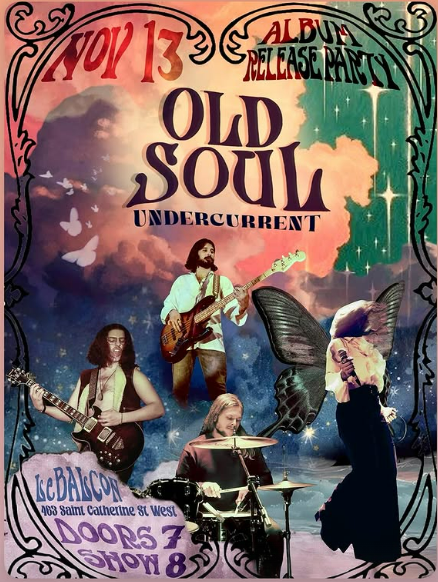
Old Soul, a rock band together for nearly a decade, released their new album, Undercurrent, two weeks ago. I streamed it soon after it dropped. It was early morning on the bus to work, and I wasn’t expecting the tone change for this album after having listened intensely to their first album, Overgrown, three years ago. The audience was given context for this upcoming project: flowing water, the colour blue, and a siren lounging along a rock face. Even if we hadn’t been given these visuals, the muted tones of certain tracks where Loreta Triconi’s voice seems like it’s coming from deep within a lake, the glide from one song to the next, showed me that Old Soul is fluid. It’s clear the band has emerged from the lush forest of their previous album and has found themselves digging into a reservoir of experimentation, exploring what rock is and can be.
Hearing them live, however, was entirely different compared to the cocoon of my headphones.
The sounds were fuller, the pitch of the lyrics varied, and the live performance let the band improvise. The bass, played by Joe Bottaro, grounded the depth of sounds that I was experiencing with rich chords, while the drummer, Ryan Palfalvi, punched through the songs, bringing a sharpness I hadn’t anticipated. This audile fullness was something that hadn’t occurred to me so clearly until then. By streaming their album, I had compressed their sound. Streaming can be great, I can guarantee that. It’s how I listen to my music, other than the weekly vinyl. Similarly to photographing an object, a landscape, or a person, streaming strips a certain essence from music. That additional layer of atmosphere created in live venues can never be replicated through speakers and headphones (try as technological innovations might). Rock resides in the rapport between audience and performers in live spaces.
On November 13th, I arrived to the venue, Le Balcon (connected to St. James United Church) a little while before the crowd and happened to cross paths with Old Soul’s guitarist, Peter Rallis. We chatted for a bit, and we agreed it would be best for me to explore the space and get a bird’s eye view from— you guessed it—the balcony. The room the band was playing in was very red and warm, at odds with their themes of flowing water and blues. There were intimate seats up on the balcony that were clearly meant for the canoodling couples lining the semi-circle wall above the stage. A great view, but I was here to plant myself squarely at the center of the crowd. I went back down as the opening set, Space Wizards, were getting ready to perform. The band set the feel of the night with cool, jazzy-psych tunes that transformed into a more intense rock energy at the end of their performance. We were given sips of what was coming next. We were primed.
Old Soul got on stage, and the lights changed to blues and purples. Psychedelic swirls tattooed the walls surrounding the band. For this album release party, Old Soul was playing Undercurrent start to finish. The album opens up with synthy bass chords right off the bat with “Closer”, something that felt more contemporary, more indie. But it also sounded like something from an 80s sci-fi film. Loreta maintained the gliding notes the audience is familiar with that extended and wrapped themselves around the instrumentals. I am shamelessly using the analogy that this track sounded as if I were hearing music through water. There was something muffled, intimate and close (ha) about this opening song that set it apart from their previous musical past.
While Overgrown was a call reincarnating the rock and blues energy of the '60s and '70s—think Jimi Hendrix, Led Zeppelin, The Doors—Undercurrent blends this past sound with their new one. The album itself is more mellow at times—at one point, when the band performed “The River”, an acoustic forward piece, the audience all sat on the ground and swayed. I’d never sat on the floor of a venue like that before, at least not intentionally. We were lulled into believing it would remain this mellow the entire time. We were wrong. Old Soul tripped us up and recalled their rock essence with piercing guitar riffs, heavy bass and intense drum solos. Tracks like “Talking to Myself”, “Rolling Rock”, and “Colours of the Moon” added that high-energy beat to balance out the more lo-fi and groovy sounds.
Between two songs, Loreta spoke to the audience about how this album was more intimate than what the band had previously made. I felt the intimacy and sensuality of their music, in hearing it performed live before my very ears. Engaging all the senses at this album release is part of that intimacy: the vibrant music gracing the venue, the bodies that crowd together and brush alongside each other, the smells of people’s perfumes, colognes, body odours, the taste of the double gin and tonic in my hand, the pulsing lights in time with the music. I didn’t feel that intimacy when I first heard the album on the bus. Time and place were totally essential here. However, when I do listen to the album, which has been a lot more since the album release party, I’m reminded of what I felt when I was there. The auditory cues are like what the madeleine cookie is to Proust’s narrator in In Search of Lost Time, jogging my memory involuntarily, conjuring just as sweet recollections of my experience. I wonder now how my experiences of countless albums before this one would be entirely different had I heard them live.
Undercurrent feels like a new vision of rock. One where bodies still shimmy and writhe in response to the music. This vision is informed by the past, but does not dictate where the sounds converge in pools. The fluidity of Old Soul cannot be confined to falling somewhere between genres—they rearrange themselves according to the vessel they find themselves in. And that vessel can be broken down and reconstructed countless times over.
A Conversation with Great Dain

This transcription is the abridged version of the interview. The full 35 minute interview is available at the bottom of the article, for those interested in more lengthy discussions and anecdotes.
Photo by Sammy Mohellebi
As the Halloween season came to a close a few weeks ago, I had the pleasure of attending local punk band Great Dain’s first headlining show at L'Hémisphère Gauche. Consisting of four Concordia electroacoustics students (Julian on drums, Noah on bass, and Laurier and Shae on vocals and guitar), this group has been tearing it up at small venues across Montreal since March and shows no signs of stopping anytime soon. In this interview, taken a few days after their first headliner in one of Concordia’s recording studios, the band has a casual conversation about their influences, their experience playing shows over the past year, and their recent headlining show.
J: Can I talk in a Dracula accent?
N: Can I be explicit in nature?
If you do talk in a Dracula accent, I will have to put “in a Dracula accent” in parentheses before everything you say.
N: Start the article like that. First sentence: “In a Dracula accent”.
No, yeah. Everything you’ve all just said was being recorded, so I will have to put everything in there.
Alright, so, introduce yourselves.
J: We’re Great Dain.
S: Do you want the full names of everyone?
Sure, full legal names.
We’ve got Laurier Michel Payette-Flynn, Julian Michael Dainard, Noah something Louette? I dunno, what’s your middle name?
N: Keep it a mystery. I’ve got two middle names.
S: And I’m Shae Murdoch McGregor Powell.
Okay, nice. You guys have been around for how long?
L: Eight months.
J: Would that go back to April? ‘Cause April was our first show.
S: Not for me, though. I joined, like, the second show.
L: Well, in reality, we’ve all been playing together for a good year and a half.
J: Pretty much since we met in the program, but I’d say officially it would be our first show, which was Gert’s.
S: And then I joined when they did Esco ‘cause Noah was in Colombia, so I filled in on bass, and then they were like “Do you wanna just stay?”. Actually, I don’t even really know how it happened.
J: I think it was actually that we had written a song already with you, and then we realized we maybe needed one more guitarist, and it just kinda worked out.
L: Even, like, tonally or sonically, there was just something missing from some of the songs, like it was very basic in the sense it was just bass and guitar and drums, and when Shae came in there was a little more diversity in what we were doing. We could explore stuff. I could just not
S: We could just physically do more things.
N: We have more freedom to do cooler things cause you’re not just bound to singing and playing rhythm guitar. You could do a solo, you could stop playing guitar and just sing, you guys could harmonize while I do something else.
J: It also makes some of the songs we play sound bigger, like “Batterhead” or “Zigzag”. Like when you guys are both playing equally to each other, it just makes things sound really huge.
Would you say you all have an equal part in how a song comes together?
J: For sure.
L: Definitely.
S: Yeah, mostly.
J: We’d like to believe that nobody keeps score, but also, most song ideas are just one of us coming up with something, and everyone fills in the blanks.
L: I think we’re big believers in building the song together.
S: Letting each instrument do what they wanna do on it, because it's just like “add your thing on it. I dunno what the bass is supposed to sound like.”
L: It’s just trying to remove the most ego possible when it comes to that. It’s very much an equal-parts kind of band.
J: Yeah, nobody’s here trying to take home a prize for whatever they did.
S: And it’s not like any of us play the director, either. If one of us has an idea, we just pipe up about it.
J: Okay, cool. Some songs are entirely written by some of us, and we’re helping each other figure out what our image is, while other songs are just us jamming, and eventually we get a structure to it.
S: That’s most of it.
J, gesturing to Laurier: Like some songs like “Regret”, which is all you.
L: I mean, I wrote that song four years ago.
J: And then “Batterhead” is a song that I wrote, which is the only song I’ve written lyrics for. And then Noah and I did “Hangtime”, which is just two chords, but it’s awesome.
L: I think the other thing is that someone will bring an idea and explain it, and then everyone tries to get their mind in that same vision.
N: We tried figuring a song out once, and it was a very moody, more heavy metal-ish type of song, and we couldn’t get it right, so I just decided to put on ambient rain sounds and turned the lights off, and we tried playing again. I think that let us figure out the song a lot easier, ‘cause wejust needed that ambience.
Talk to me about your influences. What kind of bands do you share a mutual appreciation for?
N: I think, for all of us and what we envision Great Dain as, it’ll be just us hanging out and putting music on, putting together songs that we like into a playlist or something and then that as our basis.
L: It’s a mesh of a lot of different tastes in music. For me and Noah, we take a lot from funk inour playing. At least for me, that’s what I have in mind.
N: Aesthetic-wise, we all like late ‘80s punk music, pre-grunge punk music and college radio punk music.
S: For me, I was in a punk band when I was 17, but I actually didn’t listen to a lot of punk music, so I started listening while I was in that punk band. I was really into Bad Brains and Liam Lynch. And then I was listening to a lot of Beck and the shit my guitar teacher would get me to learn. Queens of the Stone Age, Quiet Riot, shit my parents liked. Then, when I joined this band, Noah got me onto Crowbar, Julian got me into Helmet and Gulch, and that’s where my head’s been at for the past little bit. What happens is, during our rehearsals, we show up at different times, sit outside, drink, smoke and listen to music. And then it gets to a point where we’re like “fuck, we should just be playing.”
N: What’s funny, though, is that the music playing is usually just reggae.
J: I’d say for influences directly on our music and how I like to play, Fugazi is one of the bands that we all came together and just appreciated.
L: I also think like Alice and Chains, anything Ian Mackaye, Dinosaur Jr…
J: Also, a lot of BC bands.
I’m curious about the process for changing your setlist, since normally you start your shows with the “Great Dain Theme Song” but opted for "Batterhead” this past show.
J: Wow, I didn’t know we’d get asked that.
S: People were so confused about why we didn’t start with that. I think we assumed people were tired of hearing that.
J: I was like, I don’t really want our setlist to get stale.
S: People really like the theme song. We gotta bring it back.
J: I think we will bring it back, but I wanted to try something new.
S: Plus, we wanted to elongate it, so we put it in the middle and made it twice as long. L: It’s one of those songs that we like to play around with.
J: I think, since we’re new, when we try something new, it’s not really the worst.
N: If it’s a more recognizable song for people who know what we do, putting it in the middle is a bit smarter since you don’t start the show off with everybody dancing immediately.
Was your first headliner stressful? I’m under the impression that you all did a lot of rehearsing that day.
J: We ran through the setlist twice. The original plan was that we were all supposed to show up at 10, and Noah was staying at my place that night.
S: Just so that they could show up early. Like, Julian picked up Noah from work the night before.
J: And Noah and I ended up staying up until five in the morning. We picked up a pizza from my work, we were drinking beer, and kind of…
N: Pre-show jitters.
J: And I wake up to a bunch of snoozed alarms at 12 o’clock. I woke up in my underwear and went to wake Noah up like “we gotta go, we gotta go”. I can’t even process that I’m hungover or anything, and just hopped in the shower, then we left, but still had enough time to go through the setlist twice at least.
L: But I don’t think the fact that we were headlining made us nervous. I think we were more excited than anything else.
S: If anything, this is the one show I felt the least nervous for. I felt like we had actually practiced so fucking well.
N: Also, having it as a Halloween show gave so much levity to the whole situation. S: ‘Cause we could be fun.
Any local bands you’ve played with that you’d like to shout out?
ALL: Dollhouse.
J: Yeah, they took us under their wing, and they're the reason we’ve been gaining a following so far. They got us Van Horne.
L: They’re also just infinitely nice people.
N: They kind of immediately liked what we did and had us tag along to all of their shows, which basically kickstarted our whole thing. So we owe a lot to them.
J: It’s given us a chance to play with different bands that sound different from us.
S: But also, Dionysus and Soleil St.-Jean were perfect for that bill two nights ago. I hadn’t heard anything they made. Zoe and I made the poster, and we didn’t know what the vibe of the bands was, but Dionysus blew my fucking socks off, and Soleil St.-Jean was sludgy as hell. They came up after and were like “great job” and I’m like “fucking, you did a great job!”
J: The bassist of Soleil St.-Jein came up to each and every one of us individually after the show and just complimented us on what we were doing. For people to have that sort of reaction is something I’m eternally grateful for.
S: It’s cool when you can reciprocate just as strongly, too. The lead guitarist for Dionysus? A blindfolded Ozzy cover? Are you kidding?
N: Kind of put us all to shame after that.
J: Marius, yeah. Marius is fucking dope. He pulls up with a pedalboard the size of a guitar case. And when you pull that up to a show, I’m like, “Well, are they really going to use all of this?” This guy was shredding every single song.
N: One of the best live guitars I’ve ever heard.
S: Also, the drummer for Dionysus in the morph suit is singing every song.
N: Singing while drumming. Their bass player is also sick and nasty. Shoutout Duncan. It’s great that you guys are dedicated to being genuine and having fun.
N: The fact that our main goal is to have fun and enjoy what we’re doing rather than stand there with a stone face trying to be absolutely perfect, I feel like, as an audience member, it's more entertaining.
J: We play to the best of our ability, which creates a more genuine sound.
N: We also make mistakes and laugh all the time.
S: I think, pound for pound, people just tell me it feels like we’re hanging out on stage.
L: Authenticity is a big thing for us. There’s no point in putting an act on stage for us. That’s not something we do.
S: I turn my dial to eleven when I’m on stage, but it’s not like I’m not me.
J: I’ve seen a lot of bands and musicians where you see them and almost struggle with a lack of confidence by overcompensating for being a professional on stage. The entire time, you’re
taking yourself seriously while everyone else sees you're not having fun. An audience feels stressed by what you put out on stage, not just the music itself, but also your body language. It’s like your audience is responding to not only your music, but to you as an individual.
S: It’s a transaction of energy. You model the energy you want them to have; they’re gonna do it. If you’re the best audience member for them as a player, they’re gonna be like “Yeah!” and get whipped up.
I’ve got one more question before letting you all go. What’s next for Great Dain?
L: Album.
J: Yeah, we get a lot of people asking us to put music out, including my parents.
S: We do have a show on November 20th.
L: With Dollhouse.
S: I do think we’re gonna try to record an album during winter and possibly tour after.
N: We’re gonna take our time with it though, ‘cause you can only put it out once.
J: We’re still writing songs as well. We have enough songs now, I feel, that if we have them all recorded, we can curate what’s gonna be on the album.
L: We all really care about whatever this album could be, so the biggest thing for us is taking our time to make it exactly how we want it to sound. If it takes until summer, that’s fine.
J: Do we have any room for shoutouts to anybody? Yeah, you’re welcome to shout out some more people
J: Shoutout to Larry’s mom, Julie, for letting us use her garage.
S: And being so normal about it. She’s there all the time doing work upstairs as if there isn’t an entire concert happening in the same house.
L: Shoutout to my neighbours for not sending me another noise complaint.
J: Shoutout to Sergio for fighting for Montreal noise laws.
S: Shoutout to Zoë for making the Great Dain poster.
J: Shoutout to Savannah for making our first logo. RIP Van Horne. We wish we could play there a million more times.
N: Shoutout to our recording teacher at Concordia, John Klepko.
S: Shoutout, Sammy, for taking all of those pictures. And Karl and Frank for their cars.
J: Yeah, sorry, Karl. We still owe you gas money. Shoutout to my dad, who’s always begging us for demos.
S: Shoutout to Raven.
J: Shoutout to all of our friends who show up to shows. If we seem cold or not as engaging after a show, it’s never anybody else. We’re so grateful for the attention and the people that show upmore than anything.
L: I would have been happy if ten people showed up to the show.
S: The fact that we got upwards of sixty people was pretty cool.
J: To see a crowd of people moshing to the music that we write is insane.
S: Like when I screamed “Open the pit” to have a pit open? Are you kidding me?
L: I do want to input a warning if you’re ever in a pit with us: Sorry. Watch out, plant your feet, clench your teeth or something, or maybe just get out of the way.
J: If you fall down, though, we’ll help you up. Watch out for me, though. I might deck you.
N: Shoutout to all the people under 5’8 in the pit.
J: Shoutout to the venues for letting us play as well and being cool about our music being loud. And thank you for the beer discounts. We love those.
S: A dollar off every beer is a dollar I can save to buy beer.
Alright, well, thank you guys for taking the time to record and do this interview. See you guys around.
J: See ya.
GAMERella: An Interview with Gina Hara
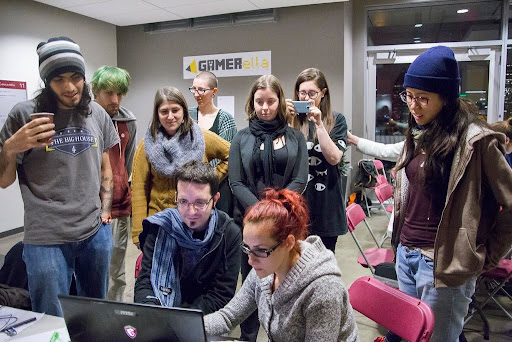
Founded in 2013, GAMERella has spent over ten years building a community of gamers across Canada and in its hometown of Montreal, Quebec. Celebrating over 10 years with thousands of alumni across the country, the GAMERella Game Jam will be happening November 15th and 16th, alongside the 2025 Montreal Games Week. Every year, GAMERella invites game lovers from beginners to experts to join in on the weekend-long game-making workshop, where they team up with other folks to create a game over two days. GAMERella is a springboard for many people interested in the video game industry from underrepresented communities (women, LGBTQ+, neurodivergent, etc.). This year, GAMERella is launching its first-ever mentorship program. Today, we speak to co-founder and co-director Gina Hara
Answers from co-founder and co-director Gina Hara.

1) For those who may want to attend or take part in GAMERella for the first time this year, what can they expect from the event?
They can expect a cozy, friendly and inclusive event filled with people excited to collaborate and share knowledge.
What GAMERella's about is creating a safe space for folks from equity-deserving backgrounds who have always wanted to make a game but never had a chance to get started. Throughout the weekend, we'll be offering mentorship from professionals in the industry, mental health support, free food, and an overall supportive, low-stress space to experiment, learn, and connect.
Whether you're an artist, writer, programmer, or just someone curious about games, you'll find a community that cheers you on every step of the way. People make their first-ever games here, and they leave with new friends, collaborators, and the confidence to keep creating.
2) What skills can someone take out into the real world from GAMERella?
So many! On the technical side, participants learn the basics about game engines, design tools, and storytelling techniques. But the biggest takeaways are often collaboration, problem-solving, and creative resilience.
Making a game in two days teaches you how to communicate, compromise, and work as a team. These are skills that can transfer into any creative or professional field. People leave with a newfound sense of confidence, realizing, “Oh, I can actually do this.” That’s a powerful feeling.
3) This year, there is a mentorship program. How important is this to the event?
It means a great deal! It’s really the next evolution of what GAMERella has always been about.
Year after year, we create this utopian weekend, free of barriers (as much as possible). Participants and crew alike have been hoping for something that extends that, throughout the year.
Over our 13 years, we've seen how mentorship can change the experience of aspiring and emerging game-makers. The mentorship program formalizes this: matching young creators with seasoned game developers for guidance, portfolio feedback, and long-term support.
The goal isn't to solely teach technical skills, but rather to open the door to historically closed opportunities for equity-deserving groups. It's about helping people build networks and careers. And in the long term, create a kinder and more equitable games industry.
4) Do you feel there has been progress made since the events of Gamergate, and what progress would you like to see happen in the future of the video game industry, from triple-A titles to independently produced games?
There's been progress, most notably in how we speak about inclusion and safety, but the work is far from over. More studios have begun taking diversity and representation seriously, and there's more visibility for under-recognized creators than ever before. That's encouraging. But systemic change takes time, and the economy is not helping. What we see in layoffs, barriers in hiring, pay equity, leadership representation, and workplace culture is discouraging. Independent creators and community projects are often leading the way, but the larger industry needs to keep pushing beyond empty gestures and social media statements towards actual structural accountability. What I'd love to see next is more shared power: where equity-deserving creators are not just represented, but are the ones shaping decisions, stories, and systems from the inside out.
5) Fun Question: What is an independent game that you played this year that gamers need to seek out?
Psychroma! It is a side-scrolling psychological horror game focused on highlighting LGBTQIA+ and BIPOC experiences. It's a beautifully crafted Canadian game that is refreshingly original and leaves you with a lasting impact. But if you want something more cozy, check out Go Go Town! It is a delightfully charming game that combines farming, city management, decoration, cute ghosts and local multiplayer!!

Gina Hara is the co-founder and co-director of GAMERella, happening from November 15-16th. For more information, visit https://gamerella.ca/en/. To participate, visit https://www.eventbrite.ca/e/gamerella-game-jam-2025-registration-1595717436809.
Remi is the host of At The Movies, along with regular Co-Host Danny Auber,y every Tuesday morning from 9-10 AM only on CJLO 1690 AM. They cover local film festivals, have interviews with directors and actors, and talk about a new film or the classics. They also cover the iconic sounds of present and past film scores and soundtracks. Follow Remi on Letterboxd. Remi is still the casual gamer on the PlayStation 5, looking for story-driven games despite his parents' wishes that he would take breaks in between.
Slipping into Other Worlds at Newspeak

In the middle of a dance party, you wouldn’t normally expect the DJ, anchored perfectly in the middle of four CDJs, to pull out a stringed instrument and turn a dance floor into an entranced audience. Yet that is what NGL Flounce did, and it is what I experienced at Newspeak on a chilly Saturday night, courtesy of the Massimadi x Discoño collaboration, an event closing out the 17th edition of the Massimadi film festival.
The night began with Ms Baby’s DJ set, whose song selection beckoned in the first arrivals with an assurance that the dance floor was definitely warmed up. What started with R&B/Hip-Hop classics to sing along to soon turned into body roll inducing, choreo-starting mixes of afrofusion, baile funk, and high BPM remixes.
When NGL Flounce takes the stage, there’s a palpable shift in the atmosphere. While many still felt the call to dance, all turned towards the performer, taking in the ethereal mix of strings backed by tracks that seemed to bounce between the electronic and the traditional. Chants and drums served as percussion while the violinist made the strings sing both lead and harmony, bringing the audience along through the soundtrack of afro-electronic trance.
The event was hosted by dancer and multidisciplinary artist Joya as well as rapper, actor and writer Cakes da Killa. Joya seemed to dance non-stop, first as part of the crowd, then up on a stage set just behind the night's performers.
When Young Teesh gets on the decks– not before requesting another round of applause for NGL Flounce, Cakes da Killa launches into emcee duties, grabbing the microphone to remind “all Montreal baddies” to report to the dance floor.
The night was absolutely electric: I heard two completely different, completely high energy remixes of Where Have You Been by Rihanna, and sang along with the crowd at the top of our lungs, somewhat hidden by the highest possible settings of the venue’s fog machine. Between Missy Elliot and Chief Keef there was bouyon, salsa, and soca, with Cakes on the mic keeping the energy high, and Joya on the stage dancing up a storm, welcoming attendees to join in. A stage usually becomes the second dance floor in Montreal and Halloween weekend can be no exception.
Archangel and Ekitwanda closed out the night, to the delight of the dancers, behind the DJ booth and in front. To see the bartenders and people working the coat check singing along was wonderful, and when I noticed Carolina, the event producer of Discoño, watching the performers, eyes full of admiration and pride, my heart was warmed on this chilly October night.
When I tore myself away to begin the long walk towards the nearest nightbus, lungs full of fog machine air, all I could think was how easily we slipped between worlds with each performance, anchored by hosts who tied these sets together, culminating in one unforgettable Afro-Queer story.
Pages


Staff Login | Advertise | Our Location | RSS | Contact Us
