RSS
The Montreal International Documentary Festival: an Interview
The Montreal International Documentary Film Festival, or better known as "RIDM", strikes again this year for its 25th anniversary. Beginning November 17 and running until the 27th, it is not to be overlooked. This year, the retrospective of the festival focuses on Brazil and its filmmakers; to celebreate cinema and bring political awareness into the programing.
Listen to CJLO radio host Remi Caron, interview RIDM programmer Marlene Edoyan, where they speak about the importance and the stake of documentaries in today's society, and what to expect from this year's festival!
The RIDM catalog can be perused here. Bon festival!
Fletcher Rocks Montreal at MTelus
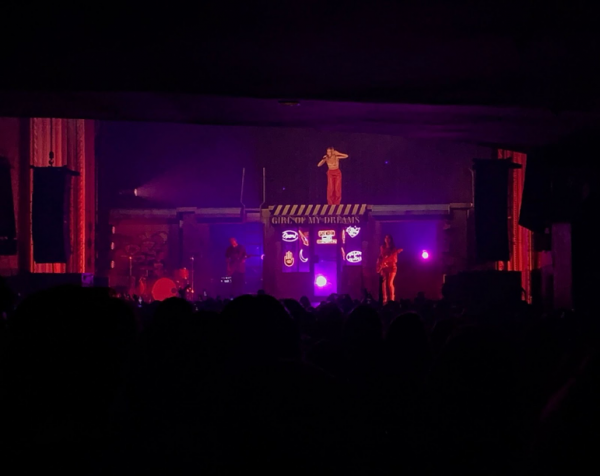
LGBTQ+ icon, Fletcher (Cari Elise Fletcher), took the stage October 29 in downtown Montreal. The venue was packed wall to wall.
From the moment Fletcher stepped on stage with her bright red leather pants and white corset, I couldn’t look away. Nor could anyone else. The only words to describe the energy she and the band members emitted are “electric” and “all-consuming” Even the scene set on the stage demanded everyone’s attention, with flashing LED signs spelling out her song titles and a bed casually suspended in the air.
Fletcher opened her performance with “Guess we Lied”, one of her biggest hits. The crowd knew every lyric, as they did for every song of the night. She performed other popular songs from her newest album like “Sting”, “Serial Heartbreaker”, and “Better Version.”
The crowd was so alive and so in love; with the music, with Fletcher, and with each other. Everywhere I looked there were couples kissing, holding hands, dancing with one another, or leaning on each other. As a member of the LGBTQ+ community, I felt so accepted, welcomed, and celebrated being at that show. Midway through the performance, in between songs, a woman in the crowd got on one knee to propose to her partner, demanding the attention of everyone including Fletcher herself. After a moment of silence, Fletcher exclaimed, “She said yes!” and the crowd erupted in celebration. It was a really beautiful moment.
Fletcher’s voice continued to touch everyone’s heart as the night went on. She used every inch of the stage to her advantage, dancing and headbanging as the guitarists blew us all away with electric guitar solos. The lights would dim, and when they’d come on again, Fletcher would be sitting on the suspended bed or standing on the top of the set above everyone.
Back in July, Fletcher released a song titled “Becky’s so Hot” announcing her upcoming album, “Girl of my Dreams”, putting herself at the center of TikTok’s attention. In the song, she directly names her ex-girlfriend’s new girlfriend, Becky, and even references a picture she had posted wearing her ex’s shirt. The internet went wild, divided. Some were saying this was immature and unfair to Becky and Cari (Fletcher’s ex-girlfriend), while others thought this was “iconic” and “badass”.
Before Fletcher returned for an encore, the LED signs began to flash, and fog began to fill the stage. As the crowd erupted in excitement, the speakers went from silent to playing audio short clips of different people making statements about the drama following the release of “Becky’s so Hot”. Her name was said a lot, in many different contexts, displaying the different opinions surrounding the release, right before she came back on to perform it. And she performed it with such power and enthusiasm, as if to say that she couldn’t care less about other people’s opinions.
Fletcher made the most of the controversy. She used it to her advantage, to make her show unforgettable; to make a statement. You could feel her anger, sadness, confidence, and resilience, in the way she belted every lyric. Not just while performing her encore, but throughout the entire show. She touched every person in that crowd, including myself. It was euphoric and empowering.
The last song of the night was “Bitter”, a song Fletcher released in 2021 that is still one of her most listened to today. It was a really impactful song to wrap up the concert considering the lyrics have to do with an ex-girlfriend kissing someone new but all the while thinking about her.
Heartbreak affects everyone’s lives differently and for Fletcher, it was her inspiration to write an incredible new album to rock the stage with here in Montreal.
Pink Floyd Exhibition Debuts in Montreal
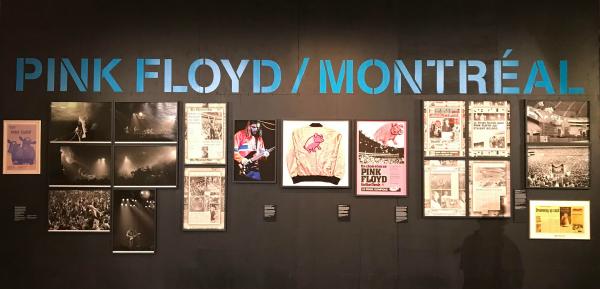
The Pink Floyd “Their Mortal Remains” exhibition opened in Montreal on Nov. 4 at Arsenal Contemporary Art. The exhibit includes hundreds of artifacts from the legendary rock band’s lengthy history, covering Pink Floyd’s legacy from their 1967 debut The Piper at the Gates of Dawn to 2014’s The Endless River.
Previously, “Their Mortal Remains” has enjoyed stays in the United Kingdom, Italy, Germany, Spain, and the United States - attracting over 500,000 thousand people since its 2017 debut. Visitors can expect displays dedicated to each era of Pink Floyd’s history, separated album by album, as the band moved from the underground London music scene to developing the massive rock operas they’re famous for, such as The Dark Side of the Moon and The Wall. Among so much more, the exhibit is laced with colourful music posters, original equipment and instruments used by the band, and various on-stage costumes that appeared throughout their career. A fan favourite artifact displayed was the school teacher’s cane used to beat frontman Roger Waters in his youth, which inspired the famous line “Hey! Teacher! Leave them kids alone!”
The exhibit didn’t only bring paraphernalia to Montreal, however. Pink Floyd founding drummer Nick Mason answered questions to the media at a press release, alongside Creative Director and co-curator Aubrey Powell (who helped design the famous album cover for The Dark Side of the Moon, among many others), and Executive Producer Michael Cohl. Here, Mason elaborated on Pink Floyd’s remarkable history with the city of Montreal.
On July 6, 1977, Pink Floyd played the first ever concert held at the Olympic Stadium, whose construction was unfinished at the time. A record 80,000 spectators watched the legendary rock act play some of their most iconic songs on their In the Flesh tour. Yet, while many audience members were undoubtedly inspired that night as Floyd jammed away, Waters was the one with the biggest lightbulb over his head as he spat into the face of an audience member in some sort of meltdown.
While one may be inclined to think that the incident was sparked out of some kind of dislike Waters had for Montreal specifically, his angst had been building up over the course of the tour. The singer had become dissatisfied with the growing separation between his band’s fanbase as they transitioned from playing more intimate club gigs to full-on sports stadiums. With these arena tours came the ruckus of rowdy talkative fans, unattentive concert-goers, and general troublemakers, who had been throwing firecrackers on-stage at the infamous Montreal gig, which closed the In the Flesh tour. This was clearly the last straw for Waters, as he swore into the microphone halfway through their set before spitting on a fan who had apparently thrown one of the firecrackers.
Waters’ disenfranchisement with the band’s fanbase inspired the whole concept for Pink Floyd’s massively successful The Wall - packaged with a tour and animated film. Without getting too much into the motif of the record, the wall referred to here serves as a metaphor for the growing divide between Pink Floyd and their fanbase. On the tour for this album, the band would set up a massive wall stage prop that was slowly built up throughout the concert and eventually blown open in the culmination of concerts on that tour.
Given the importance Montreal had to their career, it was only fitting that Pink Floyd brought “Their Mortal Remains” to the city. The exhibition runs until December 31, 2022 at Arsenal Contemporary Art.
Batushka Deliver a Blasphemous Sermon to Sold Out Bar Le Ritz
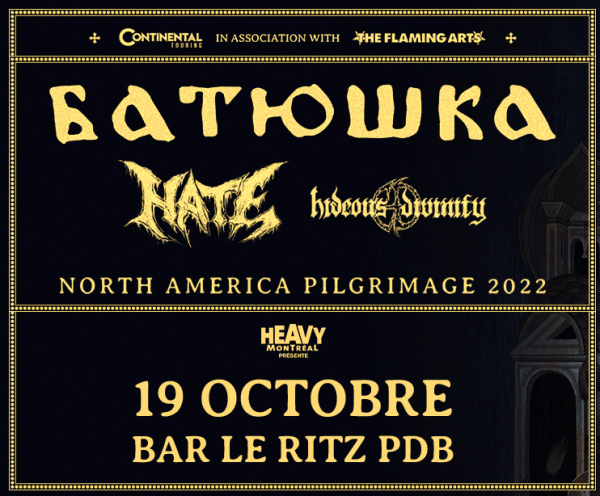
Batushka (Батюшка) and Hate brought Polish black metal to a sold out Bar Le Ritz on October 19th. The Montreal date was one of the concluding stops on the 24-date North American Pilgrimage tour.
Hate warmed up the stage. Hailing from Warsaw, the group have been releasing underground blackened death metal since 1992. While the band mostly consists of new members, lead singer/guitarist Adam Buszko (stagenamed Adam the First Sinner) has been at the band’s helm since their inception.
The group presented themselves like you’d expect a blackened death metal band from the ‘90s to, each member adorned in leather and their own play on the infamous black metal corpse paint. Their songs were fairly chunky and had quite a bit of substance to them, as the band rifled through tremolo riffs and heavy percussive hits.
The most interesting part of Hate’s set was their “encore.” About 30 minutes after they got on, they thanked the crowd and walked off the stage. However, the house lights stayed dim and the venue played a dissonant ambient track for a few minutes while… everyone kind of stood around in the dark wondering what was going on. After a very weak chant was started by some dude in the front row, Hate retook the stage to an applause. It was the only encore I’ve seen that was created out of confusion. Definitely an interesting tactic.
Headliners Batushka played next. Also Polish but from Bialystok, the group are a newer project that gained a lot of traction back in 2019 because of complicated legal disputes between band members which split the name in two. As a result, there are technically two bands that operate under the Batushka name, but the original group responsible for their much-acclaimed debut doesn’t seem to be that active. Therefore, the Batushka currently on tour are the ones making a name for themselves with new music, while the other Batushka seems to have the rights to the album that made the group famous in the metal scene, but they are not nearly as active.
With all that out of the way, Batushka showed why the venue was sold out that night. Given that they were playing in a small bar, Batushka were about as theatrical as possible, which was by far the highlight of their performance. The band members were adorned in long satin hooded cloaks spotted with custom gold emblems and patterns. These outfits really set the atmosphere for their set, as frontman Bartłomiej Krysiuk stood ominously in front of the microphone stand, delivering ominous chants to the audience. In front of him was an altar that held a sea of lit candles and a prayer book, flanked by metal podiums topped with skulls. The band’s music also set the scene, as the band progressed through grand black metal tracks which were often bookended by more melodic sections, which offered a good sonic balance.
The best part about Batushka’s performance was their emphasis on mixing the musical aspect of their set and occult theatrics. Attending the show felt like attending some sort of strange blasphemous yet communal ceremony. This atmosphere was created not only by the aforementioned stage props, but through how the band frequently focused on the non-musical aspects of their set. During some songs, cloaked members would slowly light various candles on-stage, as spooky black metal rifled through the audience. Other members would collect skulls placed around the stage and lift them towards the ceiling as some form of occult prayer. It was these moments that really got to the core of what’s special about Batushka.
While Batushka’s North American pilgrimage has come to a close, make sure to catch the band live if you dare.
'90s Nostalgia Hits the Bell Centre in 3 Waves
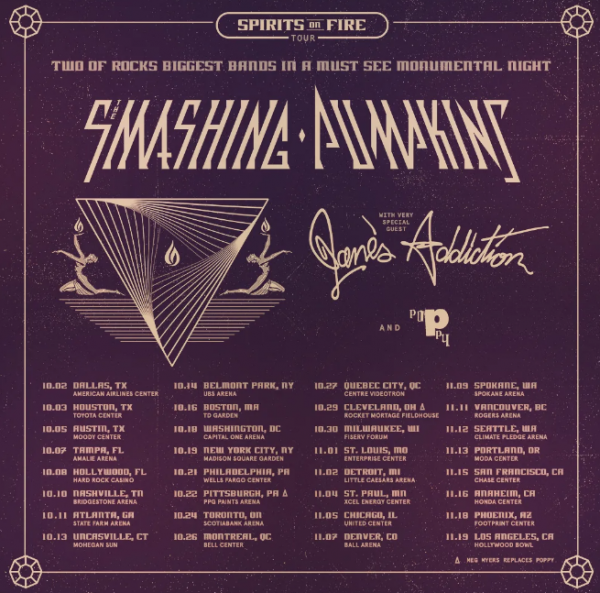
Do you like cyberpunk themes while you’re out late at night? Cause that’s what Meg Myers is all about. She opened up with a granular synth to cue the band to come on and played a set that hyped up the crowd for the ensuing acts of the night. Poppy then delivered on the heaviness, listening to their studio songs is nothing like hearing them on stage, they were tight, and they were polarizing. Her bubblegum pop voice (which bordered on extremely sultry) mixed with the abrasive big muff tone of the guitars and blast drums was everything that the crowd was looking for in an opening band. They ended off their set with her song “I disagree”, which entailed the drummer Ralph Alexander increasing his blast speed twofold.
Then Our Lady Peace took to the stage, opening with an ominous sequencer that filled the entire venue before “The Message” led the setlist. They stopped in the middle of their second song to thank the crowd for having them on stage and thanked Smashing Pumpkins for the opportunity to play on their tour. “Innocent” took the mantle of the third song. During the chorus you could hear the crowd on the floor singing “we are, we are all innocent” which took me on a trip down memory lane. After “Innocent,” the singer told a story to the crowd about how as a teenager he snuck into a venue to watch Jane's Addiction. He professed his admiration for them by announcing to the crowd that they would cover “Mountain Song'' from his idol band. “One Man Army” was a bit of a letdown because I was expecting the singer Raine Maida to be able to handle the high notes but he changed the majority of the chorus vocal melody. The band also made a slight slip up which is negligible but noticeable all the same. They played two songs from their more recent albums to stay current: the first one was “Wish You Well” which was from Spr, their most recent album, and the single that followed was “Drop Me in The Water” from Somethingness.
Despite “Somewhere Out There” falling out of reach with its live expectations, many fans in the crowd could be seen waving their lighters to the beat of the ballad.
Easily the most memorable songs (and least disappointing) from their set were “Clumsy” and “4am." All in all I would’ve just liked to hear Maida’s voice more in the mix, but then again I think there was a reason for that as there had been many reports of him not being able to hit the high notes. Lastly, during “Starseed”, he barely sang the chorus sections and made the crowd do it; much to the our chagrin.
And then, everybody’s attention was diverted to the main attraction of Smashing Pumpkins. Do you like pad synths? Well then you would have loved the intro theme to the Smashing Pumpkins set. If I could describe it in one word?: symphonic. If you thought that the people were cheering for Our Lady Peace during their hits, you should’ve seen them during “Bullet With Butterfly Wings.”
“Bonsoir Montréal, nous somme Smashing Pumpkins” in a shitty French accent right into “Today” which filled the venue with the sounds of teenage angst in a North American suburb. They have improved a lot since their last venture into Montreal in 2019. I remember Billy Corgan just playing the songs and barely interacting with the crowd. This couldn’t be further from the truth this time: he was dancing, pointing to random crowd members and interacting with them. Their set had just the right amount of heavy and soft songs; playing the softer tracks during moments where they felt people’s ears would tire out and they were spot on. Truly the mark of a seasoned band that has experienced many decades of touring.
One song from the setlist was a curveball in two ways: they took the song and turned it into their own, and the fact that they, Smashing Pumpkins, would dare stray from the 90s post-grunge that they were. That song was “Once in A Lifetime”, originally from the new wave band Talking Heads. They also didn’t hesitate to play their more recent songs, as “Solara,” “CYR,” and “Beguiled” made the set. Halfway through the show, Corgan and Iha struck up a conversation with each other, and thanked the crowd, remarking how “never in a million years could we imagine that we would be up here with you"; proceeding to perform the fan favorite Tonight, Tonight.
After “I of the Mourning” Iha introduced the band, playing up the banter levels again before starting the iconic “Cherub Rock.” What followed were some of the biggest hits in '90s post grunge history: after “Cherub Rock;” there came “Zero,” and then “1979.” I don’t know which of these received the loudest applause but Corgan, Iha, and Chamberlain, if you’re reading this, thank you for the memories. You made me cry.
It's as if the night was a race for who was edgier: Poppy, Our Lady Peace, or Smashing Pumpkins? With Poppy/Myers’ sultry industrial sound and OLP having the monopoly on Canadian edginess, Smashing Pumpkins retained their first-place status as the “God is empty, just like me” persona. 10/10 would watch them again for the third time.
CJLO REARS ITS MTL’S-BEST-RADIO-STATION-HEAD FOR THIS YEAR’S RECORD BREAKING FUNDING DRIVE!
CJLO’S annual funding drive came to an end just a few days ago on October 31, and within the 11 days everyone partook in this drive, from programmers, to volunteers who helped at the events, and to those who donated of course, all had an important (and very cool) hand in far surpassing our goal of $5,500 and last year’s amount of $8270… with a record-breaking $10,166!
This is certainly a funding drive to remember as it accentuates how strong the community over at CJLO remains, even in the most trying climates. It demonstrates the power and solidarity that exists in people selflessly coming together, and how nothing– not even the living crisis, can take that away from Montreal and CJLO 1690AM. The city is alive, and it’s largely due to organizations such as CJLO that keeps it breathing through upholding artists of all sorts.
It’s not merely the donations that makes CJLO Montreal’s best radio station, but the close-knit community of this organization that keeps this city’s essence alive. A huge thank you once again to all the volunteers and their shows who relentlessly dedicate themselves to making CJLO the radio station it is, to those that aided in making this funding drive succeed, and to those who donated! None of this could’ve happened without you all. So, put on your dancing shoes and lets dance the blues, in honour of this year's record-breaking funding drive!!!
Conan and Dopethrone at Foufounes
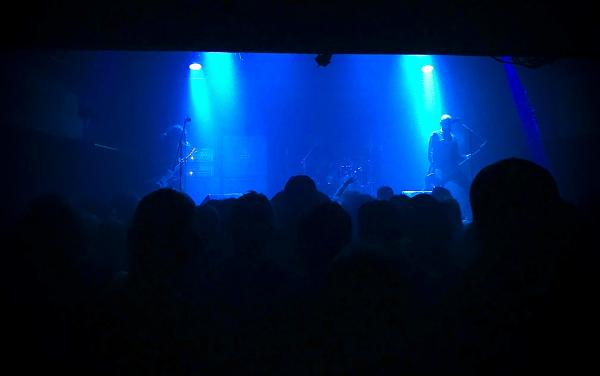
British riff titans Conan opened their “Doom Over Canada” tour in Montreal on October 27 at Foufounes Electriques. The unique 10-stop jaunt will see the band grace Canada east to west with their blend of slow yet hard-hitting sludgey sonics - presumably ending in Vancouver on Nov. 6 (the location is to be confirmed, but it’s a logical point to end the tour).
Calgary’s Wilt and scene favourites, Dopethrone, opened the Montreal date. Dopethrone is a staple of the Montreal scene and they knocked their set out of the park as expected. Frontman Vincent Houde was really feeling his crazier stage persona, as he opened his eyes wide and scanned the crowd, eventually locking eyes with random audience members for uncomfortable amounts of time. This was of course when he wasn’t busy maniacally twitching and sliding his finger sideways across his neck while delivering lines to hit Dopethrone numbers.
Their set wasn’t all death stares however. Houde took a break between songs to ask fans to collectively wish his mother happy birthday, who he said was in the crowd that night. After a few more heavy-hitters, drummer Shawn Ellingham left his kit to tell the crowd that a dear friend of his, nicknamed “Princess Leia,” had passed that morning after battling cancer. The heartfelt confession was met with a warming applause from the audience. A real sense of togetherness was present amongst attendees from this point, as the phenomenal set-closer “Killdozer” turned the venue into complete pandemonium.
Conan went on to take the stage, exploding into their meandering mixture of heavy riffs and vocals that sound like some demon trying to communicate with you from beyond the grave. While the band’s stage presence was somewhat stiff, their music was altogether solid and well-arranged. Following slower, sludgier sections, the band would often break into something more fast and wild, riding catchier riffs and asking audience members to hop along with.
I also have to commend these Brits for taking on a Canada-specific tour. When I read the “Doom Over Canada” tour name I figured they were just going to hit the Canadian stops in one shot then dip to the denser dates down south where the money’s at. But no, they’re literally hopping across the pond just to play Canada east to west. I can only assume visa issues or something along those lines are the result, since it’s an interesting choice to play so many Canadian dates close to the border and not dip down to the States to at least play New York City, New Jersey, Philly, etc. Regardless of the backstory, props to Conan for being one of the few bands bold enough to tour Canada in one shot! They’re even playing Saskatoon!
Conan’s new full-length Evidence of Immortality is out now via Napalm Records.
Funding Drive Halfway Point Updates
Since we just passed the halfway mark for Funding Drive, we thought it’s only fair to share the support we’ve been getting from the CJLO fam, with the CJLO fam! You’ve shown up in a big way and got us past several of our set goals to date.
Funding Drive runs until October 31st, so you still have time to keep donating!
As promised, here’s a list of show-specific donation incentives.
Superconnected
DJ: Francella Fiallos
>$30: thank you on-air, song dedication
$50: personal playlist
$100: playlist + hand-sewn pouch
$250: co-host + knitted accessory
Sewer Spewer
DJ: Chris the Frog
$5 - request a song to played on October 31st (more donations = more song requests)
Transistor Sister
DJ: AJOREILLY
$15 - on-air song dedication
$25 - personalized playlist
$40 - Transistor Sister show takeover
$60 - baked sweet treat of your choice delivered to you
Hooked on Sonics
DJ: Omar Sonics
$30 - a Spotify Playlist in the Sonics Quilt format (send over a topic or an event for a slew of songs that work through a common thread)
$60 - an LP or 7" from the Sonics collection carefully curated to your tastes
$100 - keys to the show to host it for your own Sonics Spectacular
$200+ - Omar does your taxes! (*non-existent clients only).
Ashes to Ashes
DJ: Alex
$10 - a curated playlist of bops made just for you
$25 - co-host one hour of the show with me and play any song of your choice
$50 - co-host and choose tracks for all two hours of the show!
The Pressure Drop
DJ: Danny Payne
$10 - a tune of your choice played on-air (no Coldplay)
$20 - choose that week's Pressure Drop Pioneer (played at the end of the show)
Dead Beats
DJ: PRETTYDEADB0Y
Proof of donation - a personalized little monster drawing + a thank you letter
Another reminder that we still have two great events coming up this weekend:
CJLO A-Goat-Goat Motown Night
“Throw on your hottest '60s garb and get ready to dance the night away to the very best tunes from Hitsville, USA! CJLO 1690AM will be spinning Motown classics from the Supremes, the Temptations, Smokey Robinson, Marvin Gaye, Stevie Wonder, and many many more!”
When: Friday October 28th, 11am-3pm
Vinyl Fair
“Calling all vinyl nerds! Dig into some crates and discover some gems, both new and classic, at the CJLO Vinyl Fair! Come on down to MB 9 (JMSB building) of the downtown campus of Concordia University! We'll have vendors selling classic rock, soul, country, blues, and even some folks selling CDs (calling all CD Guys! Your time has come!)
When: Saturday October 29th, 12-5pm
Looking forward to seeing you all there!
CJLO's 2022 Funding Drive is Upon Us
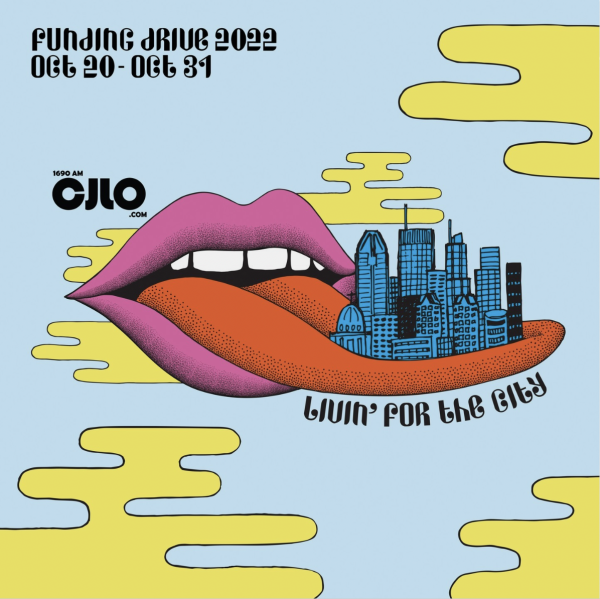
We are well into October, and that means we’re about to kick off our annual Funding Drive! As we ramp up for that, here’s a quick overview of the incentive tiers from the station.
There are one-time donations ranging from $5-$250, and recurring donations ranging from $3/month-$25/month. You can find more information and donate here. (Check back for a list of show-specific donation incentives, coming soon!).
We’re hoping to raise $1,200 before October 20th, which is when the Funding Drive officially starts.
The exciting events you can expect from this year's drive:
Introduction to DJing for Gender Minorities
“Learn the basics to DJing and get some hands-on experience spinning tracks with this in-person workshop. Open to women or anyone who identifies as a gender minority. Instructors Lady Oracle and Sugarface Belfo will be bringing their consoles and equipment, and each participant will be given time to experiment with music on their own.
When: Saturday October 22nd, 11am-4pm
“Show off your smarts as CJLO teams up with the Monday night trivia held every week at Ye Olde Orchard, to present a special edition for CJLO's Funding Drive. Form teams with up to 6 people and compete to win cool prizes, including passes to RIDM and Eastern Bloc, as well as vouchers for Chef On Call and Nilufar, and merch bundles from local record labels!”
When: Monday October 24th, 8:30pm
“Throw on your hottest '60s garb and get ready to dance the night away to the very best tunes from Hitsville, USA! CJLO 1690AM will be spinning Motown classics from the Supremes, the Temptations, Smokey Robinson, Marvin Gaye, Stevie Wonder, and many many more!”
When: Friday October 28th, 11pm-3am
“Calling all vinyl nerds! Dig into some crates and discover some gems, both new and classic, at the CJLO Vinyl Fair! Come on down to MB 9 (JMSB building) of the downtown campus of Concordia University! We'll have vendors selling classic rock, soul, country, blues, and even some folks selling CDs (calling all CD Guys! Your time has come!)
When: Saturday October 29th, 12-5pm
On top of all these events, there’s also the option to show support with CJLO exclusive merch showcasing this year’s Funding Drive theme of “Livin’ for the City”. T-shirts, tote bags, power banks and stickers, along with a limited edition patch, will all be available. Of course, we still have our classic CJLO mugs and hoodies as well.
Funding Drive runs from October 20th-October 31st. Thank you for all your continued support that helps allow campus radio, and community thrive!
Isabella Lovestory – Pop Princess, Thrift God
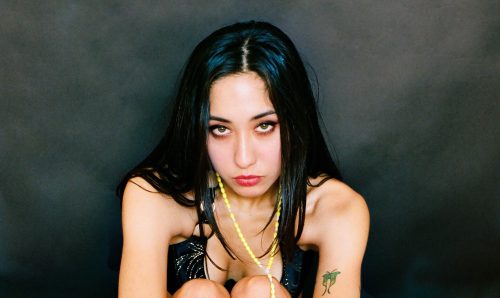
Approaching the balcony of Projet Casa, I couldn’t help thinking that Isabella Lovestory had stumbled onto the wrong stage. Let me set the scene: a bourgeoisie house in the Plateau, repurposed into a contemporary art gallery called Projet Casa. The balcony of Projet Casa is old fashioned, featuring a charmingly dilapidated wrought iron balustrade. It looks over Projet Casa’s small parking lot. A huddle of mortals gathers, gazing up at the sexy, hot pink MTV goddess, almost glowing against the grayness of her stage.
At the start of the set, much of the audience was awkwardly standing apart from each other (perhaps observing social distancing), but Isabella Lovestory was having none of it: “come closer,” she urged us, arms outstretched. I imagine that everyone in the audience felt at that moment that she was speaking directly to them. The crowd edged forward, and soon learned that life is better closer to Lovestory’s glow.
She launched into “Sexo Amor Dinero,” and I learned quickly that it’s impossible to not dance to her music. (I say “dance” – for me this is awkward swaying, but the point is that the urge to move one’s body is irrepressible in earshot of Lovestory’s music.)
Her music is neon, kinetic and absolutely overstimulating. She fuses the sounds of Y2K pop, reggaetón, Y2K R&B, hip-hop, K-Pop, and hyperpop completely effortlessly. The way she combines so many genres feels very… internet-y to me. I think gen-z kids all generally understand how being terminally online teaches you how to be a sponge. But Lovestory is a very special sponge. The brilliance of her music is not that she can mimic of all these styles; it is that she is intelligent enough to absorb them, synthesize them, and make them completely her own.
She made voracious use of the space around her, strutting back and forth across the stage in her kitten heels (clickclickclickclick). The balcony became her prop: she cleverly used the balcony railing for sexy hijinks and imagery – going on all fours and peering through the railings, like she was behind bars, then using the taller posts in the railing as an impromptu stripper pole. When she bent over the edge of the balustrade, she said “this is so Romeo and Juliet.” The genius of her use of the space really speaks to the multimedia ingenuity of the masterpiece that is Isabella Lovestory.
There’s a German term called “Gesamtkunstwerk,” which basically denotes a work of art with different creative processes come together to create one work of art and I can’t for the life of me get it out of my head as I’m thinking about Isabella Lovestory’s performance; of her persona. She’s not just musically talented, she’s a true performer, a dancer, a fashion freak. Her outfit alone was a work of art: dazzling multi-colored neon leggings, a skintight pink and black striped minidress, a low-slung Y2K style black belt, little black ankle warmers slung over Miu Miu kitten heels (duh), and a little pom-pom headband (which at some point she threw to a member of the audience who was later revealed to be her little brother).
It is important to me that you know that Isabella Lovestory is fucking hilarious. After performing her *iconic* hit from 2020, “Kitten Heels,” she stuck a foot between the balcony railings, wiggled it around and said of her eponymous kitten heels “they’re Miu Miu and I got them on ebay for 12 dollars.” (Miu Miu kitten heels are generally around $1300 CAD new and $150 CAD used). Then she turned around sharply, whipping her hair, and launched into the next song.
During the last song, the cops showed up, sirens blaring. Lovestory took this in her stride: “It’s part of the song!” she announced, without missing a beat. Then she strutted to the end of the balcony, folded at the hips and twerked audaciously in the direction of the police.
The thought I had at the start of the show was clearly woefully misguided: there is no “wrong stage” for Isabella Lovestory. She belongs everywhere. I welcome her reign.
This performance at Projet Casa was part of POP Montreal. Her new album, "Amor Hardcore" was released Wednesday October 5, 2022, and is available to stream on Spotify, and YouTube Music.
Pages



Staff Login | Advertise | Our Location | RSS | Contact Us
