RSS
Jolie Holland + Sallie Ford & the Sound Outside @ Cabaret Mile End

In the music world, consistency's a bitch. Sure, it helps you build a solid fan base and stack up a repertoire of tunes, but no one wants to write about how your ninth album is just as solid as the eight that preceded it. Such is the curse of many career singer-songwriters, including Jolie Holland, formerly of the Be Good Tanyas, who released her fifth solo album Pint of Blood just last week to unanimously polite reviews.
Speaking of polite receptions, 100 or so faithful gathered at the Cabaret Mile End, an odd venue with a flat, rectangular shape and loads of seating, to catch Holland and her band rather than opting for the 80,000-strong U2 cluster-happening somewhere out east. First up, though, were Sallie Ford & the Sound Outside, a blues-folk group with a slightly cabaret-leaning stage presence thanks to the powerful, if somewhat mannered, lead vocal stylings of Ms. Ford. Their 40-minute set opened with a handful of more downcast tunes, occasionally making use of bowed stand-up bass, but never sunk to becoming actually depressing. Midway through, upon noticing the tenor of their set, they kicked it up a notch, upping the tempo and leaning harder on ace guitarist Jeff Munger's blues solos.
Holland kept Munger and Sound Outside drummer Ford Tennis for her own band, who opened the show with a rousing Michael Hurley cover before getting to Holland's own tunes, beginning with the Pint opener and Neil Young sound-alike, "All Those Girls." Holland's playing style relies heavily on stage banter, albeit of an unusually candid nature. A cover will usually be accompanied by a brief ramble on her feelings for the originator (Hurley, Neil Young, Los Lobos), but the rest of the time she's apt to reel off any stray thoughts as she pieces her set list together. Her use of the band was odd, too: she brought them on for the first few tunes, then discarded two players, then played the entire middle to end of her principal set solo. This unadorned portion worked especially well for lyric-driven tunes like The Living and the Dead's touching, sardonic "Palmyra." Luckily she had the good sense to bring the band back for a spirited take on Pint of Blood's African highlife inspired "Little Birds." ("I wrote this a while ago, but now that I live in Brooklyn...I have a band that can play this.") Munger also ably kept up with Marc Ribot's part on the tricky, ambling ballad "The Devil's Sake."
The encore was admirably loose, with Holland playing the last of her remembered originals before branching out into some more covers, including one last tune that, despite the intervention of her intrepid violinist, she could not properly recall the second half of, ending the show rather abruptly and letting the audience go to discover the horrors of the outside world's sudden, torrential downpour. It was the sort of set-ending the term "grace note" was invented for.
-Simon H hosts Sucker Blues on Wednesdays from 4-5pm
Heat wave to hit Montreal mid-week
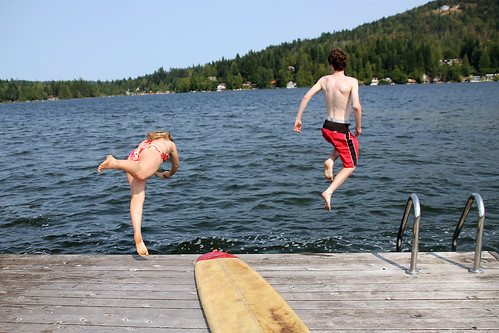
Environment Canada is expecting a heat wave to hit Montreal by mid-week. Temperatures rose to 40 degrees factoring in the humidex on Sunday. High heat and humidity warnings were issued for Montreal and Laval.
Environment Canada suggests children under five, the elderly and people with respiratory problems stay indoors as much as possible. Meteorologist Andre Cantin at Environment Canada says it’s very important for everyone to stay hydrated. He also recommends staying in the shade or in air-conditioned places and cautions against intense physical activity.
Temperatures are set to rise to 31 degrees as of Wednesday, and remain that high throughout the weekend.
Photo by Erica Fisher.
Montreal Impact won’t open MLS season at home

The Montreal Impact won’t be opening their first Major League Soccer season at home. Instead, they will play at the Olympic Stadium.
The team hoped to play the first few games in the expanded Saputo Stadium. The government gave them twenty-three million dollars for the project, but the team wasn’t able to find a builder on time. The Montreal Impact president says this is because the cost was too high. He says they’re still trying to stay within budget.
The project is now set to complete in the summer of 2012.
July 15th 2011
News read by Joshua Nemeroff and produced by Erica Bridgeman.
Stories written by Michael Lemieux, Samah Fadil and Erica Fisher.
Super Hospital construction starts overnight
 Residents living near the MUHC Super Hospital construction site are getting ready for more dust and dirt. The next phase will have construction continue overnight.
In order to improve access to the hospital, Decarie Boulevard will be widened to five lanes from three lanes. But that also means rebuilding a railway underpath. In order to not disrupt CP rail's services, the work must be done between seven p.m. and five a.m.
This leaves no relief for nearby residences. The Glen Yards area is already fed up with the disruptions the building has caused. However, this phase is expected to be completed by November.
Bob Rae on Champlain Bridge
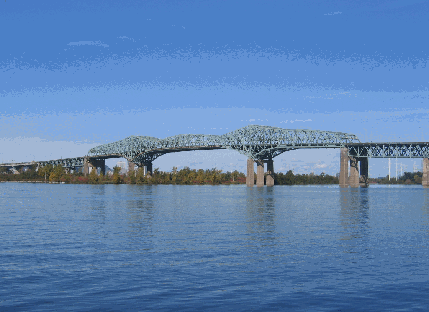 Bob Rae and the federal Liberal party harshly criticized the government for what they say is inaction on the Champlain Bridge issue.
Liberal leader Bob Rae said the Harper government has wasted five years dithering instead of working towards a solution.
The criticism comes on the heels of a report that details the costs and feasibility of replacing the Champlain Bridge. The report includes a plan and budget for replacing the existing bridge with a new one, or with a tunnel.
The Champlain Bridge is Canada’s busiest bridge. With 160,000 crossings a day it is an extremely important part of the Montreal economy. Over the past few years’ commuters have been worried by reports warning of the aging structures need for repair or replacement.
Rae was most vocal on how he believed the federal government could waste no more time debating. Quebec MP Denis Coderre agrees noting that even if the government were to decide to replace the span today, numerous environmental studies would delay its construction by years.
Many reports point out the futility of attempting to repair the bridge. Estimates of basic maintenance range from $18 to $25 million a year over the next decade. The cost of a new bridge would be $1.3 billion, a tunnel $1.9 billion.
Ville-Marie lane closure
In local news, getting around by car this summer is about to become an even bigger challenge in Montreal. That's because, starting Wednesday, Transport Quebec is closing lanes along one span of the Ville-Marie expressway.
The lane closures will affect both directions and are due to more roadwork scheduled for the next four months. Transport Quebec announced the lane closures on Tuesday.
One lane heading west will be closed between Panet St. and the University St. exit. One lane, and in some areas two lanes, heading east will be closed between the entrance of the Ville Marie tunnel and Panet St.
Work at Beaver Lake
 In local news, the city of Montreal announced on Tuesday that it will start work around Beaver Lake. The work will include rebuilding the stone wall around Beaver Lake, improving the water circulation and cleaning up undesirable plants.
The city has also announced that it will renovate the parking lot and install lighting, as well as new park furnitures. Rowboats will be replacing pedal boats.
The renovations will start in 2012, and most services and activities will still be running while the work is being done.
Cop cars are not for sleeping
 The Laval police have launched an inquiry into the behavior of their officers. Photos of two of their officers sleeping in their police cruiser were sent to local media. The patrol car was parked under some trees behind Tourism Laval on Saint Martin Boulevard on Saturday morning.
The department’s spokesperson said sleeping in a patrol car outside work hours does not violate the code of conduct. But it does go against the department’s work ethic.
The inquiry was announced in a news release issued Tuesday evening.
Another similar incident occurred in February on a Highway forty ramp. Motorist Maxime Carpentier pulled over after seeing two Sureté du Québec officers lying down in their cruiser. He recorded video on his cell phone which woke up one officer who then issued a one hundred and fifty-four dollar ticket for parking on the highway. His fine was dismissed after the video went viral on youtube.
Jazz Fest: Francois Bourassa Quartet @ Gesù

Thursday, June 30th at Gesù, lauded Canadian pianist François Bourassa proved that, without a doubt, Quebec is home to some of the finest jazz musicians on the planet.
Fronting an incredibly talented quartet of home-grown musicians in saxophonist Andre Leroux, bassist Guy Boisvert, and drummer Philipe Melanson, Bourassa put on a contemporary jazz clinic. The evening's program consisted almost exclusively of tunes from the quartet's brand new album Idiosyncracie. Not "straight ahead" by any means, Bourassa's compositions aren't catchy. They hover on the fringe of memorability, forcing the listener to press forward into exciting musical territory rather than linger on phrases already played.
Each musician in the ensemble possesses a unique role. Leroux is charged with the bulk of the melodic foundation, weaving intricate lines in and out of the harmonic framework laid down by Bourassa. Melanson's drumming and percussive work is as much textural as it is rhythmic, with the aforementioned manipulating his drum kit in a variety of interesting ways providing a wide range of timbral effects. Boisvert's impeccable timing and rock solid groove serves as an anchor in an otherwise swirling rhythmic soup. The result is a perfect mélange of emotion and intellect fueled by the E.S.P.-like connection shared between the four.
Interesting to note was Bourassa's mention of contemporary classical composers Karlheinz Stockhausen, Gustav Mahler, and Alban Berg in advance of his three-movement "Suite Allemande". These were some of the most forward thinking composers of the twentieth century, and that influence was readily apparent throughout the evening.
While not flashy, Bourassa's quartet displayed exceptional prowess and emotional range, both in improvisation, and group interplay. The evening was capped off by an energetic rendition of Bourassa's "Rasstones", the only tune of the night not found on Idiosyncrasie.
To sum up the evening, it was an immaculate foray into contemporary jazz that kept the audience engaged from the opening note. The François Bourassa Quartet proved that you don't always have to search far and wide for jazz heavyweights; sometimes they're right in your own backyard.
-Gordon M co-hosts The J-Spot every Tuesday from 4-6pm
Pages



Staff Login | Advertise | Our Location | RSS | Contact Us
