RSS
CSU councillors get legal, All eyes on MI'KMA'KI
Reporter: Shanellie Marie
Stories: Luca Caruso Moro
CSU Councillors get legal
CSU councillors got legal on Sunday night.
Hersh Filler, Sarah Mezhero, Matthew Benzrihem, and Isaih Joyner discussed complaints against each other with the Concordia Judicial board.
One of the complaints was against councillor Mezhero for allegedly misquoting Filler to the Link.
According to councillor Filler, Mezhero told the student paper he had referred to George Floyd as, quote, dude, when talking about systemic racism.
Other councillors have come out against that alleged statement as insensitive.
All eyes on MI’KMA’KI
Kahnawake community members gathered in support of MI'KMAQ fishers who have come under attack in recent weeks.
Fishing permit disputes have resulted in destruction of MI'KMAQ-owned fishery buildings and equipment by non-indigenous fishers.
People gathered to voice their support at Place Émilie-Gamelin at noon on Sunday.
Uncovering Exorcist’s Mystery Horror Metal Album
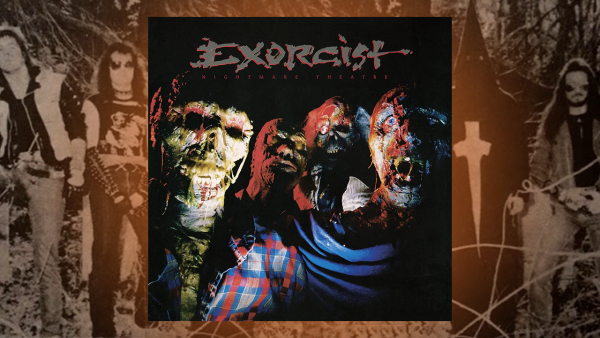
Back in 1980s, a mystery album titled Nightmare Theatre (1985) dropped in record stores around North America and parts of Europe, shocking those who were lucky enough to grab a first pressing. The band responsible was Exorcist, but they certainly weren’t a “band” in any sense of the word. They didn’t play any shows, didn’t do any interviews, nor did they release any follow-up material.
Everything about this release was meant to be kept secret. The album cover certainly didn’t convey much with its four masked figures. You could look into the album’s liner notes or at the track listing credits, but asking around about the names responsible, “Damian Rath” and “Marc Dorian”, wouldn’t have gotten you very far– keep in mind, this was before the internet was a proper thing– these names were pseudonyms. The only glimmer of hope for some sense of tangible connection between Nightmare Theatre and the real world was the grainy band photo contained inside copies of the album. Even then, making out the players standing in front of what looks to be an overgrown graveyard wouldn’t be an easy task. It doesn’t help that one of them sports something resembling a reverse-colour KKK costume.
Dropping the needle revealed yet another layer of mystery. Rather than sounding similar to other popular metal acts of the time like Iron Maiden, Mötley Crüe, or Black Sabbath –who’s singers and signature style can be easily picked out and identified by ear– Nightmare Theatre produced a rather gruesome and abrasive sonic output. The morbid concoction of aggressive speed metal, demonic vocals, and harrowing audio samples of witches being sentenced to be burned at the stake offered an immediate contrast to whatever metal music kids were listening to on MTV at the time.
It wouldn’t be too hard to guess that Nightmare Theatre wasn’t a chart-topper. Well, it didn’t really matter because that wasn’t the point of the whole thing, but we’ll get to that later. What was undoubtedly a flop in the eyes of the Hot 100, slowly became a minor underground sensation among metal fans who listened to the more extreme end of the genre. Today, nearly 35 years after its release, Nightmare Theatre is celebrated as a cult album that was ahead of its time, influencing the more extreme metal subgenres of black metal and grindcore which developed years later. Keep in mind, this was all without anyone knowing who actually played on the album or wrote its music.
Fortunately for us (or unfortunately, depending on how engaged you were with the mystery aspect of this story), those 35 years have also shed some light on the album’s secretive origins. Nightmare Theatre was actually written and performed by singer David DeFeis and guitarist Edward Pursino, who played together in Virgin Steele, a hard rock/heavy metal band based in Long Island, New York. While their main group had just released their third full-length, the Exorcist project allowed for the two musicians to experiment with something of a different speed (with the assistance of a few other players on the record, of course).
Well, allowed is probably a bit of a stretch. DeFeis and Pursino were more-so not-so-kindly asked to write and record the album because they owed a debt to their record company. As DeFeis put it in a 2017 interview with Oldschool Metal Maniac, “we had run into so-called monetary difficulties with certain people. In order to get a clean slate and go back to square one, we were invited to do this other kind of project.”
This situation actually wasn’t too uncommon. Labels would often loan an advance to a musician to record an album on the premise that their project would make enough money to pay off the loan (of course, if the record was a sleeper and the loan couldn’t be paid off from its profits, the musician would be in trouble). In these cases, labels would often throw fake bands together to write and record albums for free so musicians could pay off their debts - no royalties, nothing. I guess that’s better than getting your knee busted in with a baseball bat.
This was so common that a specific name for these releases was coined, aptly-dubbed “Metal-Ploitation.” Some albums to fall under this category are Original Sin’s Sin Will Find You Out (1986), Convict’s Go Ahead… Make My Day (1985), and Piledriver’s Metal Inquisition (1985), among many others. These “Metal-Ploitation” records are all rushed, poorly recorded, and feature mostly filler, as they were written by unpassionate musicians who were just doing it because they had to pay off their debts.
But, Nightmare Theatre is a diamond in the rough here. Despite DeFeis and Pursino not getting paid a dime for the record (which was written and recorded over two weekends), they used this opportunity to craft something that wasn’t possible with the mellower Virgin Steele. Rather, they used this fresh slate to write a totally off-the-wall release, with DeFeis taking heavy inspiration from his fascination with horror movies and the Salem witch trials. Since DeFeis’ manager didn’t want people thinking he was singing in a new band, he asked DeFeis to change his vocal style for the Exorcist record. Well, DeFeis took it to the opposite extreme, as his powerful clean singing style was now morphed into a guttural demonic growl. (He certainly succeeded in his manager’s request, as one can barely understand the lyrics he’s singing, let alone who’s singing them). Finally, the two musicians’ pseudonyms and lack of follow-up material set up a pretty neat mystery for a while, as finding out who played on this record would have been nearly impossible before DeFeis decided to come clean with some recent interviews.
In turn, these parameters all came together in a perfect storm, which is what makes Nightmare Theatre so special. If you listen to the extremity offered by DeFeis’ demonic vocals, Pursino’s scratchy galloping guitar, and the album’s occult imagery, it really is comparable to other landmark extreme metal releases of the time like Bathory’s The Return…... (1985) and Sodom’s In the Sign of Evil (1984).
However, rather than coming from a band that purposefully formed to shock and terrify listeners from the get-go, Nightmare Theatre was the haphazard product of many factors that should have gone wrong, but all ended up going right. Despite not getting paid a dime for the record, DeFeis and Pursino took the opportunity in stride, turning something that was just supposed to be a quick cash grab into a memorable album worthy of being celebrated decades later.
Hunter co-hosts The Iron Club with JP, your weekly dose of extreme metal from around the globe. Tune in on Sundays from 9:00-11:00PM.
Briga’s Territoire Album Takes Turbo Folk to New Heights

The Montreal-based writer, composer, performer, violinist and multi-instrumentalist Briga released her fifth album Territoire on Oct. 29.
Born to a Polish father and a Quebecois mother, Briga isn't afraid to show us the different sides of her fragmented identity. Briga gives listeners a modern take on Eastern European music, a new subgenre in folk she self-defines as Turbo Folk.
Territoire is an enchanting and intriguing body of work, marrying Balkan and Maghrebian grooves with electronic percussion.
These influences are the most obvious in the song “Tabou.” In the true fashion of Balkan music, the song carries a simple beat from beginning to end, accompanied by a jovial violin and a groovy base. Briga’s voice feels like another instrument in the composition as opposed to being the focal point of the song.
Briga wanted her project to “reflect the reality of the Canadian musical landscape.” She cites Canadian artists such as Jeremy Dutcher and Tanya Tagaq as inspiration, both known for blending traditional styles and influences.
The title track successfully blends old with new, with French pop vocals, orchestral harmonies and experimental beats. For the music, the violin arrangement does not stray away from traditional Maghrebian influences.
Briga also stands out when she is experimenting with typical Montreal sounds. In “Faim,” Briga talk-raps using a Montreal vernacular that blends French and English effortlessly. The song ends unexpectedly with an electric violin solo, creating tension and release to end the song.
Despite this, not all songs on Territoire succeed in establishing a clear beginning and end. “Lipa” featuring Ewelina Ferenc, a Polish singer established in Toronto, starts with a classic violin quartet, followed by experimental electronic music and ends with folk pop. Each section oddly blends into one another in a confusing way, making it hard to remain engaged.
In “Tribu (Respire),” the same progression occurs. On the first listen, it feels like three different pieces compiled into one. The song ends abruptly and chaotically, almost as though they weren’t quite sure how to finish the piece.
In comparison with the rest of the tracks on Territoire, “l’Oubli” is where Briga’s experimentation is the most impressive. Each part of the song, although quite different, strings together perfectly over a powerful monologue by Haitian rapper Ali X about intergenerational trauma.
Briga closes off the album with “Paysage.” The song incorporates most of the stylistic elements she used on the album to remind us that Territoire is not quite folk, but not entirely electronic or pop either.
Accompanied by the band’s other musicians, Briga will offer a digital performance of her new album live from legendary recording studio Hotel2Tango in Montreal's Mile End. The event will be broadcast free on YouTube on Oct. 29 at 8 p.m.
Jean-Philippe hosts Les Moutons Noirs on Thursdays from 1:00 - 2:00 p.m.
Yves Jarvis returns in full bloom with latest album Sundry Rock Song Stock
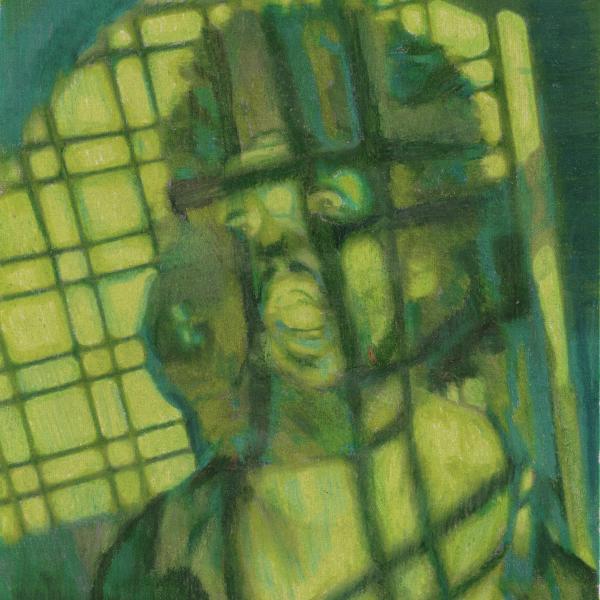
Yves Jarvis is the stage name of Jean-Sébastien Audet – a singer originally from Calgary, Alberta. After moving to Montreal and performing under the stage name Un Blonde, the persona Yves Jarvis was borne in 2018. It was brought to life with The Same but by Different Means - his first album released under the new moniker. With this experimental album, Yves Jarvis began his dedicated journey to moving forward and being unafraid to explore mysterious waters.
His latest album Sundry Rock Song Stock is a return in full bloom. The album, clocking in at just over half an hour, is a unique experience somewhere between a daydream and reality; or is perhaps better described as an elevated state of mind.
What is most interesting about his craft is his ability to blend influences into a seamless new sound. Songs may begin with more standardized compositions with a strong base of psychedelia, then they often bleed into delicate and accurate experimentation. Yves Jarvis has allowed for enough breathing space on this album for songs to venture off in their own direction and grow to their full potential.
Even though the lyrics on this album are rather obscure, they contain an overwhelming sense of personality and unique connection. There is a presence, and for certain, thought, behind these vague philosophies. Yet there is enough room for individuals to place themselves within the music and experience it with their own understanding.
It is quite clear that Yves Jarvis is following his influences and striving to create real art rather than following trends. This can be sensed within the first few opening bars of the album, but Jarvis defines it best himself when he sings “proof of personality in my periphery” on the song "In Every Mountain". It is for that reason that this album is unmistakably his, and that it will also last forever. Steady, yet ever changing; like running water from a river.
Protesters call for reduced police spending, Quebec surpasses 100,000 cases of Covid-19, Quebec town changes name
Reporter: Shanellie Marie
Stories by: Luca Caruso Moro
Protesters call for reduced police spending
Protestors gathered again over the weekend in Montreal calling on the city to defund the police.
Hundreds of protestors gathered in Sir Wilfred Laurier park on Saturday.
A group of community groups called the coalition to defend the police released several demands, including one to completely disarm police officers.
Quebec surpasses 100,000 cases of Covid-19
Quebec has surpassed 100 thousand confirmed cases of Covid-19.
That's the most out of any province, with Ontario in second place with over 70 thousand cases recorded since the beginning of the pandemic.
According to CTV News, experts blame gatherings during thanksgiving for the continued increase across the country, as well as reduced restrictions and increased testing.
Quebec town changes name
The Quebec town formerly known as Asbestos has changed its name to Val-Des-Sources.
It's the result of a community referendum to change the name, synonymous with a cancer-causing fibre once common in construction.
The town of 7000 is located an hour and a half east of Montreal.
The Canadian Press reports the town was instrumental in Canada's Asbestos exports before their mine closed in 2012.
(Interview) Gab Godon Discovers Herself as Laroie with Debut EP

Photo credit: Zacharie Lavertu
As one half of pop/R&B/hip-hop duo Heartstreets, Gab Godon is a veteran of the Montreal music scene, performing at Osheaga, the Montreal International Jazz Fest, NXNE, and more. But after 10 years of making music in a team, Godon set out to discover her artistic identity outside of her main project. Settling on the alias Laroie, the artist crafted her self-titled debut EP, a project that’s just as genre-melding as her work in Heartstreets. CJLO spoke with Godon about the release, writing a lot during the COVID-19 lockdown, and the future of Laroie.
What was the decision behind recording under the Laroie alias? Did you feel it granted you distance from your work as part of Heartstreets? Did you feel it gave you more license to experiment creatively?
I've been quietly developing this solo project for a couple years now and I think the need to create under Laroie came to me to better define myself as an artist and discover myself as a solo artist. When it's been more than 10 years that the creative work has been done in a band, I think it becomes relevant and healthy to want to explore who you are in the music industry as an individual. It also allows you to take a step back from previous creations and it changes the perspective of creation.
This might sound silly, but considering how long you’ve worked with Emma Beko as a part of Hearstreets, did it feel like “cheating” on Heartstreets by doing a solo project? Were you ever apprehensive about branching out on your own?
I was never really apprehensive of branching out on my own. Emma and I have been working together for a long time, but we’ve been friends for longer than that and we support each other in our creative and personal decisions. I think we both needed to find ourselves individually and it ended up being perfect timing as we both wanted to explore at the same time!
You had Montreal electronic producer Robert Robert as your sole co-producer and collaborator for the EP, compared to the multiple collaborators Heartstreets normally works with. What was the decision behind working with only one collaborator? Did it help emulate your creative process when working as a duo in Heartstreets?
I didn’t try to overthink the process and decided to let go and embrace the creative bond between me and Robert Robert. If you feel something, listen to it. We connected during a writing retreat I had organized and it just felt natural to build my first musical project with him. When working with a lot of different collaborators, it can get overwhelming, and as much as it’s part of Heartstreets’ creative process and brand, it isn't what I wanted to do for my first EP. I’m very happy with the result of our collaboration and I wouldn't have it any other way ;)
I host a show focused on pop music, so one of my favourite questions to ask artists is this: at its core, what is it that makes a perfect pop song to you? Is there a particular song or artist you feel best fits your description of pop perfection?
For me, everything resides in the hooks, as much in the vocal arrangements as those of the instrumental ones. I find Dua Lipa to be very good with pop music because her work is swamped with hooks, especially on her hit “Don’t Start Now.” She is killing it!
You’ve said that the songs on the EP represent how, through interpersonal relationships, “We draw lessons, experiences, strong emotions and we move forward with new imprints.” Do you think COVID-19 and the physical isolation we all faced from those closest to us altered those lyrical themes of our interpersonal relationships, or did it just make them even more pertinent than ever?
I don’t think COVID-19 had much of an impact on my writing. I’d say, on the contrary, it gave me the perspective we sometimes need to refocus, and in my case, to recharge my batteries from my experiences with others. I had plenty of time to reflect and introspect myself on these experiences that I live on a daily basis with the people around me. It was almost therapeutic, and I ended up creating a lot during quarantine.
The pandemic has obviously wreaked havoc on our lives, but are there any music or non-music related trends popularized during the pandemic that you hope continues even once it all subsides?
The pandemic for sure made it quite hard for artists to expand their works, but it also pushed us to step out of our comfort zone and think outside the box. How can we bring our art to life without our usual resources? I think it’s important to keep pushing those boundaries and explore even more once it all subsides.
Is this the last we hear of Laroie – a fun one-off in this crazy year of 2020 – or is it only the beginning of a long and fruitful solo project?
This is most definitely the beginning of Laroie and a fruitful solo project! I’m very excited for the release of my EP and for this new adventure to start. As I mentioned, quarantine was a creative time for me and I’m really looking forward to sharing all the new music I have in store!
Laroie is out now (independent).
Alex Viger-Collins is the host of Ashes to Ashes, your home for modern pop in all its forms, every Tuesday at 8:00 PM EST.
CSU councillor to petition for media defunding, Quebec cases reach new daily record, Open letter calls for new McGill light rail stop to be named after Oscar Peterson
Reporter: Shanellie Marie
Stories: Evan Lindsay & Luca Caruso Moro
CSU councillor to petition for media defunding
Student union councilor Hersh Filler is expect to pettion to cut funding to Cjlo and The Link.
Filler presented the petition questions to council on Wednesday, allgeging the Link has been involved in smear campaigns against people who tried to bring the fee levy opt-out system online.
The counselor did not respond to Cjlo's questions to clarify what those smear campaigns were due to ongoing litigation.
Filler will petition the questions to appear on the student referendum during the next council byelection.
Quebec cases reach new daily record
Quebec reached a new record for recorded Coronavirus cases over the weekend.
On Saturday, 1200 people tested positive in 24 hours.
The day's increase has brought the total case count to over 92 thousand within the province.
Open letter calls for new McGill light rail stop to be named after Oscar Peterson
Some of Montreal's most important figures in arts and culture are calling for McGill's new light rail station to be named after Montreal Jazz legend Oscar Peterson.
The communities open letter contains signatues from the black theatre workshops Quincey Armorer, Montreal symphony orchestra CEO Madeleine Careau and Montreal Jazzfest co-founder Andre Menard.
They believe the new station is perfect opportunity to commemorate Peterson.
The station would take the name Centre-Ville-Oscar Peterson.
This is the third proposal to name a location after the musician.
In June a petition was called for renaming Lionel-Groulx.
Ensemble Montreal also proposed to change the name of the Place Des Festivals as well in honour of Peterson.
Oscar Peterson has won seven grammy awards and is a member of the Canadian music hall of fame.
Love, Loss, and Nostalgia: BAO gets reflective on debut album Perpetual Heartbreak
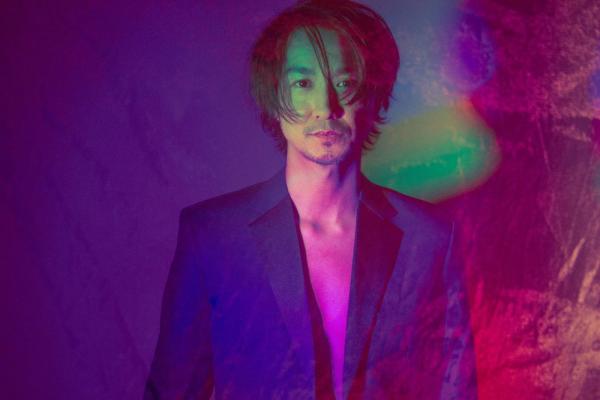
Those familiar with LA-based electro-pop outfit Ming and Ping may have a particular sonic vision in mind for BAO’s debut album - BAO is the solo venture of Bao Vo, the producer and musical mind behind the duo’s sound. As a producer, Vo has worked with a number of other Asian-American artists, including the aforementioned Ming and Ping and Mariqueen Maandig Reznor, lead vocalist of How To Destroy Angels. Fans of his previous work who come to his solo work expecting the ‘80s new wave-influenced synth productions he’s been known for won’t be disappointed, but they will be asked to expand their horizons.
In his first full-length offering Perpetual Heartbreak, BAO seeks to reach beyond his previous (extensive) production credits, and even beyond genre. The result is a 14-track album that ranges between full-length songs and dreamy, soundscape-inspired short pieces, all tied together by a sense of retro-inspired introspection.
In the blurb for the brand-new album, BAO says he wanted to create something that “showcases the beauty of imperfections”. Perpetual Heartbreak certainly does have a home-produced, personal feel to it. The lyrical subject matter follows suit, telling intimate tales of love, heartbreak, and family, all with a millennial-forlorn feel. Tracks like “We Never Say a Word” explore the intersection of culture and identity, with BAO referencing his Vietnamese heritage in context of his American upbringing. The bulk of the songs on the album weave short, longing stories of fraught relationships and existential angst. BAO’s lyrics float in between waves of synth-pop that does succeed in blending genre boundaries to an extent, but never quite leaves the electro-pop pool.
As the album flows on, alternating longer and shorter pieces, it’s apparent that BAO has stitched together nods to his genre influences throughout the entire tracklist. The opening songs are twinkly and nostalgic. Title track “Perpetual Heartbreak” deserves its headliner status - the tune features flute, harp, dulcimer-like tones and soft, mournful synth beds, showcasing BAO’s considerable chops as a producer. Later on, “Burn It Down” starts with a solid new wave groove and resolves into a sassy danceable blend of R&B, funk, and disco - another testament to production ability. “Heavensent” winds down into lush, full harmonies, drawing on a sonic and lyrical softness and a different kind of emotionality.
The final track on the album, “A Different Story”, ends on a brief and cautiously hopeful note, with BAO repeating “it’s not the end of the world, and you will wake up tomorrow…”. It’s a message of hope amidst loss, longing and chaos, and it speaks to the aim of Perpetual Heartbreak in its entirety. It’s also a reassuring lyric to leave us with as we end the album and venture back out into an extremely uncertain world. Much of Perpetual Heartbreak feels timely in this way. It’s longing for the past while being unsure of the future; but despite everything else, it is still hopeful.
At The Movies Talks With Director Noah Kentis

At The Movies recently got a chance to talk to one of the directors of the film Summerland, Noah Kentis. Summerland is a coming of age teen comedy road trip with some introspective moments. We talk to Noah about the road trip movie to a music festival amidst a pandemic and how Summerland finds its own voice in the genre.
Remi and Danny host At the Movies which features everything new and noteworthy in the world of cinema. The show goes live every Tuesday at 8:00AM.
Throwback Tuesday: Animation Filmmaker Chris Dainty Discusses His New Film "Shannon Amen" with At The Movies Host Remi Caron
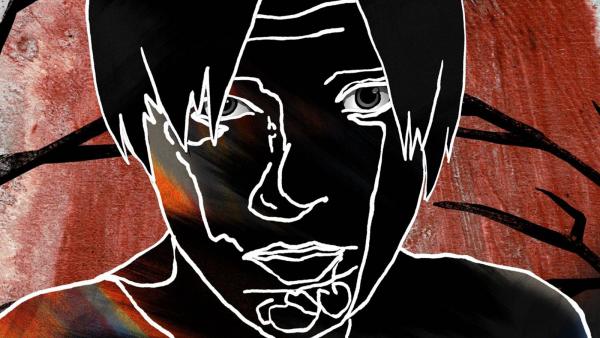
For At The Movies Reviews on location Remi was able to chat with Chris Dainty about his short animated feature Shannon Amen being showcased at this year's Festival Du Nouveau Cinéma. Using Animation (2D, Stop motion, and Icemation) along with archival footage, Dainty brings his friend Shannon Jamison’s story along with her art to life. Remi chatted about the animation techniques used to tell the story, as well as Dainty's process of emotions while making the film.
You can now watch the film on the NFB site, click this link!
Remi is the host of At The Movies which features everything new and noteworthy in the world of cinema. The show goes live every Tuesday at 8:00 AM.
Pages



Staff Login | Advertise | Our Location | RSS | Contact Us
