RSS
The Darker Side of Metal: Racism
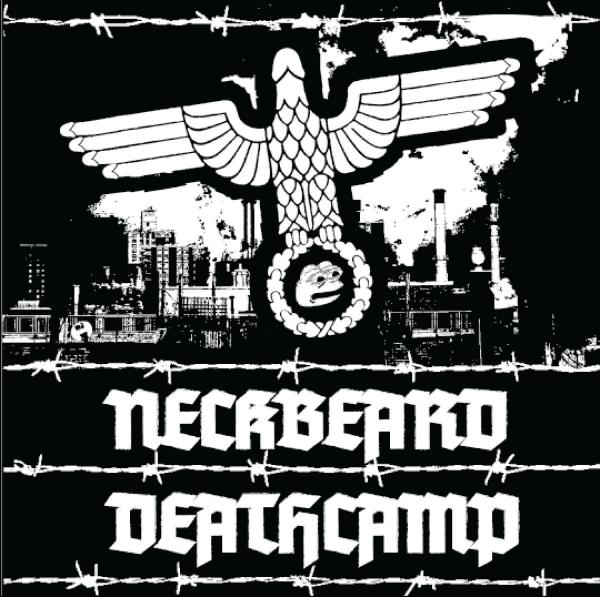
We here at CJLO love heavy metal, despite its many flaws. It’s not just a few bad apples spoiling the genre. Some cases are evidence of cultural intolerance infiltrating the scene, getting worse as the music becomes more extreme. This two-part series will examine the problematic nature of metal. We’re only scratching the surface here, the subject matter can fill books and multiple documentaries. But only by acknowledging the problem, can we change it for the better.
Although its roots are based in African-American blues and rock n’ roll, metal has attracted a number of white supremacists. Part one uncovers how the music is used to sell hate, and what a handful of individuals are doing to combat that racism.
Evolution of a Problem:
Since its inception, Heavy metal pioneers like Black Sabbath and Slayer have used Nazi imagery for the sake of being provocative. Lemmy of Motorhead was particularly controversial for collecting Nazi memorabilia, but he insisted he was only interested in the historical significance, and not the ideology. It wasn’t until the 1990s, that Nazism was taken seriously. The Norwegian black metal scene took it to the next level with acts of violence and terrorism. The most infamous perpetrator was Varg Vikernes of Burzum, and his transition from a Lord of the Rings nerd to Satanist to “Pagan Nationalist.” His many crimes include murder, arson of several churches and mailing a faulty letter bomb to Israeli band Salem. He and other Scandinavian black metal bands sought to return to their Pagan roots, writing songs of Viking armies conquering foreign foes. This led to the creation National Socialist Black Metal. The music style has been used an effective recruitment tool for far-right hate groups, operating in secret through record labels. European NSBM was later adopted in North America, building on the legacy of the racist skinhead band Screwdriver. It was rebranded as “hatecore” and was able to fly under the radar thanks to free speech laws. The racism in the lyrics was downplayed so that bands could reach a wider audience and headline mainstream music festivals.
the problem persists:
Just like the world today, racism in metal is subtle, but has occasional publicized outbursts. In 2016, Phil Anselmo of Pantera was caught on camera giving a Nazi salute and shouting “white power” at a concert. He claimed it was a joke, but his behaviour wasn’t the least bit surprising, considering the amount of confederate flags in Pantera’s album art. The same year, NSBM band Graveland were set to headline the Messe des Morts festival, but the show was shut down by anti-fascist protesters. Meanwhile, Varg Vikernes, a decade since being released from prison, has abandoned black metal and instead posts racist video rants on Youtube.
who is fixing the problem:
In response to NSBM, there has been a rise of explicit anti-racist black metal bands. Lyrics fantasize about executing racists like in “White Genocide” by Neckbeard Deathcamp and Gaylord’s “Neo-nazi Metalheads Will Be Hanged and Their Broken Corpses Openly Mocked.” This year was also the first installment of Black Flags Over Brooklyn, a festival dedicated to anti-racist extreme metal. Bands like Anal Trump (a parody side-project of Travis Ryan from Cattle Decapitation) have directly donated money made from record sales to organizations that support minority groups that have been hurt by the Trump administration’s policy.
People of colour are occupying more and more space in metal. Excluding the cringey white rappers of nu metal, artists are infusing heavy metal with hip hop to speak of the black experience. Some notable bands are Body Count—Ice T’s metal side project—and Ho99o9, who mix elements of trap, hardcore punk and industrial metal.
If you ever have suspicions of a certain band being racist, do your research. It sometimes only requires a Google search. Antifa networks have done a lot deep-diving on bands, often finding racist remarks made in interviews, old photos of band members sieg-heiling, or an association with NSBM record labels.
Chris Aitkens, aka The Frog, is the host of SEWER SPEWER on CJLO every Wednesday at 1pm.
Priest Returns to Oratory, Secularism Bill, Brexit Impass
Hosted by Alexandre Denis
Stories by Alexandre Denis
________________________________________________________________
LOCAL
Father Claude Grou has returned to celebrate mass at the St-Joseph Oratory one week after stabbing. The Priest announced that security measures were being evaluated, but the Oratory shall remain open to all.
The incident happened last week during mass. The mass was being live streamed online. Fortunately, the injuries were minor and he was released from hospital the same day.
The priest said he did not know the attacker, but hopes he will receive the helps he need.
PROVINCIAL
The CAQ’s promised secularism bill was tabled on Thursday. The bill contains various new rules regulating religious symbols in the government.
The bill has been controversial for its treatment of religious minorities. Symbols like the hijab, kipa, and turban would all be prohibited from certain positions. Affected positions include teachers, principals, police officers and crown prosecutors.
Absent from the new law are any plans to remove the crucifix from the national assembly. However, a motion to move it was approved unanimously and the CAQ has promised to relocate it.
The bill also makes use of the notwithstanding clause, shielding it from the charter of rights and freedoms for 5 years.
INTERNATIONAL
The Brexit plan has once again fallen in the UK parliament. Ahead of this one, Prime Minister Theresa May has promised to resign if it passed.
Brexit was scheduled for March 29, but a complete inability to pass any sort of deal in parliament has left the UK in an uncertain position.
April 12 is now the new date, with a possible extension until May 22nd if May can get a majority vote on a deal. If not, it’s a no deal brexit on April 12.
The UK has been at a standstill over brexit after refusing all deals, no deal, a second referendum, or abandoning brexit all together. Despite this, the government weathered a no confidence vote and a leadership challenge.
Interview: Hero’s Last Rite

After discovering Hero’s Last Rite while doing my research form the Thrash Metal episode of the Iron Club, I was intrigued by the little heavy band from Fredericton, New-Brunswick. After exchanging a few emails, I got my first phone interview with singer Steve McDonald and here is the transcription of that phone interview.
JP Bernier : “I’m with Steve McDonald, frontman of Hero’s Last Rite, a band from New-Brunswick. Hi Steve, how are you?”
Steve Mcdonald : “I’m good and you?”
JP : “I’m pretty good, thank you. So, you guys formed in 2008?”
SM : “Yeah”
JP : “If there was one question you were tired to be asked, which one would it be?”
SM : “One question that I would be tired to be asked? Hum… Well, I mean, we are not some huge big name, it’s not like we get asked too many questions but, when we do get interviewed, I guess that the one that is asked the most is when the new music’s coming out? Which is not something that I’m tired of hearing. I understand that people want to hear it but I think that’s the one [question] that we get asked the most.”
JP : “Okay, and what would be the answer to that question so people would stop asking it?”
SM : “ Typically, we are always working on music. We put out albums and by the time the album comes out, we already have two, three songs on the go. So we typically like to have maybe a two years span between albums, it used to be longer but we kind of shorten that up between the last few albums just because we are doing everything on our own, so we aren’t on anybody’s timeline. We basically tell them [the fans] that it’s coming, so people are starting to know that, in 2 years, the new album will be coming out.”
JP : “So it’s for soon? Since the last album came out in 2017.”
SM : “It will definitely be 2019, probably the end of summer or the fall for the brand new album.”
JP : “So I discovered you guys during my research for our Thrash themed-show on the Iron Club, and I had no idea how many bands were from the Maritimes. How is the metal scene in the Maritimes for an outsider like me?”
SM : “It’s phenomenal! There is a lot of bands in general. Not just in the metal genre but there is a lot of rock bands, punk bands and stuff like that but, as far as the metal genre, it’s quite alive and well. We are actually doing a tour in May with three other populars bands ; Discord from Moncton, Death Valley Driver from Prince-Edward-Island and Orchid’s Curse from Halifax and us, doing a kind of a four city run over a two weekend period. We did it twice before and it has always been successful so we are doing that again. But, even in our home town, there is probably four or five good working consistent bands, Moncton has a really good scene as well as Halifax, Charlottetown and Prince-Edward-Island. There is no shortage of bands, I think one thing that there is a shortage of is the shortage of venues, I think everybody suffer from that, in their city at some point, venues open and close. But like I said, the is no shortage of great bands in our neck of the woods.”
JP : “ So you always have new music coming up and you are always rocking to some jams.”
SM : “Oh yeah! Absolutely, yeah!”
JP : “So a lot of your members were ex-members of Obsidian Reign. Was it the origin of Hero’s Last Rite and, if not, how Hero’s Last Rite came to be?”
SM : “Obsidian Reign started in 2003, it was myself and Mike Davidson who plays guitar for us and and other fellow that was on the drums and we played the three of us and then, our old bass player, Paul Vidal, was in it as well and then, 6 months into 2003, we got Dan Rogers, our current drummer. So we did that for about 5 years and there was another fellow in the band playing guitar, we splitted with him and he moved away and we then just decided to kinda break away from Obsidian Reign, change our sound pretty drastically, just a different kind of approach with the way we wrote music, that was in 2008. After that, Tim Gorman, who was with the band from about 10 years, I met in in 2009 and he left last year, on good terms. He wanted to focus on other things. That put us as a four-piece, Paul Vidal leaving 4 years ago, and we are in the process on writing our first album as a four-piece. It’s going good, the music kinda got a little bit of a change to it, we are focusing on not being as heavy or brutal kind of our last album or the one before that. I’m changing a little bit of my singing stuff, more clean singing, stuff like that. That’s where we are in 2019.”
JP : “ So a lot of great stuff coming up then! You talked about the change in the writing process between Obsidian Reign to Hero’s Last Rite, so what is the writing process with Hero’s Last Rite?”
SM : “ With us right now, it’s very collaborative between all four of us. Mike, our guitar player, writes all of the music, he will bring the ideas to us and usually, it’s either the full song will be done and no work is needed or little tweaks needed will be done or we will just completely rearrange the whole thing but he is definitely is the primary music writer. He brings everything to the table and we just work on it, practicing kinda hammering it out and tweaking it as we kinda see fit and then I throw lyrics over it, then we hammer it out and usually, after a couple of practice, it’s good to go!”
JP : “So it’s pretty simple.”
SM : “Yeah, it’s simple. After 17 years of working together, we know each other and the way we work, It helps.”
JP : “After 17 years, it a good thing to be able to understand each other.”
SM : “ Yeah!”
JP : “So you guys are having a lot of shows in the Maritimes, did you do any shows outside of New-Brunswick, Moncton and the like?”
SM : “Yeah, well, with Hero’s Last Rite, we haven’t. With Obsidian Reign, we did get to Montreal and Toronto. We played down there a couple of times. Not to say we don’t want to, it’s hard, we all have wives and kids and houses and all that, not to use it as an excuse but it’s just kind of the way it is with getting time off from work now to go on trips like that. It’s not something that is out of the realms of possibility cause we all say that we want to do it, it’s just a matter of booking the show and we know people in those areas, like in Montreal, in Toronto and in Ottawa. So who knows? WE always say this time around, we’ll go, we’ll make it to Montreal, we have friends of ours that goes to Montreal all the time, like Discord out of Moncton. They’re in Montreal and Ontario almost every year so it may be an option to ride on their coattails. I don’t know, we all talked about it over a beer but whether it happens or not is a possibility.”
JP : “Something to look up to in a near future.”
SM : “ Absolutely!”
JP : “What do you think would your most popular song, as of right now?”
SM : “Our most popular songs would be the ones that we did the videos for. Viral Judgement off our Mirror’s Face album usually get a pretty good pop at shows, because people are a little familiar with it because there is an official video up for it. And I’m Atomic, we have a video for that, we don’t really play that one anymore live, we haven’t in a couple years but that always get a good pop. Those two, Viral Judgement and Generation Why off of Mirror’s Face are probably two of our more popular ones.”
JP : “ Why do you think they are more popular than the others?”
SM : “They’re quite catchy, quite accessible. If you just feel like going and banging your head to a metal song, those ones are gonna do it. They allow the headbang to pretty easily, it’s just the beat, I don’t know how that works but they just seem to be the ones that get the most pop whenever we play them.”
JP : “My favorite of yours is Wasted Prayers, it’s the one i played on the show for our Thrash episode. I just wanted to know what is the meaning behind the song. I have looked up the lyrics, but I couldn’t quite find the meaning.”
SM : “When I write lyrics, I like to do my own lyrics and then, everybody else kinda pull their own meaning out of it. That one, it’s more or less calling out people who try to be holier than now, they present this persona of themselves being good religious persons yet, will stab you in the back at the first moment they get. So it’s basically calling out those people. I’m not really a religious person, I respect people that are religious. It’s not a call out to religion itself, it’s a callout to people that claim to be very pious and religious and yet turn around and don’t act as a person. That where that song is coming from.”
JP : “Is the religious scene in New-Brunswick and in the Maritimes big? Because in Quebec, it’s been in decline for 10 years now.”
SM : “I don't know. [laughs] I have no idea. I don’t follow the scene too well. My parents are religious but I kind of stepped away from that when I became an adult. I don’t know, I guess? there are churches everywhere.”
JP : “ So it would be a good research to do?”
SM : “ Exactly, to see what the numbers are!”
JP : “Now, a more sillier question. If you were a Disney character, which one would you be and why?”
SM : “ Well, I would like to think that I would be Goofy, because he seems like he has a good time and gets away with it.”
JP : “That’s true! My last question is what can you expect from the new album that might be coming around in the spring of 2019 or the summer of 2019?”
SM : “It’s a little bit different, we went a different root with this one. It’s not going to be as brutal and heavy, my singing is is gonna have very little growly stuff, maybe some background vocals will be kinda growls but the main vocal that I’m doing are very clean in a vein of Tool, that kind of clean. I’ve drawn a lot of inspiration for my vocals from bands like Tool and singers like Russell Allen from Symphony X. Not that i can sing like that but the way he present his vocals style and the way he plays with his own voice with almost a falsetto, it’s something that I’m really trying to capture with this one. As far as the guitar work, it slowed down a little bit but it still got a heavy undertone. If I can compare it to something, we are trying to be like Tool or that kind of band, not regarding the time signatures but being clean with heavy undertone.”
JP : “Do you have anything else to add ?”
SM : “Oh, just thanks so much for the support! We really appreciate it. It’s always great when someone from another province reaches out to us so we really thank you for that.”
JP : “Well, I thank you for being the most welcoming band, it’s not the word I’m looking for but it’s the only one that comes to mind. You guys were great. I didn’t believe it when you kept replying to my emails back to back.”
SM : “It’s too bad that more bands don’t do that! [laughs]
JP : “You were the most reponsive bands of the ones i contacted for Metal March. You guys are awesome!”
SM : “Great, great! Well, we appreciate it and if there is anything you need from us in the future or whatever, we will definitely support you guys, show you guys on our page and such.”
JP : “So if I go on a trip in the Maritimes, I’ll come visit you guys!”
SM : “Yeah, send us an email, absolutely! I’ll put you up in the house, I’ve got a great big house.”
JP : “Alright, thank you”
SM : “Thank you, talk to you later!”
JP Bernier is the Co-Host of The Iron Club, airing on Wednesdays at 3pm.
YUL Pet Squads, Quebec's Secularism Bill, Boeing 737 Max 8 Incident
Hosted by Ahmad Moujtahed
Stories by Ahmad Moujtahed
________________________________________________________________
LOCAL
Since the beginning of October last year, a squad composed of 30 dogs has been roaming around Montréal-Trudeau airport to offer moments of comfort to travellers.
According to the airport, it is an initiative that has been "highly appreciated" by passengers who are more nervous or anxious in an airport environment.
Recently, the Humane Society International/Canada (HSI/Canada) one of the world's largest animal protection organizations, has awarded Montréal-Trudeau Airport (YUL) an honorary plaque in recognition of this initiative, which according to the organization highlights and promotes the social benefits offered by pets.
HSI announced that this program underscores the special connection between humans and dogs, while reminding us that pets are full members of the community.
NATIONAL
Quebec public school teachers and school principals will be prohibited from wearing religious symbols such as the hijab or kippah, under a bill likely to be tabled on March 28 in the provincial legislature.
According to CBC news, the long-awaited legislation from the CAQ government will extend the limitation on religious clothing further than initially expected.
Montreal La Presse reported last week that legislation expected will invoke the notwithstanding clause preemptively, blocking any attempt to challenge the law on charter grounds.
Meanwhile, opposition to the Quebec government’s secularism bill is increasing. A major teachers’ federation recently filed a lawsuit against the government’s attempts to count the number of teachers who wear religious symbols.
INTERNATIONAL
A Southwest Airlines Boeing 737 Max 8 on its way to storage was forced to make an emergency landing shortly after departing Orlando, Florida, on March 26.
According to airline officials, Southwest Flight 8701 took off from Orlando International Airport at 2:50 p.m. and returned to the airport about 10 minutes later, after pilots reported an engine problem.
After two crashes involving 346 fatalities in less than six months, all Boeing 737 Max aircraft have been grounded by the Federal Aviation Administration and are only allowed to fly in special circumstances, such as being transferred.
N.H.L in Cree, Fishing in Yellowknife, Thailand's Election Results.
Hosted by Erdene Batzorig
Stories by Erdene Batzorig
________________________________________________________________
LOCAL:
History was made on Sunday night, as for the first time an N.H.L game was broadcast in Cree.
Studio host Earl Wood, who provided commentary and analysis in Plains Cree along with play-by-play Clarence Iron and John Cabot said, "I am completely in awe and I am very proud."
According to CBC, Wood, the founder of the magazine Northern Cree Singers, said this was a first step for Indigenous languages to be presented to a broader audience.
"The many different Indigenous languages, they're very, very beautiful. They each have so much energy and they each have so much knowledge and beauty and coherency to them.”
The game between the Montreal Canadiens and the Carolina Hurricanes, which aired on Sunday night on Rogers Hometown Hockey, was commented on by a fusion of English and Plains Cree.
NAT:
Have you ever wanted learn how to fish? Well, you might get a chance and also visit Yellowknife at the same time.
According to CBC Indigenous, Yellowknife's Rainbow Coalition hosted the drop-in fish camp on Great Slave Lake. Participants learned how to set a net, how to check it, and how to filet and make dry fish from their catch. There was even an opportunity to create art from the day's bounty.
Organizers of the event, also said this event is open to all— regardless of gender and age. Jiah Dzentu, the Indigenous and LGBTQ program co-ordinator for the Rainbow Coalition said, “We tend to have this perspective of Dene culture that's very gendered, like male-female roles, positions, which activities you can and can't do.”
The Rainbow Coalition estimated about 120 people came out to the camp over last weekend, and about 40 people were coming out each day early last week.
Although the season has ended, this could be a winter activity you can pencil into your schedule for next year.
INT:
The results of the long-awaited Thailand election has been delayed once again due to confusion.
According to Al Jazeera, on Sunday preliminary results from Thailand's Election Commission showed the military-backed party Palang Pracha Rath Party was in the lead, in the country's first elections since a military coup in 2014.
However, on Monday, when the official results were to be announced, the exiled former Prime Minister’s party, Pheu Thai had won 138 seats out the 500 lower chamber seats compared to the 96 won by PPRP. Other smaller parties gaining around 30 seats each.
While the pro-military PPRP has the larger share of the popular vote, there are still 150 seats up for the taking.
Amidst criticism from both the parties and the public, the EC said they will be publishing the full results on May 9th.
Assimilation: The Laws of Power Album Review

Clench your fists and get that circle pit ready, ‘cause Assimilation are in town. Innovating within a genre traditionally lacking innovation, these British Columbia boys are on the prowl for severed heads and crushed skulls! Just kidding, these are some pretty nice dudes; their music is pretty scary, though.
READ MORE
For the uninitiated, the death/thrash archetype of metal sonics, titled due to its place of division between death metal and thrash metal, is simply brutality in the truest form. Bands falling within such a category will make you ill, cause blood to drip from your ears, and honestly, their music is really abrasive. Luckily for us, when a friend is describing a metal band’s sound using abhorrently negative adjectives, that’s a recommendation. Let’s dive in, shall we?
Originally released back in March of 2017, The Laws of Power has been somewhat of a sleeper hit within the realm of screaming sonics. Unfortunately, due to the country’s size and territorial demographics, Canada is a tough region to be in when trying to kickstart a band. This difficulty is especially pertinent in Assimilation’s case, as the Canadian West coast is a couple thousand kilometers away from the country’s metal hotspot of Montreal, Quebec. In British Columbia’s case, your options as a small band are to head East towards sleepy Calgary, or down across the border into Seattle. Regardless, Assimilation owe their band’s career to passion and persistence, as things can be tough out there.
In differing fashion from most death/thrash albums, The Laws of Power revolves mainly around lyrical themes, both in terms of written content and sonic qualities. While Assimilation certainly know how to make a room shake, you’ll find that their tracks often draw down to a rumbling crawl, at least in comparison to contemporary outfits. These knuckle dragging sections, such as the title track’s chorus riff, or the crushing patterned intro of “Sigil of the False God,” all ooze Assimilation’s power-hungry nature.
Guitarist/vocalist/lyricist Jesse Jardine based the album on a multitude of social coaching books, to the likes of The 48 Laws of Power and Mastery. Naturally, the lyrics found throughout the release are based upon corruption, the social ladder, and the relationship between strength and weakness. Don’t worry, this isn’t some Red Pill conspiracy. For Assimilation, its all about becoming your own Übermensch within a world constantly looking for an opportunity to crush you to smithereens.
From an objective standpoint, The Laws of Power is simply an eclectically-coherent album. This certainly isn’t your one-trick-pony. You’ve got a crushing intro track which makes way for the more standalone numbers that follow, there’s some speedier stuff, some slower, more technical jargon, and even a jumpier instrumental track. Many of the old-school death/thrash albums from the ‘80s suffer a polar fate, as they often allure listeners through a handful of blistering numbers, but fail to retain due to a lack of variety. In contrary fashion, Assimilation seem to have kept that retro ‘80s full frontal assault, albeit with an incorporation of strong album-centric qualities to make The Laws of Power feel like more than just a collection of tracks.
Recommended if you like: Old-school death metal, the act of decapitating heads, Autopsy, and Demolition Hammer.
(Bandcamp link: https://assimilationvancouver.bandcamp.com/album/the-laws-of-power)
CJLO 1690 AM and Assimilation are bringing you a free online download of The Laws of Power for the duration of March 17th to celebrate its 2-year anniversary. Make sure to grab it before it’s gone!
Hunter Walwaski is the Co-Host of The Iron Club, airing on Wednesdays at 3pm.
Exploring Assimilation's West Coast Brew of Power-Hungry Old-School Death Metal
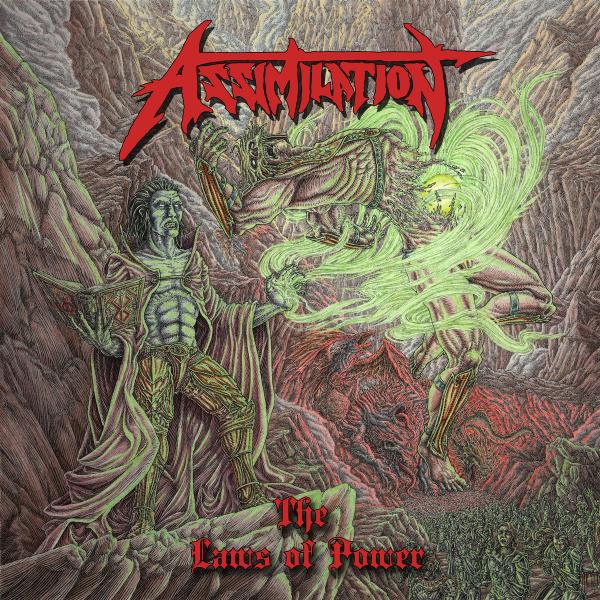
While contemporary heavy groups are busy hugging trees and familiarizing themselves with legal botany, Assimilation occupy themselves with cultivating relentlessly crushing death metal. Often operating with beers in hand, the quartet finds an odd but fitting balance between crushing sonics and laid back attitudes. Here's a look into what makes them tick.
For those unfamiliar with the region's luscious landscape, British Columbia offers an impressive range of forests, mountain ranges, and waterside views, all extending around the perimeter of the province's most populous hotspot, Vancouver. By extension, city and mountain folk often seem to be mesmerized by their proximity to nature's protrusions, becoming utterly consumed within the subject matter. This can be seen immediately through a quick analysis of other BC-based bands, like Bison and Seer, whose music is crafted through the passionate indulgence of sludgy riffs and slow, lumbering vocal styles, perhaps metaphorically akin to the qualities of Mother Nature. While Assimilation’s members are certainly environmentally conscious, they use their music as a polar opportunity to delve down to humanity's deepest roots, focusing on interpersonal relations, the human psyche, and the struggle for ultimate power.
While many bands engage in healthy competition regarding who can produce the heaviest sonic experience, many a time these groups regurgitate equally off-putting lyrics for the sake of overwhelming brutality, but this technique often misses the mark. Assimilation’s lyrical concepts operate differently, as vocalist/guitarist/lyricist Jesse Jardine describes. “If someone was reading these lyrics it would help them in a hard time. I just write about experiences like ex-girlfriends, if you break up with a girl and it puts you in a really low place, that’s a perfect time to write about it. I’d rather write about that stuff than about truncated corpses.” Jesse certainly highlights a critical issue within the modern death metal scene. Brutality for the sake of shock value gets stale, especially since bands have been operating like this for upwards of 30 years.
Among other concepts, Jesse incorporates themes from books such as Robert Greene’s The 48 Laws of Power and Mastery (the former is actually where the group derived their debut album title from). “A lot of people relegate themselves to mediocrity,” says Jesse: “What’s your goal in life? There has to be a higher reason why we’re here. There are people that need help but there are a lot of people that are happy to be mediocre, they’re just not doing anything to help themselves.”.
Every song on The Laws of Power explores the realm of power struggles within civilization and the general public arena. While Jesse writes the lyrics, all other members seem to agree with his main themes of focus. The lyrical themes derive from the group’s personal growth within an ever-competitive world. However, even though they’re supposed to be applied in real life, they’re still coated with a layer of fantasy for the sake of interest and creativity. “Lyrics are supposed to have a bit of mysticism or fantasy to them, its not like reality,” says Rene Wilkinson, lead guitarist. “I don’t listen to metal to get political and to get into all that stuff. I like hearing stuff that’s more fantasy based, its an escape from reality.” Assimilation certainly pepper a fair bit of fantasy within their lyrical thematics, such as for the song “Decapitated by Beasts,” but there’s always an ever present depth, a metaphor to dig behind, and work to do for the listener.
The Laws of Power is currently the group’s only full-length album, but it is stressed that quality over quantity is certainly a factor here. Traditionally, the genre’s famous and beloved albums are diverse, multifaceted, and feature certain recognizable “album” qualities. This is certainly the case here, albeit legendary status has of course not yet been achieved. “A lot of the old-school death metal stuff is so boring, it’s a lot of albums that are ten songs of the same song,” says Jesse. “This is all Assimilation but its all different. One’s more of a speed metal song, we have a thrash metal song, then almost like a tech-death song. There’s also a lot of brutal death metal in there.” The group even hinted that they’d be doing a King Diamond cover on their upcoming full-length.
In addition to all this, the group grew out of diverse roots. Jesse essentially taught the group’s current bassist, Shiloh Anderson, how to play death metal. While the bassist started by playing softer bands like Led Zeppelin and Black Sabbath, Shiloh was converted alike many of us, albeit in an untraditional way. “Jesse taught me to play death metal for like 2 months. It was definitely a personal challenge, I had to learn a lot of new techniques to keep up the pace of it. It’s definitely the funnest stuff I’ve played though.”
A quick online search will yield examples of Assimilation’s less serious side, which is certainly odd for members of a death metal band. Items can be pulled from the band’s YouTube channel, and from the “A Day in The Life” video, to clips of various shenanigans, there’s an untraditional amount of comedy here. Jesse, who is famous for his “you should be scared of the frontman” mentality, explains this further. “We just like having a good time. That’s our natural demeanor, we’re just like that normally. We’re not evil, I’m not evil, I like to lift weights and we just hangout. Its just us being a band together.”
As Shiloh says, “There’s a big element to a band just hanging out together.”
Assimilation are currently in pre-production for their next album release. “I think the new album is much more focused,” says Jesse. However, the band stressed that they would not deviate from their crushing death/thrash sonics.
The band made sure to give shoutouts to fellow Canadian groups Arcanevil (Toronto) and Pathetic (Calgary), as well as Terror Fire out of the US, and Hexecuter out of France.
CJLO 1690 AM and Assimilation are bringing you a free online download of The Laws of Power for the duration of March 17th to celebrate its 2-year anniversary. Make sure to grab it before it’s gone!
(Bandcamp link: https://assimilationvancouver.bandcamp.com/album/the-laws-of-power)
Hunter Walwaski is the Co-Host of The Iron Club, airing on Mondays at 2 p.m.
Call For A Regulatory Body Of STM Transit Officers, Pay Equity in Canada, Migrant Rights Network Protests
Hosted by Ahmad Moujtahed
Stories by Ahmad Moujtahed
________________________________________________________________
LOCAL
A coalition of organizations including the Ligue des Noirs du Québec, the Center for Research-Action on Race Relations (CRARR), and the Côte-des-Neiges Black Community Association is calling for an independent inquiry into a violent incident that happened two weeks ago at Montreal’s Villa Maria metro station.
A video depicted a black man getting beaten with batons by two STM inspectors. It was alleged that the man didn't pay his fare and caused disturbance with his basketball. The unjustified excessive use of force by inspectors sparked outrage on social media.
The main concern raised by the coalition is that STM inspectors and other transit officers elsewhere in Quebec are not subject to any independent civilian oversight body when they are the target of public complaints of abusive, discriminatory and illegal conduct.
The coalition is now calling for Mayor Valérie Plante to join them in supporting the coalition's demands in establishing an external impartial body to handle such incidents.
NATIONAL
A new study by ADP Canada, a company that provides payroll services to businesses of various sizes, reveals substantial compensation gap between men and women in salary and bonuses.
Based on self-reported figures, men earn 25.5% more than the reported average for women. This gap widens as it relates to additional compensation like bonuses and profit sharing.
Despite various efforts carried by the Canadian workforce regarding equal compensation, pay equity is still far from being a corporate priority.
INTERNATIONAL
Following the New Zealand mosque shooting whereby 49 innocent people were killed, the Migrant Rights Network - a new cross-country alliance, is launching on March 21 a series of protests that urgently demand pro-immigrant and anti-racist laws.
The Migrant Rights Network is led by grassroots migrant and refugee groups, civil society organizations and labour unions.
On March 21, the International Day for the Elimination of Racism, protests will be held in Halifax, Montreal, and Vancouver marking the beginning of a national dialogue to create a Platform for Racial and Migrant Justice ahead of the federal election. All social, environmental and labour groups in Canada are invited to participate in this process.
Leaving Neverland: A Look at The Man in the Mirror
CW: Sexual assault, abuse
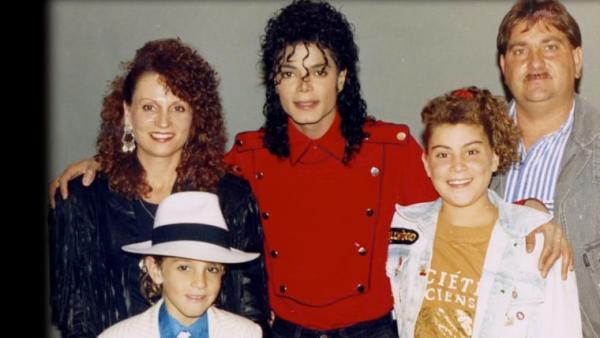
Leaving Neverland is a documentary film from director Dan Reed, which premiered at the Sundance Film Festival this year, and has since been showcased on HBO earlier this month. Ever since the film was slated to be screened at the festival it was met with criticism over the subject, and has received more backlash since the HBO release. The film focuses on the allegations of sexual abuse that Michael Jackson, The King of Pop, was accused of and is still being alleged today. There are two stories that are showcased in the documentary that reexamine the legacy of Michael Jackson in the face of these accusations after his death. Wade Robson and James Safechuck have come out with the accusations of sexual abuse that they suffered during their relationship with Jackson. At first both Robson and Safechuck kept the abuse to themselves, never telling anyone. This is a new era where survivors are becoming more comfortable with making their accusations public so that this might not happen again: a powerful moment in society, and the timing for this documentary highlights this zeitgeist. The Jackson estate, as well as his supporters, have been very vocal about not airing this documentary and discrediting the two accusers. This is highlighted at the end of part 2, and can also be seen on a daily basis on the internet. It’s a tough watch from start to end, HBO dividing the 4 hour documentary into two hour nights, as well as an after special with Oprah Winfrey.
Part One: They were just kids (Late 70’s to 1992)
The documentary commences with Michael Jackson at the height of his solo career, for which he would later become known as The King of Pop. Wade Robson was a child performer from Australia. His main act was a Michael Jackson impersonation: Jackson was his idol. When Jackson was visiting Australia on his tour he would have kids come up and join him on stage. Robson won a dance audition contest to dance when the tour came to Australia. On the other side of the country a young James Safechuck got one of his first big breaks starring in a commercial for Pepsi alongside Pepsi spokesperson, Michael Jackson. Reflecting on the experience, Jackson referred to it as the best commercial he has ever starred in, praising a young Safechuck for his performance. Media crew outlets interviewed both boys on their own experiences meeting The King of Pop. For Wade Robson it came easy to talk about being enthralled by his idol and doing the dance routines. The media embellished the interview with James Safechuck by redesigning his room with an abundance of Michael Jackson posters and memorabilia. Safechuck talked about what a great time he had working on the commercial with Jackson, and the camera also captured Safechuck dancing to some of Jackson’s songs.
Then came the contact with Michael: the film depicts both boys receiving calls and mail from Jackson. The parents found nothing wrong with this scenario and let the kids speak to Jackson for hours on end on the phone, because for them, Jackson had become another member of the family. Michael Jackson apparently never had a memorable childhood, so he sought to live out his childhood by having friends who were younger than him. There was never a question from the parents that this might be odd behaviour, because presumably Jackson was a genuine human being that would help the boys with their careers and invite them into his elegant lifestyle. The Neverland Ranch was a fantastical world for the boys that encapsulated Jackson’s youthful spirit. He would have both boys and their families come and visit him at his Neverland Ranch: a fun and care free space. This is also the place where the abuse started for both boys. What started as light gestures, say a hug or holding hands, progressed into sexually explicit gestures, with both Wade Robson and James Safechuck on separate occasions. Then the cover ups started, including the fact that Jackson kept on mentioning that he and the boys would go to jail if they even outed the abuse. He created the idea that they had special relationships and tried to separate them from their families by making them distrustful of the other people around them. During the day things would be normal at Neverland, and when night would roll around the abuse started all over again. Whether the boys were on vacation with him, visiting him or on tour with him this would be their life. They would be sleeping alongside Jackson, as their parents were in the other room, and this became normalized.
Wade Robson and part of his family would leave Australia at Jackson’s request in order to help his career. His mother bought into Jackson’s demands even after the first time she said no to Jackson’s request to having Wade stay in America with him. There were times when Safechuck’s mother questioned some of the reasons why the rooms in Neverland were closed off or far apart when staying at hotels, but never distrusted Jackson. As the boys moved into their pre-teen teen phases of life there seemed to be a withdrawal of Jackson in their lives, as Jackson started having younger boys around him including child star Macaulay Culkin. Robson tells the incident where he was told to come on set to meet with Michael, only to find out the Culkin had become Jackson’s new protege. It was also the time that Robson described the sexual abuse getting more intense and intimate. Even though this was going on, the relationship with Robson and Safechuck was becoming less frequent, Jackson opting for younger “friends”.
Part Two: Living in the Present (1993-Present)
Part two opens on the 1993 child abuse allegations levelled against Michael Jackson, whose victim was 13 year old Jordan Neil Chandler. The accusations at the time were seen as the family looking for a money. Around the same time Jackson got back into contact with Wade Robson and James Safechuck, telling them that he needed their help for his defence. First with their own family, and then with investigators, both teens at the time denied the accusations that Jackson had ever sexually abused them. Finally this case was settled out of court for a larger sum of money than was perviously asked. Jackson stated as a defence for why he settled that his lawyers advised him, stating that it would cost him more in trial and legal fees. Following this, once again the boys’ contact with Jackson was lost. Then came Jackson’s marriages to both Lisa Marie Presley and later Debbie Rowe, which also seemed to discredit the accusations. Both Robson and Safechuck, at this point, wondered where their relationship with Jackson would be in the wake of his marriages.
Wade Robson went on to have a career as a famed choreographer with A-listers, including Britney Spears. Michael would try to get Robson to contact Britney for a collaboration. Both Robson and Safechuck started their adult lives, living in healthy relationships with their partners, yet remaining silent on their past abuse. They told their partners the bare minimum that they were friends with Jackson. There were some moments that their personal life were effected by the abuse, but it was never connected that it was because of the abuse. When the new 2003 sexual abuse accusations came out, the cycle of contact started again between both men and Jackson. Wade continually stood by Jackson even as a witness for the trial. James was finally done with the relationship and told Michael that he wanted nothing to do with the trail, eventually confiding to his mom about the abuse he suffered at the hands of Jackson.
It was only after Michael Jackson’s death and having a child of his own that Wade Robinson finally cmae out with the accusations (after some deep therapy sessions). There were many different reactions to Jackson’s death from the people who respected the man and his legacy. James Safechuck’s mother, now knowing the truth, thanked god that he is gone and can’t hurt any other children. There are still the defenders of Jackson’s legacy that discredit the accusations of Robson and Safechuck. They are also the ones who question why they didn’t come out sooner, or even why Robson defended Jackson for so long. The film shows how Safechuck and Robson are both coming to terms with the healing and grieving process, as well as having a personal life.
After Neverland
After Neverland is a one hour follow up special after the documentary where Oprah Winfrey sits down with Wade Robson, James Safechuck and director Dan Reed. Winfrey, herself being a survivor of child sexual abuse, held this post discussion alongside survivors of abuse in the audience. The one thing that is made clear, largely by Winfrey, is that abuse is covered up as a type of loving relationship that one has with the abuser. Dan Reed stated that he wanted to make this documentary not about Michael Jackson, but about child sexual abuse and the survivors. Wade Robson and James Safechuck go into details on how the abuse was constructed in terms of a normalized loving relationship, never seen as abuse. As both men put it, they would always come to Jackson’s defence in an attempt to continue his legacy and the fact that his character as an individual. One of the tactics that Jackson employed was the constant pattern of keeping the relationship a secret, and making threats of the consequences of leaking the secret. Oprah then reads a letter from the Jackson estate discrediting the documentary and both men’s allegations. Robson describes that the only way that he could seek justice or tell his story where the Jackson estate would have to listen was to go through the court of law. This was the same court of law where he previously defended Jackson back in 1993 and 2003. In the final moments, Winfrey asks the hard questions about forgiveness and moving on from the experience. Most importantly, this documentary special outlines the definition of abuse, and how sometimes it comes disguised in the form of loving relationship.
In this new era where the survivors are now being heard more than ever before, it is the perfect time for the documentary to be put out. It is both factual and personal, based on Wade Robson and James Safechuck’s experience with the king of pop, Michael Jackson. It is a hard documentary to watch, not only for the content, but also as it takes aim at Jackson’s personal life and his legacy after his death. I feel that Safechuck and Robson presented claims that people may not want to hear because the truth hurts lives and legacies. However, in this era where survivors are coming forward it is an important step in the healing and grieving process. To make sure that this never happens again, no matter if the person is an influential celebrity, or a regular citizen to society, the documentary is an important step in giving voice to the survivors of sexual abuse.
METAL MONDAY: Anesthetic by Mark Morton
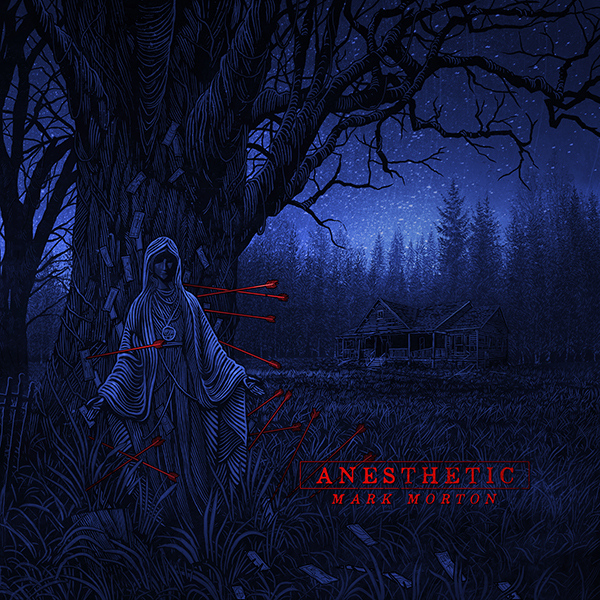
The idea behind Mark Morton’s first solo album, Anesthetic, was to creat an album of songs that wouldn't fit in a Lamb of God release. In interviews, Morton has said that this album was written at a relaxed pace over a long period of time. It presents a body of work in a veritable variety of styles, though for the most part it does not stray too far from his work in the aforementioned Lamb of God.
Morton managed to get a plethora of vocalists – 11 total – and guest musicians to write and perform on the album and this is its most remarkable characteristic. The opener “Cross Off”, the album’s crown jewel, has become a hit not only for its feature of the late Chester Bennington (Linkin Park), but for his absolutely ripping performance. It’s delight for any Linkin Park fan as Bennington screams his way through this fast-paced metal banger. The explosive pace is kept up by the equally fast “Sworn Apart”, however a Jacoby Shaddix (Papa Roach) feature is naturally less exciting. Nevertheless, Morton’s guitar flourishes and heavy blues solos embellishes the song, and prevents it from being power chord after power chord.
Many of the tracks feature a distinct 90’s alternative feel to them which comes as no surprise given some of the guests. “Axis” has this distinct country vibe to it which evolves into an all-out blues jam and perfectly compliments Mark Lanegan’s (Screaming Trees, Queens of the Stone Age) diction. Mike Inez (Alice in Chains) plays bass on five of these tracks and is highlighted with “Blur”, with Sons of Texas’ Mark Morales, who’s mid-paced riffing breaks down into a psychedelic Soundgarden-like passage. Morton even challenges himself to sing on the penultimate track “Imaginary Days”. A perfectly serviceable track, though it remains overshadowed by the soulful, organ-laden ballad “Reveal” with Naeemah Maddox, and the Randy Blythe and Alissa White-Gluz duet on “The Truth Is Dead”.
I must give credit where it’s due, the album remains incredibly cohesive despite the variety, which is arguably its strongest asset. The tracklist flows exceptionally well, knowing when to change the pace. The stylistic transitions are anything but jarring. Although, a handful tracks prevent the album from being consistently excellent. “The Never” with Chuck Billy (Testament) and Jake Oni (Oni) is a competent moshing song that works well live but falls flat on record. Additionally, “Save Defiance” with Myles Kennedy (Slash) and “Back from the Dead” with Josh Todd (Bush) are mainstream-sounding rockers with great choruses but are otherwise unremarkable.
Ultimately, Anesthetic is a fun collection of tracks that has a little something for everyone. Lamb of God fans will be surprised to hear something different from Mark Morton but will remain pleased with the familiar heavy cuts. For everyone else, it’s a competent modern metal record that’s worth your time!
Pages



Staff Login | Advertise | Our Location | RSS | Contact Us
