RSS
Mélanie Venditti Lets Herself Go on ‘Projections’

Photo Credit: Kelly Jacob
Two years after releasing Épitaphes, Mélanie Venditti is back with Projections, a six-track EP that trades in her debut album’s haunting alt-rock for radiant synth-pop. But behind the luminescent disco pop of songs like single “Les contradictions” are a set of lyrics that are no less weighty than those of the Montreal singer-songwriter’s first album, which processed the passing of her mother. CJLO spoke with Venditti about her new sound, resiliency, and feeling grateful to get back on stage.
CJLO: Your 2020 single “L’île de chasse” took your music in a more electronic pop-oriented direction, after the alternative rock found on Épitaphes and your first EP (EP sans titre). What was behind the shift in musical direction that we hear now on Projections?
Mélanie Venditti: I see Projections as the continuation of my first EP, in the energy and the process, my first album Épitaphes was a parenthesis in between the two. I really like to feel free towards all styles, to explore. To me, it’s unfortunate when an artist remains in only one avenue. Our inspirations change, our tastes as well. What we experience also guides the way we create, how we want to express ourselves. At this moment, I want to dance, to let myself go.
Despite the sunny sounds of the new EP, the lyrical subject matter is more heavy, dealing with failing relationships and despicable partners. Did you purposefully try to put a happy face on otherwise sad music by making the songs pop-like?
I love to make contrasts between lyrics and music. It’s part of my approach on this second EP to feel liberated and more relaxed after creating songs. I like that people listen to my music candidly, and that afterwards, they discover that the lyrical nature doesn’t come from the same starting point. It’s like when we want to talk about a deep subject, and we bring it up with humour at first. Humour disarms, and afterwards we find ourselves more touched. I actually worked a lot of that into the direction of my Épitaphes shows with François Bernier, my director.
The last collection of songs you released, Épitaphes, dealt with the passing of your mother and the processing of that grief. After writing such an intensely emotional set of songs, when and how did you allow yourself to begin writing songs again from a new mindset, to begin a new era, so to speak?
It came about on its own, naturally. I didn’t provoke it. I let myself be guided by what life brings me. Of course, I try to remain positive as much as possible. I’m not saying it’s easy but we do the best we can! I’m a very resilient person, I’m often told.
You said you wrote “L’amitié (L’île de chasse)”, off the new EP, for a friend “who felt guilty for not being able to get over their pain. We have to stop comparing ourselves to others, and each go at our own pace when healing.” Was it almost a bit of a relief to write about someone else’s pain, after having focused so much on your own personal life on Épitaphes? Do the other songs on Projections also focus on other people’s experiences, whether fact or fiction?
The songs from Projections are broader when it comes to terms and pronouns. Sometimes I write in the first person but it’s not me, and sometimes the second person is me. It’s a different approach for me. I tried to be less focused on myself, even if the images conveyed are very close to my personal experiences. A lot of people abused my kindness, and it caused me a lot of harm. With the #MeToo movement, I read a lot of testimonies that resembled what I went through and it inspired me.
Projections is the first project that you largely self-produced! How did it feel being in control of how everything sounded and turned out? What was behind your decision to self-produce the EP, and do you think you’ll continue to do so in your future work?
Producing the EP came to me, and not the other way around, having no budget to hire a producer. I also have the ambition to produce other artists in the near future. I said to myself that this EP could be a business card.
Musical progression has been a part of you for a long time – you started off playing the violin and classical music at 6; then going for a guitar at 14-15 to play rock music like Radiohead, Weezer, and King Crimson; and now experimenting with synthesizers and pop sonics. Yet you manage to weave all those influences together in your music without it sounding forced. What’s the common denominator that makes a Mélanie Venditti song?
There are many: versatility, openness, work, and the surroundings. Classical music taught me to be rigorous. My studies in music allowed me to be versatile thanks to skills learned. My openness in what I listen to allows to have an array of ideas and inspirations. And of course my surroundings and entourage. Surrounding yourself well [with good people] is very important.
As a musician, I imagine you can’t wait for the day when you can safely play in front of audiences again. Do you think about what you want your future live performances to be like?
I had the chance to perform on stage already [this year] with Douance and Super Plage as part of the Francouvertes contest. It felt so good to get up there again! I have no expectations really, because I’m so grateful to do shows. I felt a little rusty at times, since I hadn’t performed in a long time. Some small mistakes, here and there, hihi. But hey, as we say, you got to be kind to yourself!
Independent musicians are one of the many groups whose livelihoods are harmed by the COVID-19 pandemic. As someone who has eloquently spoken on the difficulties of the DIY career path, what worries you most about our current reality, and what gives you hope for the future?
What worries me the most is the talented musicians who will change careers and go into fields other than music. It makes me very sad. On the other hand, I find that this pandemic allows us to reflect on the place that femmes/trans/binary/non-binary people as well as ethnic minorities deserve to have in the Quebec scene. I’ve sensed a change in the last year and that, that gives me hope.
Projections is out now (Independent)
Alex Viger-Collins is the host of Ashes to Ashes, your home for modern pop in all its forms, every Tuesday at 8:00 PM EST.
The Resonance Series of 5 Podcasts
- Stories of Cuts and Care
- Aural Assembly: Echoing Life Worlds
- Grave Danger
Hour 2:
- Virtual Agents of Care?
- Fragmenting Displacement
Beats From the East Welcomes JUNE MILLINGTON (from Fanny)
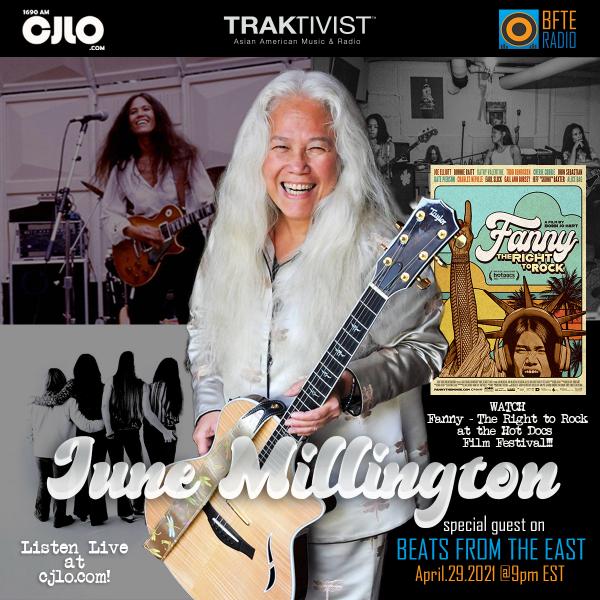
Get your tickets at : https://tinyurl.com/2z8n4ner
Co-hosted by the wonderful Lauren Lee, from TRAKTIVIST.com (Sound of Asian America)!
Quebec vaccination update
Reporter: Shanellie Marie
Stories: Luca Caruso Moro
Quebec vaccination update
Quebec hit several major vaccination milestones this week.
With daily records of over 80 thousand injections throughout recent days,
public health has announced that nearly one in three adults have gotten a dose.
This after the AstraZeneca vaccine became available to people aged 45 and up, who have all but depleted the supply.
As the province waits for more doses, Montreal walk-in clinics have closed for the time being.
The age was lowered following recommendations from a national health advisory board.
And that board just announced that provinces can allow people as young as thirty to get the dose.
The recommended age for the vaccine was initially capped at 55 after some reports linked blood clotting to AstraZeneca.
However, the risk of blood clotting remains much higher for COVID-19 itself, not to mention more commonly taken treatments, like birth control.
To add some starpower to the AstraZeneca campaign, Prime Minister Justin Trudeau received his first dose on Friday.
Ontario reverses pandemic policing measures, Quebec vaccine update, Undergrad survey in motion
Reporter: Shanellie Marie
Stories: Luca Caruso Moro
Ontario reverses pandemic policing measures
After receiving widespread backlash, Ontario has walked back some of it’s pandemic policing powers.
Ontario police will no longer be able to stop and question anyone they suspect might be violating health measures.
Community groups slammed the measures enacted in recent days.
Land-travel between Quebec and Ontario remains restricted to essential trips.
Quebec vaccine update
Quebec reached a major vaccination milestone in recent days with more than a quarter of the population having received at least one dose.
That’s well over two million doses in Quebecers’ arms.
Most of those shots were administered in Montreal, which has tallied over 600 thousand doses.
Most adults above 60 have now received a dose.
Undergrad survey in motion
Finally, in Concordia news, the student union has launched a survey on students learning online.
According to the CSU, the survey will gauge students’ feelings on remote learning to advocate next year.
Legault urges caution, lockdown continues in some areas as Quebec hits 2 million vaccine doses" QC COVID-19 update
Luca Caruso-Moro
________________________________________________________________
More people are eligible to get their COVID-19 vaccinations starting Wednesday.
For this round, certain essential workers at high risk and some Quebecers with chronic health conditions can book an appointment starting Wednesday.
A full list is available on the province’s website.
On Tuesday, Quebec’s vaccine rollout his a major milestone of 2 million vaccine doses.
That's nearly a quarter of the province.
Meanwhile, lockdowns in Quebec City, Outaouais and Chaudiere appalache will continue another week.
Non-essential businesses and schools are staying closed. The curfew will remain at 8 p.m.
And yes, after confusion around the new masks rules, Legault confirmed Tuesday that if you’re with people who are not in your bubble, you need to mask, even outside.
This as concerns of variants push lawmakers to maintain and tighten COVID-19 restrictions.
Legault said half of new arrivals in hospital for the virus are under 60 years old.
He called on people to continue to limit their social interactions.
More priority groups up for vaccination, 70 percent of new cases in Quebec City are variants, Unusual Ramadan in store under curfew
Reporter: Shanellie Desparois
News stories: Luca Caruso Moro
More priority groups up for vaccination
More health and social service workers can get a dose of the COVID-19 vaccine under the province’s new Phase two rollout for that group.
Community workers, interns, and family-type employees can now get the shot.
Back in February, those groups were left out of the health worker priority group because of a lack of vaccines.
70 percent of new cases in Quebec City are variants
As Quebec City becomes a new pandemic hotspot in the province, authorities say more than two in three new cases are variants.
Most of the cases are likely the UK version, which has now been associated with more than 1,500 cases in the province, with thousands more expected to be discovered through screening.
Unusual Ramadan in store under curfew
Finally, Montreal Muslims are getting ready for the month-long event, Ramadan, which begins Tuesday.
Across the world, Muslims will fast for large portions of the day, and many will go to a mosque to pray after sundown.
But not in Montreal. With the curfew being rolled back to 8 p.m. in Montreal and Laval Sunday, this Ramadan will look like no other.
Preview: Shiva Baby from Director Emma Seligman, a Pitting Comedy
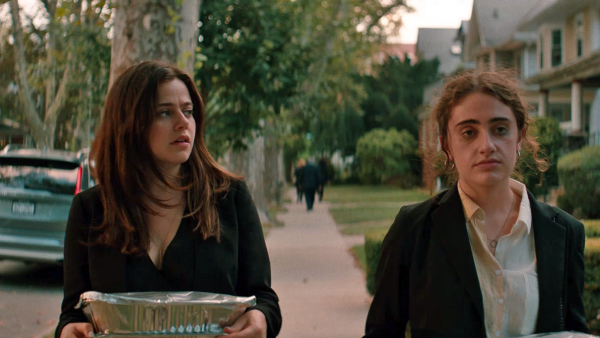
Shiva Baby from director Emma Seligman can be best described as a dark comedy in the similar vein to the cult comedy Death at a Funeral. After meeting her soon-to-be sugar daddy Max (Danny Deferrari), college graduate Danielle (Rachel Sennott) rushes to meet her neurotic parents for a family shiva. Danielle is confronted by relatives who question her lack of ambitious post-college dreams while her ex-girlfriend Maya (Molly Gordon) is applauded by the family and relatives for getting into law school. The day doesn’t seem to end when Max shows up to the shiva alongside his wife Kim (Dianna Agron) and a crying baby. Danielle must keep up appearances with different versions of herself, fend off family pressure, and confront her own insecurities.
After making a successful run at both SXSW and the TIFF festival circuit, Shiva Baby will be releasing in select theatres where open, and streaming services where available as of April 2. Cinéma Moderne in Montreal will also be hosting a screening.
Remi and Danny host At The Movies, which can be heard every Tuesday morning from 8:00 - 9:00AM. Tune in for discussions about movies, soundtracks, and iconic film scores. At The Movies also covers film festivals that are located in Montreal.
Preview: New Film Like a House on Fire from Montreal director Jesse Noah Klein

Like a House on Fire is a new film from Montreal director Jesse Noah Klein, starring Sarah Sutherland (Veep) and Quebec singer Hubert Lenoir. Dara (Sarah Sutherland) returns home after a two year absence to connect with her husband and her daughter. However, things are not what they seem. There is a new woman in the household who is seven months pregnant with Dara’s husband’s baby and her daughter does not seem to recognize her anymore. The film then becomes a story of a woman’s struggle to regain control of her old life.
Coming off the success of this past Toronto International Film Festival Like a House on Fire is currently playing at Cinema du Parc - a great way to support your local independent movie theatre.
Remi and Danny host At The Movies, which can be heard every Tuesday morning from 8:00 - 9:00AM. Tune in for discussions about movies, soundtracks, and iconic film scores. At The Movies also covers film festivals that are located in Montreal.
The Holy Trinity: Songs Named After Albums Named After Bands

Cover Photo Credit: Rolling Stones
If you listen to the radio enough, you’ll eventually hear something similar to the following, declared by a radio host who thinks they’re clever, perhaps while even hiding a smirk. “This is the song “Motörhead” off Motörhead by the band Motörhead!”
The phenomenon we’ll be discussing today is something I personally dub the “Holy Trinity,” an instance in a band’s discography where a song is named after an album, which is named after the band. A self-titled number on a band’s self-titled album, if you will.
While this odd musical occurrence isn’t exclusive to metal music (songs like “(Theme From) The Monkees” (1966), “Kool & The Gang” (1970), “Bad Company” (1974) are notable non-metal “self-titled” on the self-titled examples), the metal genre has an interesting relationship with the inclusion. A large number of the genre’s founding bands deferred to the “Holy Trinity” on early landmark albums within the genre, carving their name in metal music’s opening explosion.
The group who started this trend was, fittingly, the group who invented metal. “Black Sabbath” opens Black Sabbath’s debut self-titled 1970 album, a song that produced out of a nightmare bassist Geezer Butler had after borrowing a tome of black magic from vocalist Ozzy Osbourne. Apparently originally impromptu lyrics, Ozzy’s somber opening utterance “What is this that stands before me?” is the introduction to heavy music for many. Apart from the legacy that still surrounds the song over 50 years later, “Black Sabbath” is extra special, given that it was named after the 1963 horror film of the same name. So it’s actually a song named after an album named after a band named after a movie.
The phenomenon spread as fast as metal music did. “Motörhead” opens Motörhead’s 1977 self-titled debut, interestingly a cover of a Hawkwind track, vocalist Lemmy Kilmister’s prior band. The song itself represents the energy of metal music, as comparing Motörhead’s blaring 1977 version to proto-space rock band Hawkwind’s 1975 version is like pitting a rabid rottweiler against a frog. Lemmy also added the umlaut to the song title of Motörhead’s version, further metal-izing the track (thanks, Mötley Crüe).
Iron Maiden also closed their infamous 1980 self-titled declaration with “Iron Maiden,” an anthem track for the band and for metal music in general, with lyrics like “Iron Maiden's gonna get you, no matter how far.” The same thing can be said for NWOBHM titans Angel Witch, who opened their self-titled debut from the same year with a self-titled number. “Angel Witch” less-so defines the band, and rather helped to kickstart the genre’s borderline embarrassingly overdone fascination with witch imagery. Other notable examples of self-titled “Holy Trinity” tracks released on influential metal self-titled debut releases are “Saint Vitus” (1984), “Metal Church” (1984), “Carnivore” (1985), “Overkill” (1985), “Deicide” (1990), “Iced Earth” (1990), and “Electric Wizard” (1994). These songs/albums/bands are all landmarks within the development of metal music.
This collection of songs is notable because they all stem from the formative years of the aforementioned groups, who all largely influenced their respective scenes at the time. Of course, these tracks were open declarations of a new music movement, with many becoming fan favourites as the years passed. Songs like “Deicide” and “Iced Earth” tie back to a time before things like fame, fat cheques from record labels, and artistic stagnancy would go on to plague every band named so far. These songs were whipped up by angsty kids, unknowingly writing music history that would define them forever.
Looking closer at the very handle I’ve been using for these tracks paints an even broader picture. Please excuse the religious reference for a notoriously anti-religious genre, but much like the Christian Holy Trinity, these songs represent the mind, body, and soul of the artists that wrote them. Self-titleds like “Black Sabbath” and “Iron Maiden” come from the minds of young artists, actualizing their newfound creative visions. The tracks themselves are the body, the tangible life-blood entities that come together to create what we call music. They represent the spirit of the artistic medium, with bands singing about the meaning of metal itself, or adding much-needed punk energy to old tracks, creating something entirely new with pure aggression and noise.
The “Holy Trinity” is also infinite and unkillable in essence. When Black Sabbath opened their last ever concert in 2017 with “Black Sabbath,” the song didn’t die. It will forever remain in the hearts of the societal outcasts who call themselves metalheads, among landmark numbers like “Motörhead” and “Saint Vitus,” with new generations discovering these sonic declarations to this day. New bands continue to wave the flag, with notable tracks like “Skeleton” (2020), “Kvlt of Odium” (2020), and “Deer Lord” (2020) marking a new wave of “Holy Trinity” tracks from smaller artists carving their own names in the living flesh of metal music. Some of those names aren’t as catchy, though.
Hunter co-hosts The Iron Club, your weekly guide to the dark and mysterious realm of underground metal, which airs every Sunday from 9:00 - 11:00PM.
Pages



Staff Login | Advertise | Our Location | RSS | Contact Us
